



West Asia Tensions / US Claims Progress, Iran Denies Talks in Ongoing Conflict
Key Points
US and Iran exchange indirect messages amid “Operation Epic Fury,” with Washington claiming progress and Tehran denying talks, as military strikes pause temporarily while diplomacy remains tense and uncertain.
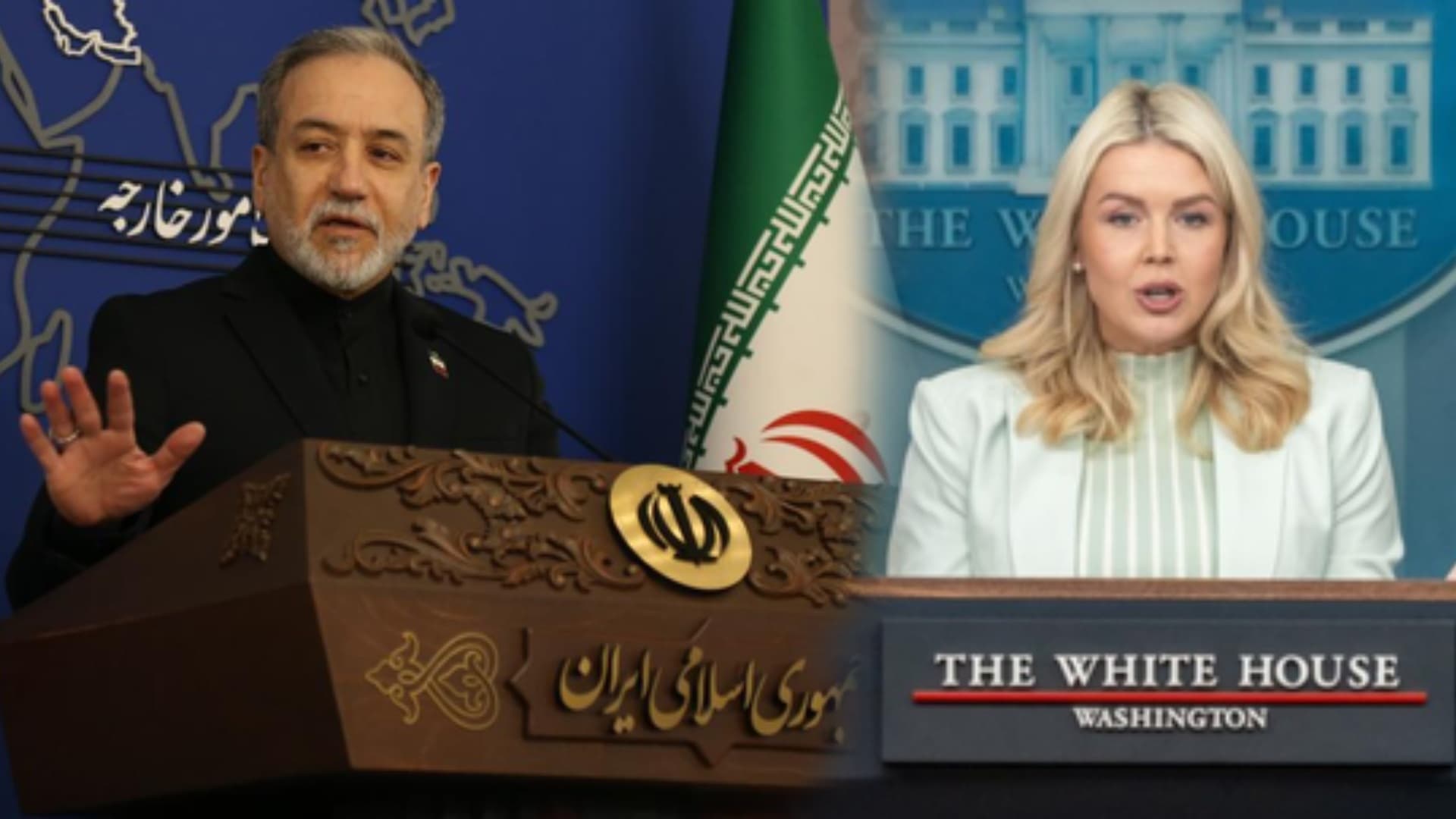
Washington, Mar 26: The United States and Iran are engaged in “productive” talks even as US military operations continue, the White House said, signalling a possible diplomatic opening amid an ongoing conflict that Washington claims is nearing its objectives.
White House Press Secretary Karoline Leavitt told reporters at her news conference on Wednesday (local time) that discussions between Washington and Tehran have taken place over the past three days, following intensified US military pressure on Iran.

📱 Get Argus News App
✨“As President Trump announced on Monday, the United States
has been engaged over the last three days in productive conversations,” she
said.
Also Read: Iran Lays Out Sweeping Demands For US Talks: Base Closures, Sanctions End, Strait Of Hormuz Control
The talks come as the US continues its military campaign under “Operation Epic Fury,” which the administration says has significantly weakened Iran’s offensive and defensive capabilities.
Iranian Foreign Minister Seyed Abbas Araghchi has said that different messages have been exchanged between Iran and the United States through intermediaries over the past few days, while Tehran has held no talks with Washington since the beginning of the US and Israeli attacks on the country late last month.
He made the remarks in an interview with state-run IRIB TV on Wednesday (local time).
"Since a few days ago, the American side has started sending different messages through different intermediaries. When messages are relayed to us through friendly countries and we, in response, declare our positions or issue the necessary warnings, it is called neither negotiation nor dialogue. There has merely been an exchange of messages through our friends, and we have repeated our principled positions," Araghchi said.
He added that in some messages, Iran warned the United States against attacking its infrastructure, which caused Washington to withdraw its warning to strike Iranian power plants within 48 hours, reports Xinhua news agency.
Leavitt, on the other hand, said the diplomatic outreach followed a shift in Iran’s posture after recent US actions. “Following President Trump’s powerful threat on Saturday evening, it was made clear to the United States that Iran wanted to talk,” she said.
As a result of these discussions, President Donald Trump ordered a temporary pause on certain planned strikes. “The president (was led) to temporarily instruct the Department of War to postpone planned strikes against Iranian power plants and energy infrastructure only,” Leavitt said.
However, she made clear that the broader military campaign remains active. “The remaining elements of the Iranian regime have another opportunity to cooperate… But if Iran fails to accept the reality of the current moment… President Trump will ensure they are hit harder than they have ever been hit before,” she said.
Leavitt emphasised that negotiations are ongoing but highly sensitive, declining to disclose details about participants or the substance of discussions. “We’re not going to get into the nitty-gritty details that have been exchanged between the United States and Iran at this time,” she said.
She also pushed back against media reports about a proposed US “15-point plan” to end the war, warning against reliance on anonymous sources. “I would caution reporters… from reporting about speculative points or speculative plans from anonymous sources. The White House never confirmed that full plan,” she said.
Despite the diplomatic engagement, the administration maintained a firm stance that Iran must abandon its nuclear ambitions and cease threats to US interests and allies.
Leavitt said the US military campaign is “very close to meeting the core objectives” of the operation, which officials earlier estimated would take four to six weeks. The White House also indicated that while talks are ongoing, there is no confirmation of additional meetings or locations, cautioning against speculation about future negotiations. “Nothing should be deemed official until it is announced formally by the White House,” she said.
Araghchi said that Iran does not seek war, stressing "We did not begin this war and want an end to it, however, in a way that it is not repeated."
He noted that Iran does not want a ceasefire as it would be a repetition of the same "vicious circle" of negotiation, war, and truce, emphasising that "We want an end to this war on our own terms."
Araghchi, on the other hand, said that Iran's current policy
is to continue resistance and defend the country, and there is no plan for
holding negotiations.
Also Read: Iran Lays Out Sweeping Demands For US Talks: Base Closures, Sanctions End, Strait Of Hormuz Control
On the Strait of Hormuz, he noted that the waterway is considered part of the territorial waters of Iran and Oman, adding that Iran is studying "new arrangements for safe passage through the strait."
The Iranian foreign minister's remarks came after US President Donald Trump claimed that Tehran is negotiating with the United States and wants a deal to end the war.
On February 28, Israel and the United States launched joint attacks on Tehran and several other Iranian cities, killing Iran's then Supreme Leader Ali Khamenei, along with senior military commanders and civilians. Iran responded by launching waves of missile and drone strikes targeting Israel and US bases and assets in the Middle East, and exercising tight control over the Strait of Hormuz, not allowing safe passage by vessels belonging to or affiliated with Israel and the United States.
(IANS)
Related Topics
Explore more stories