



EXCLUSIVE | Did Nana Patekar Foretell His Own Silent Killer Ten Years Ago? How Heart Attacks Are Quietly Claiming Lives from Bollywood to Odisha
Key Points
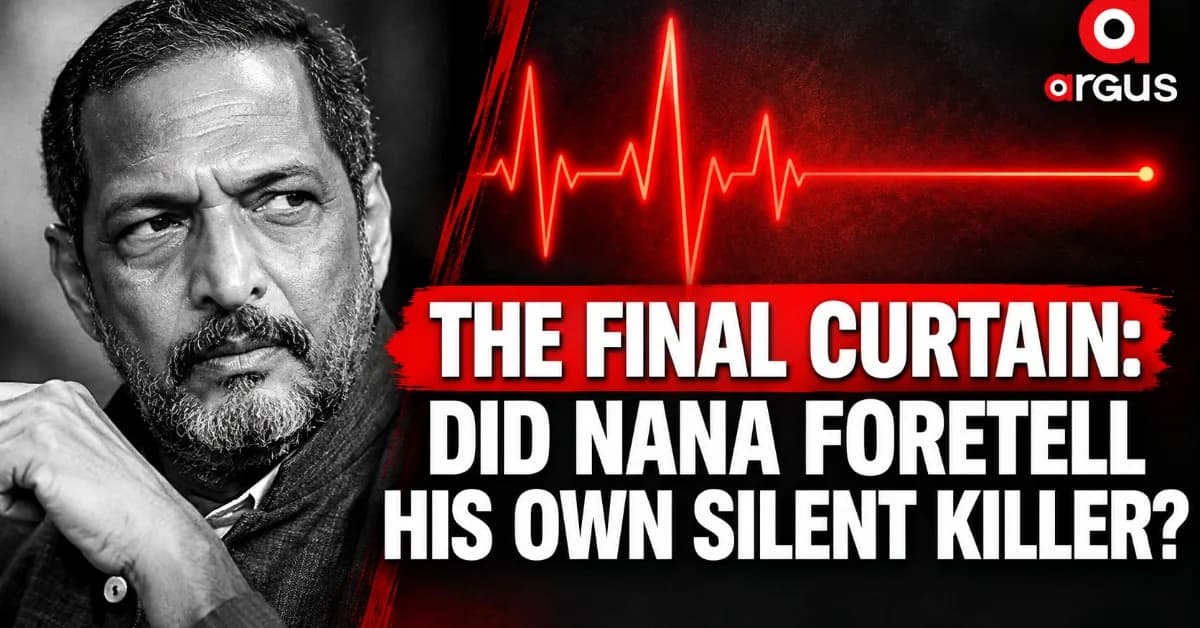
The 2016 Premonition: Years before his passing, Nana Patekar openly warned how playing intense, draining theatrical roles like Natsamrat exerts a terrible, destructive pressure on the human heart.
The Weight of Youthful Habits: Decades of heavy chain-smoking following a profound personal tragedy laid the biochemical foundation for irreversible coronary atherosclerosis.
A National and Regional Crisis: His sudden cardiac arrest mirrors a broader health epidemic, with cardiovascular diseases accounting for 27.1% of all deaths in Odisha annually.
Bhubaneswar: The screen has faded to an unforgiving, absolute black. That raspy, thunderous voice – the one that could silence a crowded theatre with a single whisper or ignite it with a volcanic eruption – has dissolved into the quiet coastal air of Goa.
A scintillating, fiercely independent light has abruptly gone out in the tinsel town, leaving behind an echo that feels entirely irreplaceable. Nana Patekar, the mercurial titan of Indian cinema, is no more.
But for a man whose life and art were defined by a raw, bone-chilling intensity, his sudden collapse at the age of 75 was not a random medical malfunction. It was the explosive final act of a silent structural war that had been building inside his chest for decades.
It raises a haunting, cinematic question: Did Nana Patekar know he would die of a heart attack a decade ago?

📱 Get Argus News App
✨The 2016 Premonition: Art Mimicking Mortality
To find the genesis of this tragedy, one must look back to 2016. While promoting his masterpiece Natsamrat, Patekar sat down for an archival interview and delivered a spine-chilling reflection on the curse of the character he played – Ganpatrao Belvalkar, the aging, broken theatre actor.
"Whoever has played the role of Natsamrat before me on stage – whether it was Dr. Shriram Lagoo or the great actors before – they all eventually suffered massive heart attacks,"
Patekar noted with eerie seriousness. "Because this character demands an intensity that completely drains your body, rips your emotions apart, and exerts a terrible pressure on your heart."
Patekar’s performative signature was defined by these exact volcanic bursts of adrenaline followed by sudden, dead silence. For decades, he pushed his blood pressure and heart rate to their absolute physiological limits. He did not just act; he subjected his cardiovascular system to a nightly crucible. Ten years before his final breath, Patekar openly recognized that the theater of his life was actively demanding his heart as collateral.
The Last Scene: When Plumbing Shuts Down Electricity
What happened in the early hours of October 8, 2026, was the literal realization of that pressure. The media called it a cardiac arrest – an electrical failure where the heart abruptly stops pumping blood. But medical science reveals that this electrical short-circuit was merely the final domino. The true killer was an acute Myocardial Infarction (a heart attack).
Patekar was a known cardiac patient, actively taking medication for underlying Coronary Artery Disease.
At 2:30 AM, when he texted a friend complaining of a headache, general discomfort, and a sharp pain on the left side of his chest, a microscopic plumbing failure was occurring. A piece of cholesterol plaque, long calcified in his coronary arteries, ruptured. A blood clot formed instantly, choking off the oxygen supply to his heart muscle.
As the heart tissue starved, it began to die, leaking potassium and sending chaotic electrical signals across his chest. This triggered Ventricular Fibrillation – the exact mechanism where the heart stops squeezing and begins to quiver like a bag of worms. The electrical circuit short-circuited. Blood flow to the brain dropped to zero. He slipped into unresponsiveness.
The Tragic Blueprint: A Grief Smoked Away
This cardiovascular time bomb was built on a foundation of profound personal tragedy. Decades earlier, Patekar suffered the most devastating loss a parent can endure: the death of his elder son, Durvasa, who passed away at just two-and-a-half years old due to congenital health issues.
Consumed by unbearable grief, Patekar turned to extreme nicotine dependency, entering a dark phase where he chain-smoked 60 cigarettes a day. He was so deeply addicted that he admitted he would even smoke while taking a shower.
Though a profound wake-up call from a grieving family friend caused him to discard the cigarettes permanently at the age of 56, the damage was already written into his biology. Decades of smoking 60 cigarettes a day causes irreversible structural alterations, aggressively accelerating atherosclerosis (arterial blockages) and hardening the pathways of the heart. The habits of his youth laid the biochemical tracks for the heart attack of his old age.
The Cinematic Metaphors: Dialogue as Diagnosis
Look closely at his films, and you realize Patekar was always lecturing us on human anatomy, stress, and the limits of the flesh. He used blood circulation as a weapon against societal rot.
In the legendary climax of Krantiveer (1994), standing before the gallows, he screamed:
"Aa gaye meri maut ka tamasha dekhne? ... Yeh tumhara khoon hai ya paani? Agar khoon hai, toh isme ubaal kyun nahi aata? Tumhari ragon mein daudta hai toh sirf darr! Yeh darr hi tumhare dil ko kamzor banata hai..."
The reality behind that scene was terrifyingly real. Director Mehul Kumar later revealed that just before shooting this iconic monologue, Patekar suffered an acute heart episode and was rushed to the hospital. He literally rose from a hospital bed to deliver a speech about weak hearts and boiling blood.
In Yeshwant (1997), playing a hyper-stressed cop, he diagnosed the emotional roots of cardiac stress perfectly:
"Yeh dukh naam ki jo bimari hai na... iska ilaaj kisi doctor ke paas nahi hai... Agar dil mein dukh ko pakad kar baithe rahoge, toh yeh tumhari ragon ko andar se nichod dega, tumhare dil ko faad dega."
Clinically, this is a textbook description of stress-induced cardiomyopathy or coronary spasms – where severe emotional distress fractures the physical heart.
Even his comedic warnings, like the famous "Idhar nahi maarne ka, idhar chota magaj hota hai... circuit short ho jata hai, dil dimaag sab bandh!" from Tirangaa, showed an obsession with sudden, catastrophic bodily collapse.
The Big Screen Warning: India and Odisha's Silent Killer
Nana Patekar's death has once again zoomed the cinematic lens onto a terrifying national crisis. Heart disease is no longer a localized issue; it is a raging epidemic claiming 28.6 lakh (2.86 million) Indian lives annually, accounting for nearly 28% of all national mortalities.
The crisis hits with unique severity here in Odisha. The latest projections for the 2025–26 healthcare cycle paint a stark picture of the state's expanding medical burden. According to data tracking from public health frameworks:
- 39.7 Lakh Odiya citizens are projected to actively attend government Non-Communicable Disease (NCD) screening clinics this year.
- Within these government clinics alone, clinicians are actively diagnosing and managing roughly 14,750 cases of Cardiovascular Disease (CVD) and 8,300 cases of Stroke.
- Over 7.07 Lakh individuals in Odisha are under clinic care for diabetes – a metabolic accelerator that doubles a person's risk of a myocardial infarction.
But these clinic numbers are just the early warning system. According to the Sample Registration System (SRS) mortality distribution, cardiovascular diseases account for 27.1% of all deaths in the region, meaning that between 90,00,000 and 1,00,000 people die of heart attacks and strokes in Odisha every single year – an average of 38 lives lost every 24 hours. Data from the above underscores why: a staggering 28.5% of the state's adult population suffers from hypertension, and 98.4% have nutritionally inadequate diets (fruits and vegetables) and taking more than 8 gm salt daily, above that of WHO recommended level, creating a ticking clock inside the chests of millions.
The Final Lesson
Nana Patekar lived his life with an intensity that shook theaters, but his heart paid the ultimate price for the smoke of his past and the adrenaline of his art. His passing leaves behind a final, unwritten screenplay for the public: do not ignore the left-sided chest pain, do not let emotional distress choke your veins, and do not treat blood pressure as a silent spectator.
Otherwise, as Nana himself
warned us from the silver screen, the circuit will short, the pump will stop,
and the lights will go down forever.
Also Read: Special Report| Diarrhoea takes 8 lives in 10 months, Odisha recorded 9 ADD Outbreaks in 2026!
Related Topics
Explore more stories