



Sanitation / Why Train Toilets Often Stink While Aircraft Lavatories Stay Surprisingly Fresh? Here's The Science Behind It
·2 months ago·3 min read
Key Points
Modern aircraft use vacuum toilet systems that suck waste rapidly into sealed holding tanks, reducing the time waste remains exposed to cabin air and minimising odours.
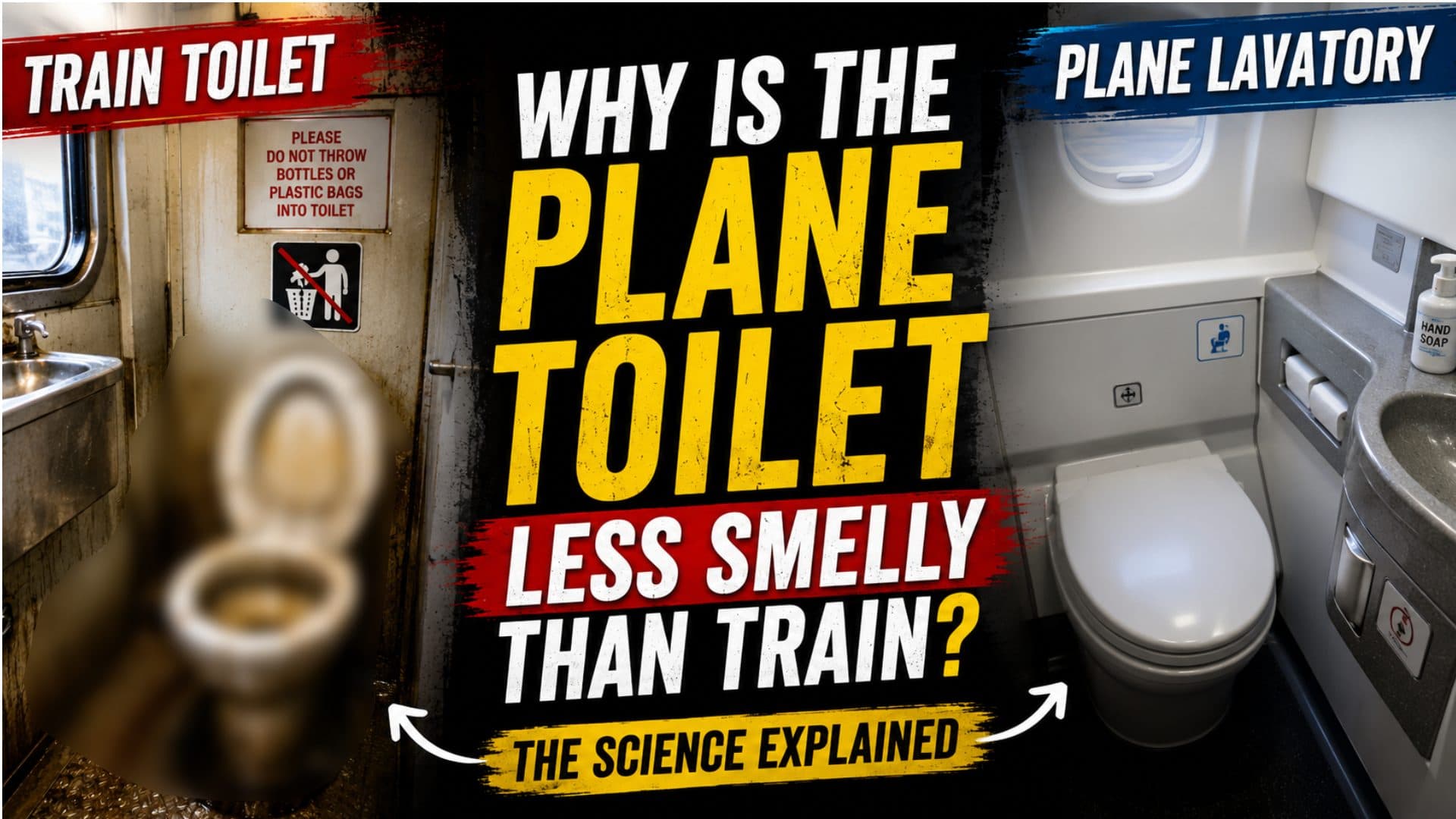
Bhubaneswar, Jun 11: Anyone who has travelled long distances by both train and aeroplane knows the difference. Step into a train toilet after a few hours and you may be greeted by an odour that announces itself before the door even opens. An aircraft lavatory, however, is often far less offensive despite being used by hundreds of passengers packed into a metal tube thousands of feet above the ground.
So what gives?
It's All About the Vacuum
The biggest difference lies in the technology.
Modern aircraft use vacuum toilet systems that suck waste rapidly into sealed holding tanks. The powerful vacuum removes waste almost instantly, reducing the amount of time it remains exposed to cabin air. Aviation experts note that the system also minimises odours by limiting contact between waste and the surrounding environment.
Unlike conventional toilets that rely largely on water and gravity, aircraft lavatories use very little water. The waste is whisked away through sealed pipes into storage tanks until the aircraft lands and the tanks are emptied by ground crews.
Trains Face a Tougher Challenge
Train toilets, especially on busy long-distance routes, operate in a much harsher environment.
Although many modern trains now use bio-toilets or vacuum-assisted systems, they still contend with frequent door openings, higher passenger turnover and varying maintenance conditions. Unlike aircraft, trains cannot isolate their waste systems as completely from the passenger environment.
The result? More opportunities for odours to escape and linger.
Cleaning Happens More Often Than You Think
Another reason aircraft lavatories stay relatively fresh is the rigorous cleaning routine.
Industry reports indicate that airline lavatories are disinfected, deodorised and restocked after flights, while cabin crew regularly inspect them during journeys. Waste tanks are also emptied and serviced on the ground between operations.
In aviation, a foul-smelling toilet is not just unpleasant; it can trigger passenger complaints and affect customer satisfaction. Airlines therefore have a strong incentive to keep lavatories in top condition.
Also Read: No Subscription? Here's How You Can Watch FIFA World Cup 2026 Opener Mexico vs South Africa For Free
The Loud Flush Has a Purpose
That startling "whoosh" when you press the flush button is more than a dramatic sound effect.
It is the noise of a high-speed vacuum system rapidly removing waste and odours from the bowl. Experts say the design was developed not only to save water and weight but also to create a cleaner and less odour-prone environment.
So the next time an aircraft toilet makes you jump, remember: that thunderous flush is doing exactly what it was designed to do -- sending bad smells packing at 35,000 feet.
So what gives?
It's All About the Vacuum
The biggest difference lies in the technology.
Modern aircraft use vacuum toilet systems that suck waste rapidly into sealed holding tanks. The powerful vacuum removes waste almost instantly, reducing the amount of time it remains exposed to cabin air. Aviation experts note that the system also minimises odours by limiting contact between waste and the surrounding environment.
Unlike conventional toilets that rely largely on water and gravity, aircraft lavatories use very little water. The waste is whisked away through sealed pipes into storage tanks until the aircraft lands and the tanks are emptied by ground crews.
Trains Face a Tougher Challenge
Train toilets, especially on busy long-distance routes, operate in a much harsher environment.
Although many modern trains now use bio-toilets or vacuum-assisted systems, they still contend with frequent door openings, higher passenger turnover and varying maintenance conditions. Unlike aircraft, trains cannot isolate their waste systems as completely from the passenger environment.
The result? More opportunities for odours to escape and linger.
Cleaning Happens More Often Than You Think
Another reason aircraft lavatories stay relatively fresh is the rigorous cleaning routine.
Industry reports indicate that airline lavatories are disinfected, deodorised and restocked after flights, while cabin crew regularly inspect them during journeys. Waste tanks are also emptied and serviced on the ground between operations.
In aviation, a foul-smelling toilet is not just unpleasant; it can trigger passenger complaints and affect customer satisfaction. Airlines therefore have a strong incentive to keep lavatories in top condition.
Also Read: No Subscription? Here's How You Can Watch FIFA World Cup 2026 Opener Mexico vs South Africa For Free
The Loud Flush Has a Purpose
That startling "whoosh" when you press the flush button is more than a dramatic sound effect.
It is the noise of a high-speed vacuum system rapidly removing waste and odours from the bowl. Experts say the design was developed not only to save water and weight but also to create a cleaner and less odour-prone environment.
So the next time an aircraft toilet makes you jump, remember: that thunderous flush is doing exactly what it was designed to do -- sending bad smells packing at 35,000 feet.

📱 Get Argus News App
✨📰 60 Word News🎬 Argus Podcast📺 Live TV and Breaking News🔔 Free Notification Alerts
Download Free:
Related Topics
Explore more stories