



Why Shree Jagannath Temple Puri Conducted Its First-Ever 'Anga Lagi' Ornament Audit in 48 Years | Explained
Key Points
Scientific Milestone: For the first time in 48 years, the temple utilized modern tools like 3D mapping, digital cataloging, and gemological verification to document sacred ornaments.
Ensuring Accountability: The audit acts as a security measure to prevent potential damage or substitution, creating a permanent digital blueprint for all ritual jewellery.
Modernizing Tradition: The exercise successfully bridged the gap between centuries-old hereditary custodial traditions and the transparent, high-tech requirements mandated by the High Court.
Bhubaneswar: For nearly five decades, the ornaments adorning Lord Jagannath, Lord Balabhadra and Devi Subhadra during major rituals followed an unbroken tradition. They were taken out of the Ratna Bhandar, used during festivals and returned to the custody of hereditary servitors on the basis of faith, customary practice and handwritten records.
That changed on Sunday.
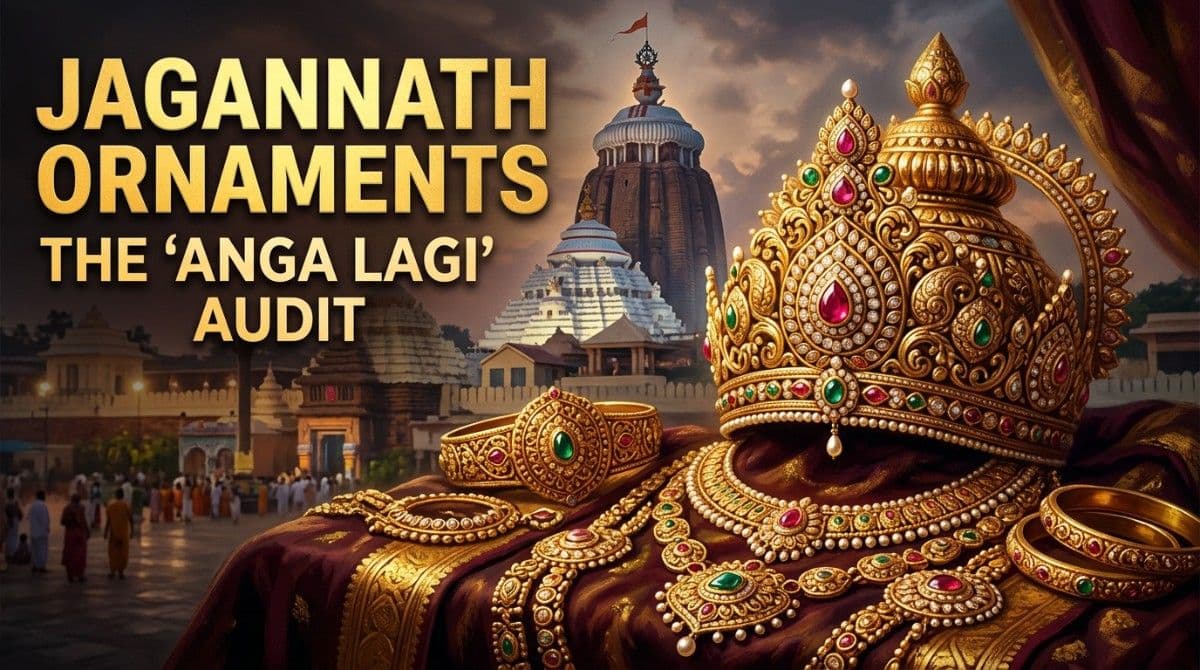
For the first time since the last formal inventory in 1978, the Shree Jagannath Temple Administration (SJTA) conducted a scientific audit of the Anga Lagi (body-adorned) ornaments, weighing, digitally documenting and 3D mapping the sacred jewellery before handing them back to the Bhandara Mekap servitors.
The exercise was not a routine annual audit. It was an extraordinary one-time security and legal measure born out of the ongoing High Court-monitored Ratna Bhandar inventory.

📱 Get Argus News App
✨Why Was the Flash Audit Conducted?
The immediate trigger was the temporary suspension of the comprehensive Ratna Bhandar inventory on May 23.
While the larger audit remained on hold, several highly valuable ornaments – including gem-studded Chitas, Rahu Rekha and other Anga Lagi jewellery – had already been brought out of the treasury for Deva Snana Purnima and other annual rituals.
Once these ornaments came out of the vault and entered active ritual use, they could not simply be returned to storage without fresh verification.
To bridge this gap, the Odisha government approved an additional Standard Operating Procedure (SOP) permitting a dedicated one-day flash audit of these ornaments before they were restored to temple custody.
The exercise ensured that every ornament was weighed, photographed, videographed, gemologically examined and digitally mapped immediately after ritual use.
Why Is This Audit Different From Every Previous Year?
The rituals are annual.
The audit is not.
Every year, these ornaments are traditionally used during Deva Snana Purnima, Suna Besha, Niladri Bije and other ceremonies. However, until now, there was never any practice of scientifically weighing or digitally documenting them after each festival.
Since the last inventory in 1978, the ornaments were removed and returned based largely on hereditary trust maintained by the Bhandara Mekap servitors and entries in traditional temple registers.
The July 19 exercise therefore marks the first scientific verification of ritual ornaments in nearly 48 years.
How Did the High Court Shape the Audit?
The audit was driven largely by judicial directions issued during litigation concerning the Ratna Bhandar.
One of the court's principal mandates was that every item belonging to the deities must be inventoried, leaving no category of ornaments exempt from documentation.
The High Court also linked completion of the inventory to structural conservation of the Ratna Bhandar. The Archaeological Survey of India (ASI) cannot begin major conservation work inside the treasury until all valuables are documented and shifted safely.
The pause in the broader inventory therefore risked delaying both the court-monitored exercise and the conservation schedule.
The additional SOP emerged as a practical solution to keep the judicial timeline alive.
The court also insisted on transparent documentation, requiring digital records, videography and participation of independent experts instead of relying solely on traditional verification.
Why Was Scientific Documentation Considered Necessary?
The Anga Lagi ornaments represent some of the most frequently handled jewellery in the temple treasury.
Unlike valuables that remain locked inside the inner Ratna Bhandar, these ornaments regularly move between the treasury, priests and servitors during major rituals.
Such movement naturally creates a period of greater vulnerability.
The audit sought to eliminate any possibility of:
- accidental damage,
- gemstone displacement,
- documentation gaps,
- mistaken identity of ornaments, or
- future allegations of substitution.
By recording every ornament immediately after ritual use, the administration created an authenticated digital record before returning them to storage.
What Technologies Were Used?
Unlike the entirely manual inventory of 1978, the present audit relied on modern documentation tools.
Every ornament underwent:
- physical weighing,
- gemstone verification by certified gemologists,
- high-definition photography,
- complete videography,
- digital cataloguing, and
- three-dimensional mapping.
The 3D scans effectively create a permanent digital blueprint of each ornament, allowing future inspections to compare dimensions, gemstone placement and physical condition with mathematical precision.
What Happened During the Last Inventory in 1978?
The current exercise derives much of its importance from the historical shortcomings of the 1978 inventory.
Conducted over nearly 70 days, that exercise manually recorded:
- 454 gold ornaments weighing about 128.38 kg, and
- 293 silver articles weighing around 221.53 kg.
However, the inventory also left behind several unresolved issues.
Fourteen large ornaments could not be weighed because suitable weighing equipment was unavailable.
Subsequent openings of the treasury in 1982 and 1985 for repair works took place without any fresh inventory.
Those gaps continued to fuel speculation for decades.
The controversy reached its peak during the 2018 "missing keys" episode, when officials were unable to immediately access the inner Ratna Bhandar, triggering litigation and widespread public concern over the safety of the temple treasure.
The present High Court-monitored exercise seeks to permanently close those historical loopholes.
How Did the Audit Affect the Bhandara Mekap Servitors?
Initially, the introduction of digital technology and external experts generated apprehension among the hereditary custodians.
Traditionally, the Bhandara Mekap servitors have enjoyed exclusive responsibility for maintaining and returning the ornaments through internal temple procedures.
The presence of videography teams, government officials and gemologists represented a significant departure from centuries-old practice.
However, once the process commenced, the exercise effectively worked in the servitors' favour.
Every ornament was verified in their presence and matched against historical records before being formally handed back.
The digital handover now serves as legal evidence that the ornaments returned to their custody correspond with the historical inventory.
This significantly reduces the scope for future allegations regarding missing or altered jewellery.
How Does It Help the Ongoing Ratna Bhandar Audit?
The flash audit resolved a major operational bottleneck.
Since the comprehensive treasury inventory has remained suspended for weeks, waiting for its resumption would have left the ritual ornaments outside the scientific documentation process.
By auditing this category separately, the administration ensured that one of the most complex and frequently used sections of the temple treasury was completed without reopening the deeper vaults.
The remaining inventory inside the Bhitara Ratna Bhandar can now continue independently once the larger exercise resumes.
Will This Become a Permanent Practice?
There is no official decision yet to conduct such audits annually.
However, the July 19 exercise establishes an unprecedented benchmark.
For the first time, the temple now possesses a scientifically authenticated digital baseline of its Anga Lagi ornaments.
Future inspections – whether after major festivals or during subsequent inventories – can compare every ornament against this digital identity instead of relying solely on handwritten descriptions.
If adopted
as a standard protocol, the exercise could fundamentally transform the way the
Jagannath Temple preserves and safeguards one of India's most revered temple
treasuries while balancing centuries-old ritual traditions with modern
accountability.
Also Read: Puri Rath Yatra 2026: Why AI, Drones and 26 Safe Zones Could Not Prevent a Stampede like Situation at Marichikote Chhak | Special Report
Related Topics
Explore more stories