



Odisha Politics / Naveen Patnaik, Now at 80, Faces a Defining Battle for Political Survival
Key Points
After losing power following 24 years in office, the BJD supremo now encounters the challenge contain internal dissent and convince voters that he remains relevant to Odisha’s changing political landscape.
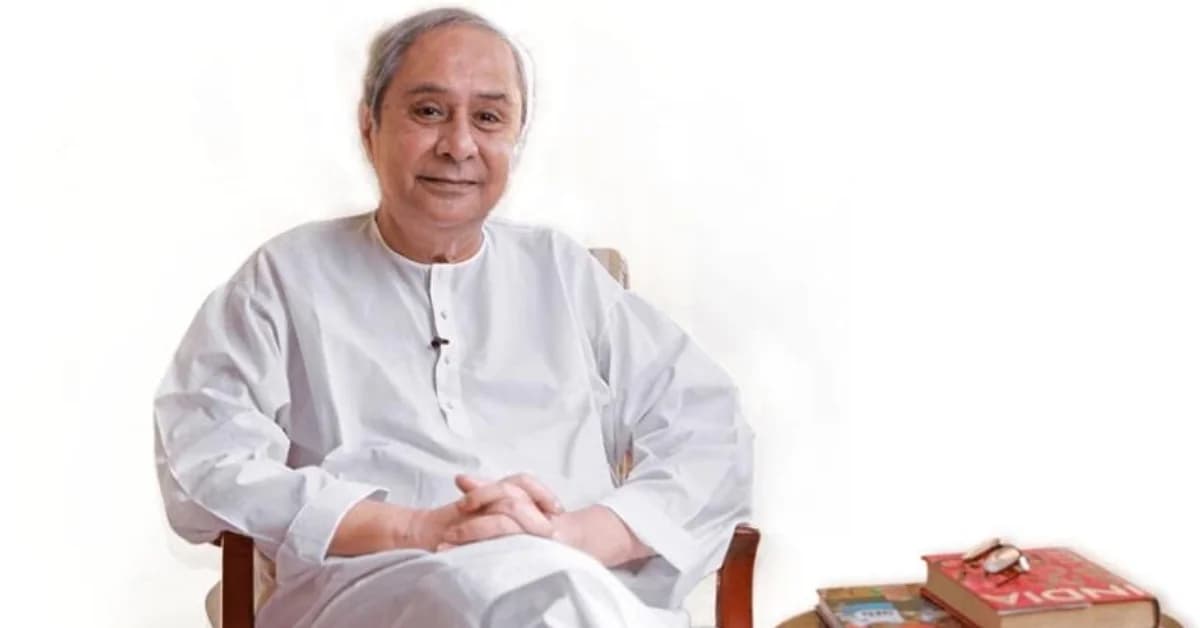
Bhubaneswar, Oct 17: At 80, Naveen Patnaik remains one of Odisha’s most recognisable political figures, but his birthday this year which came on Friday, October 16, amid a question that would have seemed unthinkable a few years ago: Can the Biju Janata Dal (BJD) recover from its electoral collapse, or is the state witnessing the beginning of the end of the Naveen era?
The birthday greetings extended by Chief Minister Mohan Charan Majhi and visits by BJP leaders to Naveen Niwas might have underlined the respect the former chief minister continues to command across the political spectrum. Yet, political courtesy should not be mistaken for political strength. The real measure of Naveen’s standing is no longer the protocol he receives but his ability to lead a defeated party back into electoral contention.
Naveen’s political journey has been extraordinary. After the death of his father, Biju Patnaik, he entered active politics in 1997 and headed the BJD that was founded some prominent democrats those who worked with his father Biju Patnaik in December that year. In 2000, he led the party to power in alliance with the BJP, beginning a 24-year reign that made him one of India’s longest-serving chief ministers.
His personal image of integrity, welfare-oriented governance and electoral consistency helped him withstand anti-incumbency for years. But the 2024 elections exposed the vulnerabilities beneath that formidable political structure. The BJP won 78 of the 147 Assembly seats, reducing the BJD to 51, and swept all 20 Lok Sabha seats in Odisha. Naveen also lost Kantabanji, although he retained Hinjili.

📱 Get Argus News App
✨The verdict was not merely a rejection of an incumbent government. It was a warning that personal popularity, once sufficient to sustain political dominance, could no longer compensate for organisational weaknesses, questions of leadership and a changing voter mood.
The challenge of opposition politics
Since becoming Leader of the Opposition in June 2024, Naveen has sought to challenge the BJP government and establish the BJD as a credible alternative. But governing and opposing are fundamentally different political exercises. For more than two decades, his authority was reinforced by control over the administration and a powerful party machinery. In opposition, he must depend on sustained public engagement, legislative scrutiny, grassroots mobilisation and a convincing political narrative.
The BJD’s third-place finish in the Nuapada Assembly by-election has made that transition more difficult. Coming after the 2024 defeat, the result raises questions about whether the party can retain its traditional support base or whether voters are gradually shifting towards the BJP.
The student union elections have delivered another warning. The Biju Chhatra Janata Dal, (BCJD) once influential on campuses, has struggled to retain its position as the BJP-backed Akhil Bharatiya Vidyarthi Parishad has expanded its presence. Campus politics is not simply about winning student union posts; it provides a recruitment ground for future political workers and leaders. Losing that space could weaken the BJD’s ability to rebuild itself over the longer term.
The BJP is therefore attempting to consolidate its 2024 victory beyond the Assembly and Parliament. For the BJD, the challenge is not only to oppose the government but also to prevent the political ecosystem that sustained its dominance from gradually shifting to its principal rival.
Dissent and succession: The unresolved questions
More worrying for Naveen is the strain within his own party. The rebellion by some BJD legislators during the Rajya Sabha election involving independent candidate Dilip Ray exposed the limits of the unquestioned authority he once exercised over his ranks.
Electoral defeat does not necessarily destroy a party. But defeat combined with internal dissent, uncertainty over leadership and declining organisational influence can make recovery much harder. Leaders who remain united during a period of power may begin reassessing their political futures when victory appears distant.
This makes succession an increasingly urgent question. Naveen’s personal authority kept the issue largely out of public discussion for years. Now, the BJD must demonstrate that it can nurture a new generation of leaders capable of connecting with voters, mobilising workers and articulating a political vision beyond the legacy of its founder.
A transition managed without transparency or collective
leadership could deepen internal divisions. Equally, postponing renewal
indefinitely would leave the party dependent on a leader whose political future
cannot be separated from the realities of age and electoral setbacks.
Also Read: Campus to Panchayat: How BJP, BJD Spinning Student Polls into Ultimate 2027 War Machine
Senior BJD leaders Debi Prasad Mishra and Pratap Jena have appealed to the people to give Naveen another opportunity, accusing the BJP government of failing to fulfil its promises. But the appeal raises a crucial question: Why should voters return the BJD to power after decisively ending its long tenure?
The party must do more than highlight the BJP’s shortcomings. It must acknowledge the weaknesses that contributed to its own defeat, identify specific governance failures and offer credible alternatives. Merely invoking Naveen’s record may stir nostalgia, but nostalgia alone rarely builds a winning political coalition.
The BJP must deliver, too
The BJP cannot afford complacency. Its victory has raised public expectations, and its performance in government will determine whether the 2024 mandate becomes a durable political realignment or a temporary shift. Unfulfilled promises, governance failures or public dissatisfaction could create opportunities for the BJD.
However, anti-incumbency against the BJP will not automatically translate into support for Naveen. The BJD must be prepared to convert public grievances into a coherent campaign, demonstrate organisational resilience and persuade voters that it has learnt from its defeat.
At 80, Naveen’s legacy is secure, but his political future is not. He has the experience, recognition and organisational foundations to attempt a comeback. What he no longer possesses is the certainty that once made his electoral victories appear almost routine.
His defining challenge is to prove that the BJD can become more than a party sustained by his personal popularity and that its 24 years in power have left it with a political purpose relevant to a new generation.
The next chapter of Naveen’s career will not be determined
by birthday tributes or the respect of political rivals. It will depend on
whether he can rebuild trust, restore party discipline and reconnect with
voters constituency by constituency. Odisha has moved beyond the assumption
that Naveen will inevitably win. The question now is whether he can persuade
the electorate that his party deserves another chance.
Related Topics
Explore more stories