



Tomato Prices Soar 48%, Gold 41%, Potatoes 24% Cheaper: Odisha Emerges as India's 5th Most Expensive State in May
Key Points
* Potato prices fell 23.71%, providing significant relief to household grocery budgets.
* Gold and silver jewellery inflation remains exceptionally high, pushing up personal expenditure costs.
Bhubaneswar: India's retail inflation may still be below the Reserve Bank of India's 4% comfort mark, but Odisha consumers are feeling a sharper pinch than much of the country.
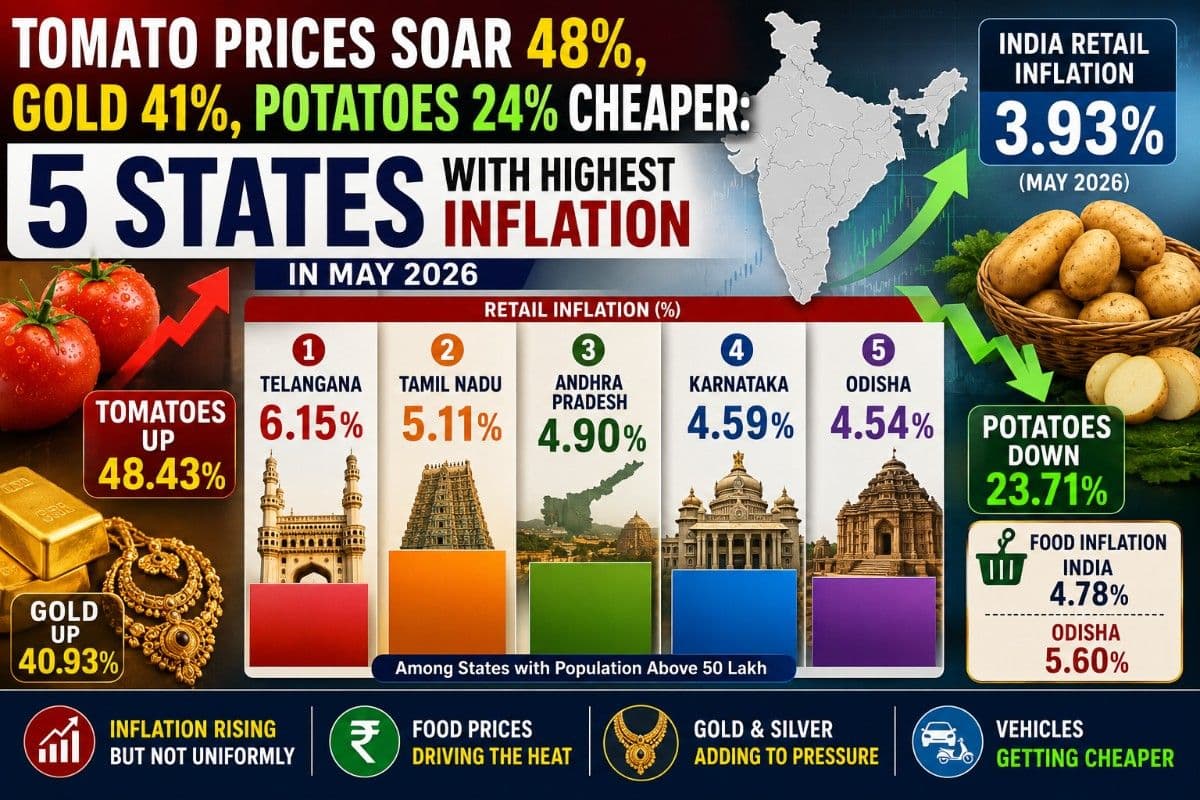
The latest Consumer Price Index (CPI) data released by the National Statistics Office (NSO) on Friday shows India's retail inflation rose to 3.93% in May 2026, up from 3.48% in April. However, Odisha's inflation stood significantly higher at 4.54%, Rural – 4.83%, urban – 3.74%, making it one of the five most inflation-hit major states in the country.
Only Telangana (6.15%), Tamil Nadu (5.11%), Andhra Pradesh (4.90%) and Karnataka (4.59%) recorded higher inflation than Odisha among states with populations above 50 lakh.
Even more worrying for households is the state's food inflation. Odisha recorded 5.60% food inflation, considerably above the national average of 4.78%, indicating that the pressure is being felt most acutely in kitchen budgets.

📱 Get Argus News App
✨For consumers in Odisha, where food inflation is already running above the national average, these increases are likely to be felt more intensely.
The data also indicates that Odisha households are facing a cost-of-living increase that is substantially higher than the national average.
Reason: At 4.54% inflation, the state's price rise is around 0.61 percentage points higher than India's 3.93%.
Why Is Inflation Rising Again?
The answer lies largely in vegetables and food items that households buy almost every day.
Nationally, tomato prices surged by 48.43% year-on-year in May, making it one of the biggest contributors to inflation. Ginger prices jumped 32.49%, while raisins became nearly 22% costlier.
The Unexpected Inflation Drivers: Gold and Silver
The CPI data reveals another surprising source of inflation pressure.
Silver jewellery prices witnessed an extraordinary 155.23% increase over the past year, while gold, diamond and platinum jewellery became 40.93% costlier.
This sharp rise pushed inflation in the "Personal Care and Miscellaneous" category to 18.46%, the highest among all expenditure groups tracked by the government.
For families planning weddings, festivals or investment purchases, the precious metals rally has significantly increased costs.
The Good News: Potatoes Are Getting Cheaper
Not every item is becoming expensive.
The biggest price relief came from potatoes, whose prices declined 23.71% compared to May last year. Peas became 11.47% cheaper, while cumin (jeera) prices fell 4.59%.
These declines have helped prevent food inflation from rising even further.
For many households, cheaper potato prices are providing a partial cushion against the surge in tomatoes and other vegetables.
Vehicle Buyers Have Reason to Cheer
Consumers planning major purchases are also seeing some relief.
Prices of motor cars and jeeps fell 7.19%, while motorcycles and scooters became 3.56% cheaper than a year ago.
The broader vehicle purchase category registered a decline of nearly 5%, suggesting subdued pricing pressure in the automobile sector.
Since food constitutes the largest share of expenditure for most households, especially in rural areas, elevated food inflation tends to hit family budgets harder than increases in discretionary spending.
What Awaits Consumers?
The next major factor to watch is the southwest monsoon.
A good monsoon and favourable crop conditions could improve vegetable supplies and help moderate food inflation in the coming months. However, any weather-related disruption may keep prices of vegetables and food items elevated.
Economists will also closely watch precious metal prices, which have become an unusually large contributor to inflation in recent months.
For Odisha consumers, the hope is that improved agricultural supplies during the monsoon season will ease food prices and narrow the state's inflation gap with the national average.
The Bottom Line
The latest inflation data tells two contrasting stories.
While potatoes, peas and vehicles are becoming cheaper, tomatoes, ginger, gold and silver continue to push up household expenses.
And for Odisha, the challenge is greater than for most of India. The state has emerged as one of the country's inflation hotspots, with both overall inflation and food inflation running above the national average.
For
consumers, the headline inflation figure of 3.93% may sound reassuring. But the
reality in Odisha's vegetable markets and household budgets suggests that the
cost-of-living squeeze remains very much alive.
Also Read: RBI Monetary Policy / India GDP Surges 7.7% in FY 26, RBI Holds Rates: What Does It Mean for Your EMI, FDs, Fuel Bill and Daily Expenses?| EXPLAINER
Related Topics
Explore more stories