



Special Report| Nuakhai Bhetghat: Dharmendra Pradhan Turns Festival Platforms Into a Wider Conversation on Western Odisha
Key Points
Dharmendra Pradhan used Nuakhai Bhetghat to emphasize collective social responsibility for providing nutritious food to underprivileged children.
The MP acted as a cultural ambassador, showcasing Western Odisha's art, cuisine, and Debrigarh Wildlife Sanctuary to national delegations.
Pradhan directly intervened to resolve delayed salary issues for Sambalpur municipal sanitation workers, blending festivity with practical welfare.
Bhubaneswar: Nuakhai may begin with Nabanna and end in Bhetghat, but for former Union Minister and Sambalpur MP Dharmendra Pradhan, the festival’s traditional platforms became an opportunity to speak about something much larger – the social responsibility, cultural confidence and global possibilities of Western Odisha.
On his four-day visit to Sambalpur, Pradhan participated in a series of Nuakhai Bhetghat programmes organised by voluntary and social organisations, moving across settings that brought together political leaders, community groups, intellectuals, journalists and guests from different parts of the country.
The engagements were not confined to the customary cultural celebrations.
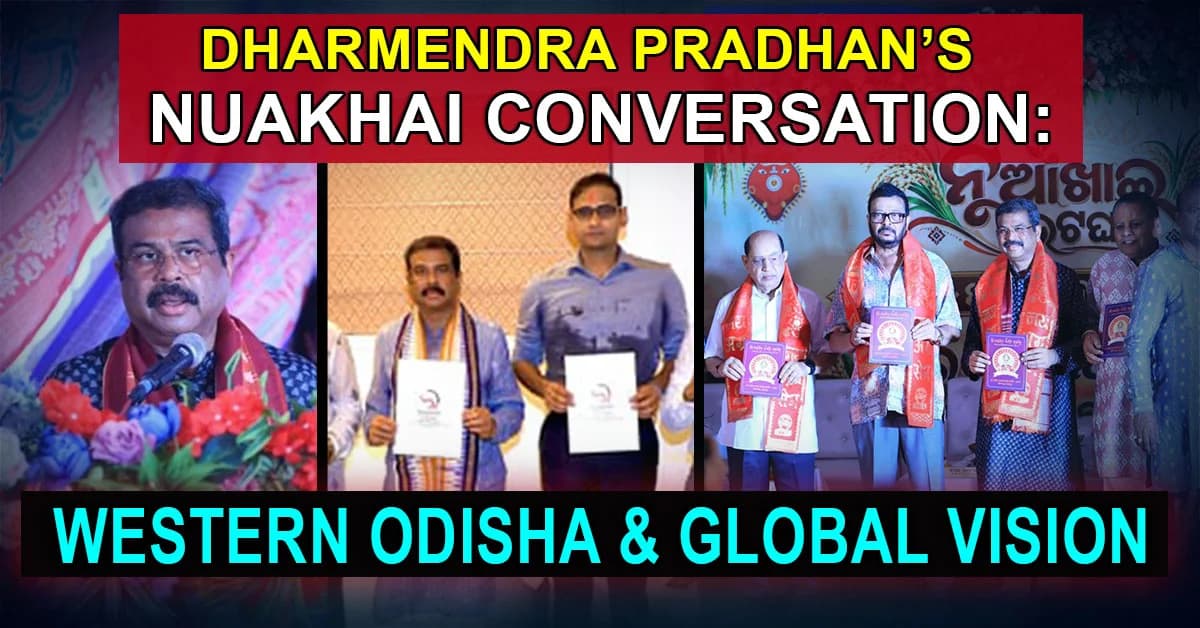
At a Nuakhai Bhetghat organised by the Marwari Yuva Manch, Pradhan used the occasion to underline the social meaning of a festival built around sharing and togetherness. He called for ensuring nutritious food for children from underprivileged families, stressing that feeding and nurturing children cannot be left to government schemes alone.

📱 Get Argus News App
✨“Providing nutritious food to underprivileged children is the responsibility of us all,” was the thrust of his message at the gathering.
The emphasis was significant because Nuakhai itself is rooted in the idea of sharing the first produce of the agricultural season with family and community. Pradhan sought to extend that traditional sentiment into a contemporary social responsibility – making the festival's spirit relevant beyond the dining table.
Minister Suresh Pujari, Sambalpur MLA Jayanarayan Mishra and senior politician and MLA Prasanna Acharya were among those who participated in the programme.
From Nabanna to Bhetghat
Pradhan's day began with the traditional rhythm of Nuakhai.
After extending his greetings on the occasion, he visited the residence of district president Ramchandra Meher, where family members welcomed him and he joined them for the Nuakhai meal prepared from Nabanna, the new harvest rice.
He subsequently visited the premises of Goddess Samaleswari, Sambalpur's presiding deity, and participated in the festival rituals and Nabanna prasad.
But the day's engagements then moved beyond the immediate political and familial circle.
At the Information Centre, Pradhan joined a special Nuakhai programme attended by delegations from different parts of the country, dignitaries, members of the Rangabati Forum, intellectuals and journalists.
Here, the MP effectively took on the role of a cultural ambassador for Western Odisha, using the Bhetghat platform to introduce visitors to the region's diverse cultural traditions, art, food and landscape.
Selling Western Odisha Without Selling It Short
The pitch went beyond Nuakhai as a festival.
Pradhan spoke about the region's culinary traditions and cultural richness while drawing attention to Western Odisha's scenic attractions. Among the places he highlighted was Debrigarh Wildlife Sanctuary, presenting its potential to find a larger place on the global tourism map.
The larger message was that Western Odisha's identity need not remain confined to its annual festivals or to the diaspora of people who return home for Nuakhai.
Its food, folk traditions, landscape and wildlife can together become part of a larger cultural and tourism narrative.
That made the Information Centre interaction different from a routine festival address. The guests who had arrived from different parts of the country were themselves part of the Bhetghat's message: Nuakhai could become a window through which people outside Western Odisha discover the region.
The Bhetghat That Became a Social Bridge
Pradhan's four-day Sambalpur visit also acquired a distinctly local dimension when he learnt about the difficulties being faced by sanitation workers of the Sambalpur Municipality over delayed salaries.
On learning that the workers had remained unpaid for a prolonged period, arrangements were made to address the issue, bringing relief to the employees during the festival.
It added another layer to the Bhetghat spirit.
For a festival whose core idea is community, celebration and sharing, the political engagement was not restricted to meeting prominent guests or participating in cultural programmes. It also brought attention to workers whose contribution to keeping the city functioning often remains invisible.
Nuakhai Beyond One Day
The significance of Pradhan's Bhetghat engagements, therefore, lies less in the number of programmes he attended and more in the different conversations he attached to them.
At one gathering, the focus was on nutritious food for disadvantaged children. At another, it was Western Odisha's art, cuisine and cultural heritage. In the wider interaction, Debrigarh's tourism potential became part of the conversation. And on the ground, the plight of municipal sanitation workers became an immediate concern.
Together, the engagements gave Nuakhai Bhetghat a broader meaning: celebrating the new harvest while asking what the community can share, preserve and build together.
For
Pradhan, the festival thus became both a celebration of where Western
Odisha comes from and a platform to talk about where the region could
go next.
Also Read: PM Modi Nuakhai Message: How ‘Spirit of Togetherness’ Reflects Western Odisha’s Cherished Bhetghat Traditions
Related Topics
Explore more stories