



Flood Fury / Odisha’s Floods: Time To Move From Relief Politics To Resilience
Key Points
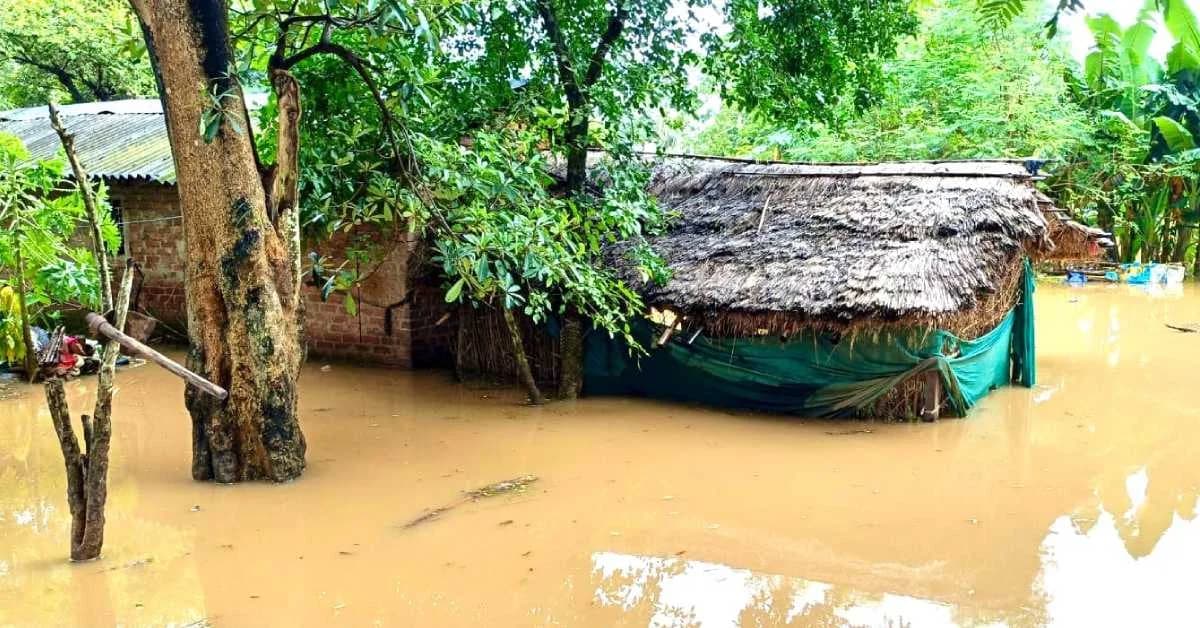
Bhubaneswar, Aug 19: Every monsoon, Odisha seems to enter a familiar cycle. Rivers like Mahanadi, Brahmani, Baitarani, Birupa, Subarnarekha, Jalaka, Kani, Chitrotpala, Luna, Paika and Karandia swell, villages go under water, roads are cut off, people are evacuated, relief camps are opened and political leaders visit affected areas. The state administration along with district units mobilises boats, food, medicines and rescue teams. Once the waters recede, damage is assessed and compensation is announced.
Then life returns to normal — until the next flood.
The recurring question is: how long can Odisha continue to manage floods primarily through relief and reconstruction?
The latest floods in all the major river systems have once again exposed the vulnerability of large parts of the state. The Baitarani, Brahmani and Mahanadi systems have repeatedly threatened low-lying and densely populated areas. For thousands of families, flooding is not an occasional disaster but a recurring disruption to homes, agriculture, livelihoods and education.

📱 Get Argus News App
✨Odisha deserves credit for developing one of the country's stronger disaster-response systems. Its experience with cyclones has created an effective culture of evacuation, early warning and administrative preparedness. This has saved countless lives.
But floods require a different approach.
Unlike cyclones, which usually come with a relatively clear warning window, floods can develop across several days and administrative boundaries. Rainfall upstream, river inflows, drainage congestion, siltation, erosion and embankment breaches can combine to create a crisis far from where the rain actually falls.
Therefore, flood management cannot remain synonymous with flood relief.
Odisha needs a long-term flood-resilience strategy.
Embankments will continue to have an important role, particularly in densely populated areas. But building higher and stronger embankments cannot be the sole answer. Rivers need room to absorb excess water. Wetlands, floodplains and natural drainage channels are part of the state's natural defence against flooding and must be protected.
The problem is equally serious in urban Odisha. Bhubaneswar, Cuttack and other growing towns increasingly face waterlogging after intense rainfall. When natural drainage channels are encroached upon and wetlands disappear under unplanned development, even a few hours of heavy rain can create urban flooding.
This is fundamentally a land-use issue, not merely a drainage issue.
The state must identify flood-prone areas and incorporate flood-risk mapping into future development. Repeatedly affected villages need more than relief packages. They require flood-resilient housing, elevated public infrastructure, dependable roads and bridges, safe drinking water and schools that can double as emergency shelters.
Technology can strengthen this effort. Satellite imagery, real-time river-level monitoring, rainfall forecasts, GIS-based flood maps and local knowledge should be integrated into a predictive flood-management system. The objective should be to identify not only where water is now, but where it is likely to move next.
Climate change makes this transition even more urgent. Increasingly intense rainfall over shorter periods can overwhelm drainage and river systems. Planning based solely on historical rainfall patterns may therefore prove inadequate.
Odisha needs a statewide flood-resilience mission involving Water Resources, Revenue, Panchayati Raj, Housing and Urban Development, Agriculture, Forest and Environment departments, along with local governments and communities.
Most importantly, the state must move beyond the annual practice of repairing what the previous flood destroyed.
Relief is essential. Rescue is essential. Compensation is
essential. But none of these can substitute for prevention and resilience.
Also Read: Odisha CM Announces Rs1,000 Cr Relief Package For Flood-Hit Areas
Odisha has shown the country how disaster preparedness can dramatically reduce deaths during cyclones. Its next challenge is equally important: to learn how to live safely with its rivers.
The goal cannot be to eliminate floods. The goal should be to ensure that when the rivers rise, people do not lose their homes, livelihoods, infrastructure and sense of security every year.
The next flood is inevitable. What must change is Odisha's preparedness for it.
Related Topics
Explore more stories