



SIR 2026 / Odisha's Electoral Roll Revision: Who Stands To Gain From The Deletion Of Over 2 Million Voters?
Key Points
Bhubaneswar, Jul 7: The publication of Odisha's draft electoral roll following the Special Intensive Revision (SIR) has triggered intense political debate ahead of the 2027 Panchayat elections and the 2029 Assembly elections. With over 2.01 million voters excluded from the draft list, the exercise has become more than an administrative update—it has emerged as a potential political battleground.
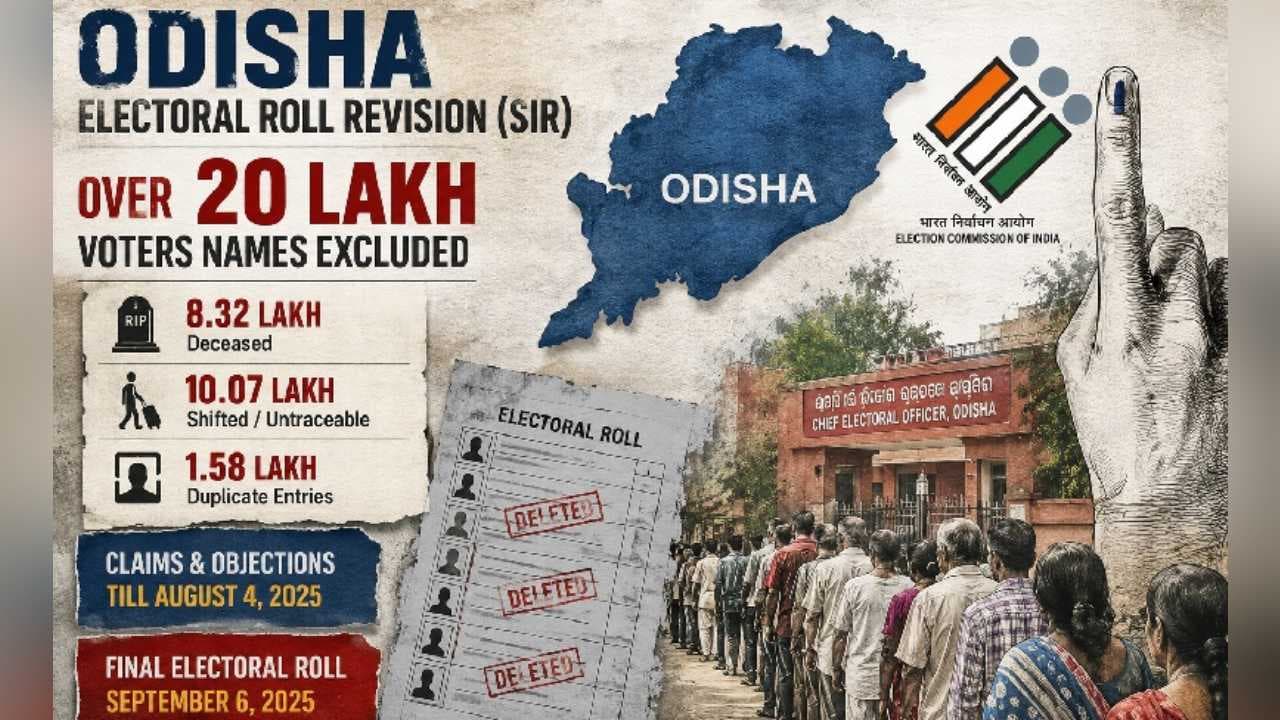
According to the Chief Electoral Officer (CEO), Odisha had 33.39 million registered voters, of whom 31.39 million (93.97 per cent) submitted their enumeration forms and have been included in the draft electoral roll. The remaining 2.01 million names were excluded primarily because they were identified as deceased (8.32 lakh), permanently shifted or untraceable (10.07 lakh), or duplicate registrations (1.58 lakh). While these figures suggest that the revision aims to improve the accuracy of the electoral roll, its political implications are likely to depend on who these excluded voters are and how successfully political parties mobilize them during the claims and objections period.
As the ruling party in Odisha after ending the Biju Janata Dal's 24-year rule in 2024, the Bharatiya Janata Party (BJP) is likely to present the revision as an exercise in electoral transparency and administrative efficiency. The removal of deceased, duplicate and shifted voters strengthens the party's narrative of cleaning up electoral rolls and ensuring fair elections.
However, the BJP also faces political risks. If a significant number of eligible voters claim that they have been wrongly excluded, the opposition could accuse the government of allowing genuine voters to be disenfranchised, even though the revision is conducted by the Election Commission. Public perception, rather than administrative procedure alone, may shape the political debate.

📱 Get Argus News App
✨The BJP's challenge, therefore, will be to convince voters that the process has been fair, transparent and free from political interference.
For the Biju Janata Dal (BJD), which is rebuilding after its defeat in 2024, the revision comes at a crucial time. The party has traditionally enjoyed strong support among rural voters, women, welfare beneficiaries and sections of economically weaker communities.
If a substantial number of its traditional supporters have been excluded—particularly migrant workers or voters temporarily living outside their constituencies—the party could face electoral setbacks unless those voters are restored during the claims process.
The SIR therefore becomes a test of the BJD's grassroots organisation. Booth-level workers and local leaders will need to identify excluded supporters and assist them in filing claims before the final electoral roll is published. How effectively the party performs this task may reveal the extent of its organisational recovery after losing power.
Congress: An Opportunity to Rebuild
The Congress remains the third political force in Odisha despite showing some improvement in the 2024 elections. The electoral roll revision presents the party with an opportunity to reconnect with voters at the grassroots.
If the Congress actively helps excluded voters—particularly among tribal, Dalit, migrant and economically weaker communities—it could strengthen its local presence and rebuild organisational networks that have weakened over the years.
However, this opportunity will materialise only if the party converts political criticism into sustained organisational work at the booth level. Without that, the issue may not translate into electoral gains.
The most important aspect of the current exercise is that the draft roll is not the final electoral roll. Voters whose names have been excluded have until August 4 to file claims and objections, while all such claims are scheduled to be disposed of before the final list is published on September 6.
This means that the political significance of the current
deletions cannot yet be fully assessed. Much will depend on how many excluded
voters are reinstated and which parties are most effective in helping their
supporters navigate the claims process.
Also Read: Over 45,000 BLOs Engaged To conduct SIR–2026 Across Odisha
At this stage, it would be premature to conclude that any political party has gained or lost because there is no public evidence identifying the political preferences of the excluded voters.
Instead, the SIR appears likely to become an organisational contest rather than merely an electoral exercise. The party that demonstrates the strongest booth-level network, identifies excluded supporters quickly, and ensures that eligible voters return to the electoral roll is likely to enjoy a political advantage in future elections.
In that sense, the draft electoral roll is not the end of the story—it marks the beginning of a new phase in Odisha's political mobilisation. The coming weeks will test not only the Election Commission's administrative capacity but also the organisational strength of the BJP, the BJD and the Congress as they prepare for the state's next electoral battles.
Related Topics
Explore more stories