



Odisha Budget / Odisha’s 2026‑27 Budget Is Ambitious, Forward‑looking, And Socially Conscious
·7 months ago·5 min read
Key Points
- The introduction of the Mukhyamantri Kanya Sumangal Yojana is arguably the most socially transformative measure in the Budget.
- The Budget’s second major pillar is Mission PoWaR (Power, Water, and Roads), a comprehensive rural infrastructure initiative.
- The Budget also places strong emphasis on rural employment and livelihood security.
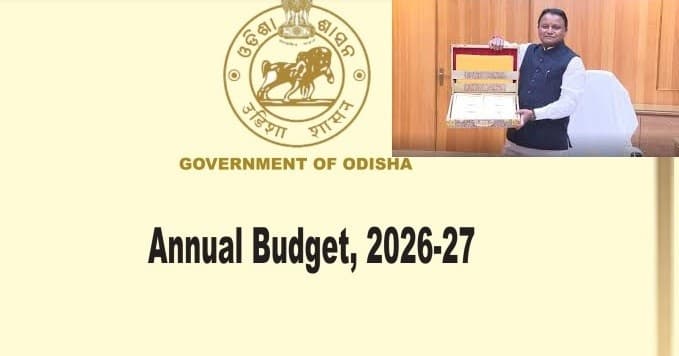
Bhubaneswar, Feb 22: The Odisha government’s 2026‑27 Budget, presented by Chief Minister Mohan Charan Majhi on February 20, represents a significant policy shift toward inclusive growth, with a dual emphasis on empowering women through education and accelerating rural infrastructure development. The Rs 3.10 lakh crore outlay, framed under the “Samrudh Odisha” vision, is ambitious both in scale and scope, signaling the administration’s intent to bridge structural gaps in education, connectivity, and livelihoods.
Empowering girls through higher education
The introduction of the Mukhyamantri Kanya Sumangal Yojana is arguably the most socially transformative measure in the Budget. By offering Rs 20,000 at the time of admission and Rs 1,00,001 upon successful completion of graduation, the scheme creates a two‑tier incentive structure: one that facilitates access to higher education and another that ensures persistence until completion. This design addresses two critical challenges faced by girls from economically weaker sections — financial barriers to entry and high dropout rates.
The upfront support reduces the immediate burden on families, while the completion incentive acts as a powerful motivator to sustain enrollment. Beyond individual empowerment, the scheme has broader socio‑economic implications. Educated women are more likely to participate in the workforce, delay early marriage, and contribute to community development. In the long run, this initiative could help reshape gender dynamics in Odisha’s rural and tribal regions, where educational attainment among women has historically lagged.
Empowering girls through higher education
The introduction of the Mukhyamantri Kanya Sumangal Yojana is arguably the most socially transformative measure in the Budget. By offering Rs 20,000 at the time of admission and Rs 1,00,001 upon successful completion of graduation, the scheme creates a two‑tier incentive structure: one that facilitates access to higher education and another that ensures persistence until completion. This design addresses two critical challenges faced by girls from economically weaker sections — financial barriers to entry and high dropout rates.
The upfront support reduces the immediate burden on families, while the completion incentive acts as a powerful motivator to sustain enrollment. Beyond individual empowerment, the scheme has broader socio‑economic implications. Educated women are more likely to participate in the workforce, delay early marriage, and contribute to community development. In the long run, this initiative could help reshape gender dynamics in Odisha’s rural and tribal regions, where educational attainment among women has historically lagged.

📱 Get Argus News App
✨📰 60 Word News🎬 Argus Podcast📺 Live TV and Breaking News🔔 Free Notification Alerts
Download Free:
Mission PoWaR: Infrastructure as a Catalyst
The Budget’s second major pillar is Mission PoWaR (Power, Water, and Roads), a comprehensive rural infrastructure initiative. With Rs 44,309 crore allocated to rural development — a 13 percent increase over the previous year — the government is signaling its commitment to universal access to basic amenities. Roads, electricity, and piped water are not merely physical assets; they are enablers of economic activity, health, and education.
Road Connectivity: Rs 3,491 crore for all‑weather roads and Rs 250 crore for bridges under Setu Bandhan will directly impact mobility, market access, and service delivery. The additional Rs 1,000 crore for road‑less habitations reflects a targeted approach to inclusivity, ensuring that even the most remote communities are connected.
Electrification: While Odisha has achieved village‑level electrification, the Rs 357 crore allocation under the Biju Gram Jyoti Yojana acknowledges the need for last‑mile connectivity. Reliable electricity is essential for education, healthcare, and small‑scale enterprises, making this investment critical for rural transformation.
Water Supply: The commitment to provide piped water to all rural households by March 2027 is a bold target. With Rs 7,000 crore under the Jal Jeevan Mission and Rs 1,495 crore under Basudha, the state is aligning with national priorities while addressing local needs. The Rs 800 crore support scheme for incomplete and water quality‑affected projects demonstrates pragmatic recognition of implementation challenges.
Livelihoods and Employment
The Budget’s second major pillar is Mission PoWaR (Power, Water, and Roads), a comprehensive rural infrastructure initiative. With Rs 44,309 crore allocated to rural development — a 13 percent increase over the previous year — the government is signaling its commitment to universal access to basic amenities. Roads, electricity, and piped water are not merely physical assets; they are enablers of economic activity, health, and education.
Road Connectivity: Rs 3,491 crore for all‑weather roads and Rs 250 crore for bridges under Setu Bandhan will directly impact mobility, market access, and service delivery. The additional Rs 1,000 crore for road‑less habitations reflects a targeted approach to inclusivity, ensuring that even the most remote communities are connected.
Electrification: While Odisha has achieved village‑level electrification, the Rs 357 crore allocation under the Biju Gram Jyoti Yojana acknowledges the need for last‑mile connectivity. Reliable electricity is essential for education, healthcare, and small‑scale enterprises, making this investment critical for rural transformation.
Water Supply: The commitment to provide piped water to all rural households by March 2027 is a bold target. With Rs 7,000 crore under the Jal Jeevan Mission and Rs 1,495 crore under Basudha, the state is aligning with national priorities while addressing local needs. The Rs 800 crore support scheme for incomplete and water quality‑affected projects demonstrates pragmatic recognition of implementation challenges.
Livelihoods and Employment
The Budget also places strong emphasis on rural employment and livelihood security. The revamped rural employment programme, with Rs 5,575 crore, promises up to 125 days of wage employment — an expansion beyond the national guarantee of 100 days. This is complemented by Rs 1,500 crore for ongoing MGNREGA works and Rs 400 crore targeted at migration‑prone districts. Together, these measures aim to reduce distress migration, a persistent issue in Odisha, by creating sustainable local opportunities.
The launch of DALKHAI, focused on sustainable livelihoods, and allocations for tribal welfare programmes such as the Chief Minister’s Tribal Livelihood Mission (Rs 150 crore) and Dharti Aaba Janjatiya Gram Utkarsh Abhiyan (Rs 326 crore), highlight the government’s intent to integrate marginalized communities into the growth process. These initiatives not only provide economic security but also preserve cultural identity and promote social equity.
Community Development and Social Infrastructure
Beyond core infrastructure, the Budget allocates Rs 200 crore under the “Vikshit Gaon Vikshit Odisha” initiative to build community assets, sports facilities, and educational infrastructure. Such investments contribute to holistic rural development, fostering social cohesion and enhancing quality of life. The Rs 366 crore earmarked for Swachh Bharat Mission (Grameen) further underscores the government’s focus on sanitation and public health.
Strategic Vision and Challenges
The overarching vision of “Samrudh Odisha” is clear: to create a foundation for inclusive and sustainable growth by addressing both human capital and physical infrastructure. The combination of education incentives for girls and rural infrastructure investments reflects a balanced approach — one that seeks to empower individuals while transforming communities.
However, challenges remain. Effective implementation will require robust monitoring mechanisms, especially for schemes like Mukhyamantri Kanya Sumangal Yojana, where leakages or delays could undermine impact. Similarly, achieving universal piped water supply by 2027 will demand coordination across departments, timely fund utilization, and community participation. Ensuring that employment programmes translate into durable assets rather than short‑term relief will also be critical.
Odisha’s 2026‑27 Budget is ambitious, forward‑looking, and socially conscious. By prioritizing girls’ education and rural infrastructure, it lays the groundwork for long‑term transformation. If implemented effectively, these measures could significantly reduce inequality, empower marginalized groups, and accelerate Odisha’s journey toward inclusive prosperity. The Budget thus represents not just an economic plan, but a social contract aimed at reshaping the state’s developmental trajectory.
The launch of DALKHAI, focused on sustainable livelihoods, and allocations for tribal welfare programmes such as the Chief Minister’s Tribal Livelihood Mission (Rs 150 crore) and Dharti Aaba Janjatiya Gram Utkarsh Abhiyan (Rs 326 crore), highlight the government’s intent to integrate marginalized communities into the growth process. These initiatives not only provide economic security but also preserve cultural identity and promote social equity.
Community Development and Social Infrastructure
Beyond core infrastructure, the Budget allocates Rs 200 crore under the “Vikshit Gaon Vikshit Odisha” initiative to build community assets, sports facilities, and educational infrastructure. Such investments contribute to holistic rural development, fostering social cohesion and enhancing quality of life. The Rs 366 crore earmarked for Swachh Bharat Mission (Grameen) further underscores the government’s focus on sanitation and public health.
Strategic Vision and Challenges
The overarching vision of “Samrudh Odisha” is clear: to create a foundation for inclusive and sustainable growth by addressing both human capital and physical infrastructure. The combination of education incentives for girls and rural infrastructure investments reflects a balanced approach — one that seeks to empower individuals while transforming communities.
However, challenges remain. Effective implementation will require robust monitoring mechanisms, especially for schemes like Mukhyamantri Kanya Sumangal Yojana, where leakages or delays could undermine impact. Similarly, achieving universal piped water supply by 2027 will demand coordination across departments, timely fund utilization, and community participation. Ensuring that employment programmes translate into durable assets rather than short‑term relief will also be critical.
Odisha’s 2026‑27 Budget is ambitious, forward‑looking, and socially conscious. By prioritizing girls’ education and rural infrastructure, it lays the groundwork for long‑term transformation. If implemented effectively, these measures could significantly reduce inequality, empower marginalized groups, and accelerate Odisha’s journey toward inclusive prosperity. The Budget thus represents not just an economic plan, but a social contract aimed at reshaping the state’s developmental trajectory.
Related Topics
Explore more stories