



Flood Control / Odisha Flood Situation Improves as Rainfall Eases, Relief Continues
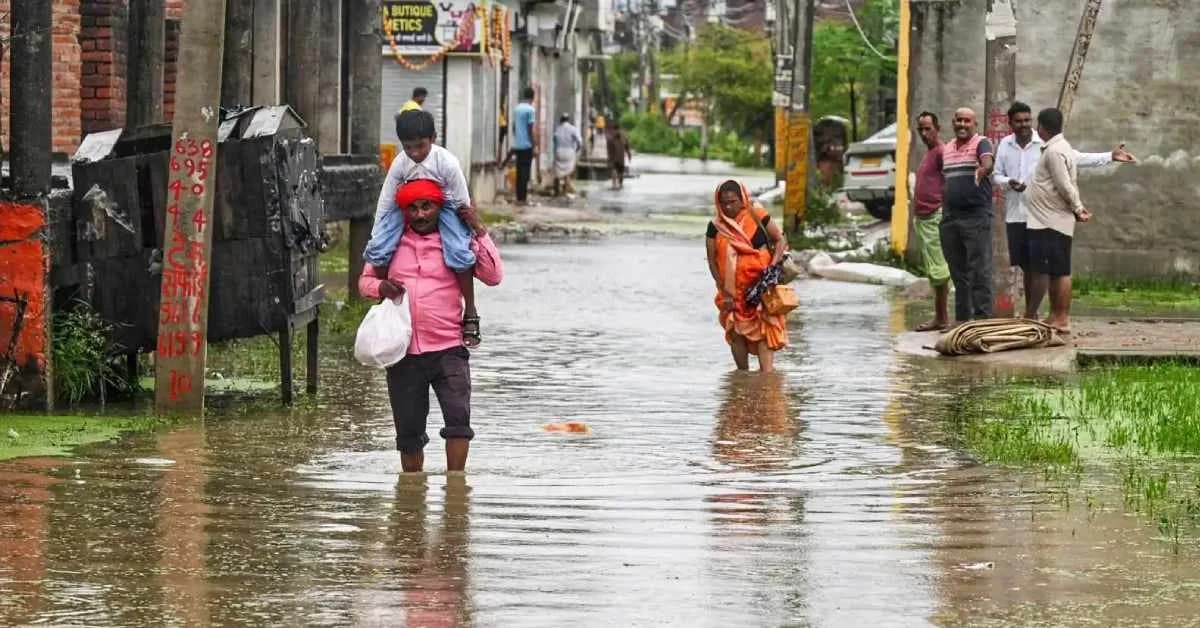
Key Points
With rainfall easing, Odisha’s flood situation is improving. Over 13,000 people have been evacuated, 49 relief camps are active, and 907 MT fodder supplied, as 43 teams continue rescue operations.
Bhubaneswar, Sep 29: With rainfall intensity easing across Odisha, the overall flood situation has begun to improve, though relief and emergency measures remain in full swing in affected districts.
The State Emergency Operation Centre (SEOC), in coordination with District Emergency Operation Centres (DEOCs), continues to monitor developments round-the-clock to ensure swift response to any emerging challenges.
According to the India Meteorological Department (IMD), light to moderate rain or thundershowers may occur at one or two places in most districts. As a precaution, a yellow warning has been issued for Baleshwar, Bhadrak, Jajpur, Kendrapada, Jagatsinghpur, Kataka, Kendujhar, and Mayurbhanj.
Also read: Pregnant Woman Carried on Cot for 6 km in Odisha's Kandhamal District

📱 Get Argus News App
✨Rainfall data shows that between September 1 and 29, Odisha recorded 316.2 mm of rainfall — 35.5% above the normal average of 233.4 mm for this period. In the last 24 hours, the state average was 1.1 mm, with Banki-Dampada block in Cuttack district recording the highest at 45 mm.
Relief and Emergency Response
To tackle the crisis, 43 teams — 36 ODRAF and 7 NDRF — have been deployed across vulnerable districts. Baleshwar has 14 teams, Bhadrak 9, Koraput 4, Jajpur 4, Jagatsinghpur 3, and Nabarangpur 2.
Reserve teams are stationed at Mundali and Kataka for rapid deployment. These trained units are engaged in rescue, evacuation, and emergency response operations.
So far, 13,221 people have been evacuated to safer locations, and 49 relief camps are operational across affected districts. District administrations are providing food, medical aid, and other essentials to displaced families.
In Baleshwar, six blocks, 72 gram panchayats, and 479 villages have been affected, impacting 48,560 people. Of these, 7,452 have been evacuated, and 15 relief camps are functional.
In Nabarangpur, one block, two gram panchayats, and two villages are affected, with 85 people receiving assistance in two relief camps.
In Jajpur, two blocks, 12 gram panchayats, and 36 villages are affected, impacting 5,059 people. As many as 3,876 have been evacuated, with 19 camps operational.
In Bhadrak, five blocks, 57 gram panchayats, and 172 villages are affected, impacting 18,691 people. Relief materials are being distributed to families.
In Sambalpur, one ULB and two wards are affected, with 215 people impacted. Ninety-three have been evacuated, and three camps are functional.
In Baragada, one block, two gram panchayats, and four villages are affected, impacting 978 people. All have been evacuated, with four camps operational.
In Kandhamal, one block, two gram panchayats, and two villages are affected, with eight people reported impacted.
In Jagatsinghpur, two blocks, six gram panchayats, and eight villages are affected, impacting 1,188 people. Of these, 822 have been evacuated, and six camps are functional.
Fodder Supply for Livestock
Recognizing the urgent need for cattle feed, the government has supplied 907.04 metric tonnes of fodder to affected districts. Balasore received 400 MT, Bhadrak 380.5 MT, Jajpur 67.74 MT, Mayurbhanj 40 MT, and Koraput 18.8 MT.
Preparedness and Monitoring
Authorities have emphasized that while rainfall has reduced, vigilance remains critical. District administrations have been instructed to monitor local flooding, waterlogging in low-lying areas, and disruptions such as underpass closures in urban regions. SEOC continues to coordinate with DEOCs on a 24x7 basis to ensure timely evacuation and relief.
No specific warning has been issued for fishermen at
present. The state government has reiterated that public safety remains the top
priority.