



NIT Rourkela researchers convert waste proteins into hydrogels for wound healing
Key Points
Rourkela, Nov 26: Researchers at the National Institute of Technology (NIT) Rourkela have developed a novel method to transform discarded proteins from pharmaceutical industries into hydrogels that show promise for wound healing, tissue regeneration and targeted drug delivery.
The research, carried out by Prof. Harekrushna Sahoo, Prof. Monalisa Mishra and Prof. Devendra Verma, addresses a longstanding challenge in the pharmaceutical sector, where proteins that lose their biological activity during manufacturing or storage are routinely discarded as waste.
Proteins are essential components of modern medicines and regenerative therapies. However, exposure to heat, chemicals or harsh processing conditions can cause them to lose their natural three-dimensional structure. Once unfolded, the proteins aggregate into clumps and become biologically inactive, limiting their therapeutic value.
The NIT Rourkela team devised a process to repurpose these inactive protein aggregates into functional microgels. The researchers heated BMP-2 proteins to around 85°C for ten minutes, causing them to unfold. Chemical reactions then induced aggregation, following which hydrogen peroxide and hyaluronic acid were added to convert the aggregates into a hydrogel.

📱 Get Argus News App
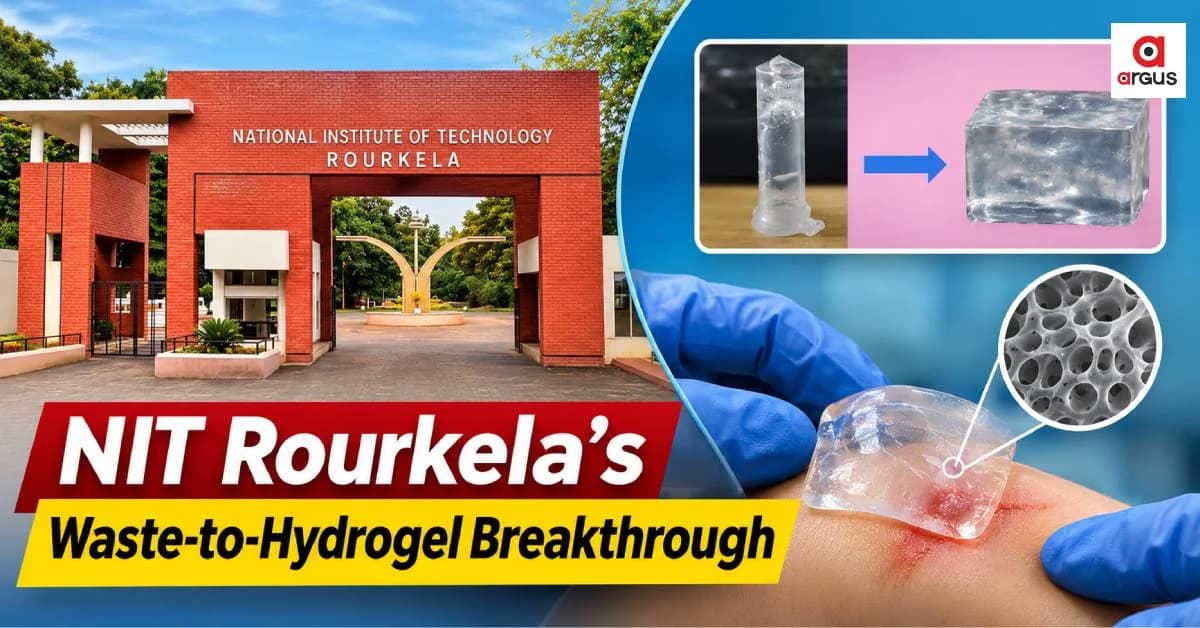
✨The resulting material contains microscopic pores that enable it to absorb water, retain drugs and interact with surrounding tissues. According to Prof. Sahoo of the Department of Chemistry, the combined action of BMP-2 protein and hyaluronic acid enhances the hydrogel’s structure, antioxidant properties and sustained drug-release capability.
The study has been published in the Royal Society of Chemistry’s Journal of Materials Chemistry B (2026). The researchers have also secured an Indian patent for the technology, with application number 202531107839, filed on November 6, 2025.
Laboratory tests showed that the hydrogel could effectively
carry and gradually release the antibiotic ampicillin, highlighting its
potential for targeted drug delivery. The material also supported the growth of
fibroblasts, cells that play a crucial role in wound repair.
Also Read: NIT Rourkela Scientists Develop Lead-Free Light-Emitting Material for Safer Technologies
Prof. Monalisa Mishra from the Department of Life Sciences said preliminary wound-healing studies using Drosophila melanogaster as an in vivo model yielded encouraging results. However, she noted that further studies in higher animal models would be needed to establish biocompatibility before clinical trials can commence.
Prof. Devendra Verma of the Department of Biotechnology and Medical Engineering said the early findings were promising and indicated the technology could progress towards clinical applications after successful testing in higher animal models.
The innovation is expected to contribute to the development of sustainable biomaterials by converting industrial protein waste into value-added healthcare products.
Related Topics
Explore more stories