



Naraj data centre: A political test of Mohan Majhi's governance skills
Key Points
Bhubaneswar, Nov 26: The controversy over the proposed Adani data centre at Naraj in Cuttack district has presented Chief Minister Mohan Charan Majhi with an important political and administrative challenge. What began as an ambitious investment proposal to position Odisha on India's emerging artificial intelligence and digital infrastructure map has now become a contentious issue involving water security, electricity consumption, employment generation and environmental sustainability.
The Opposition Biju Janata Dal (BJD) brought the issue into the spotlight in the Odisha Legislative Assembly on November 25, questioning the wisdom of setting up a 1-gigawatt data centre at a proposed investment of around Rs 1.04 lakh crore to Rs 1.4 lakh crore. Deputy Leader of Opposition Prasanna Acharya claimed that the facility could require around three crore litres of water daily and consume enormous quantities of electricity. Senior BJD leader Ranendra Pratap Swain demanded a white paper on the project's economic viability and environmental implications.
The questions raised by the Opposition cannot simply be dismissed as political criticism. Equally, the demand to scrap the project without a comprehensive assessment would be premature. The real challenge for the Majhi government is to establish that Odisha can welcome big-ticket investments without compromising the interests of its people.
There is little doubt that the data centre sector represents an important opportunity for Odisha. As artificial intelligence, cloud computing and digital services expand, the demand for large-scale computing infrastructure is expected to increase substantially. An investment of this magnitude could strengthen Odisha's position in the country's emerging technology ecosystem, attract ancillary businesses and create opportunities for skilled professionals.

📱 Get Argus News App
✨The project, proposed by High Density Data Centre Ltd, an Adani Group subsidiary, received approval from the State High-Level Clearance Authority chaired by the Chief Minister in September 2026. The proposed facility is expected to occupy around 250 acres at Naraj and generate approximately 1,000 jobs.
However, the scale of investment alone cannot become the principal yardstick for measuring its benefits. The government must explain the economic returns, employment opportunities, infrastructure costs and concessions, if any, being extended to the investor.
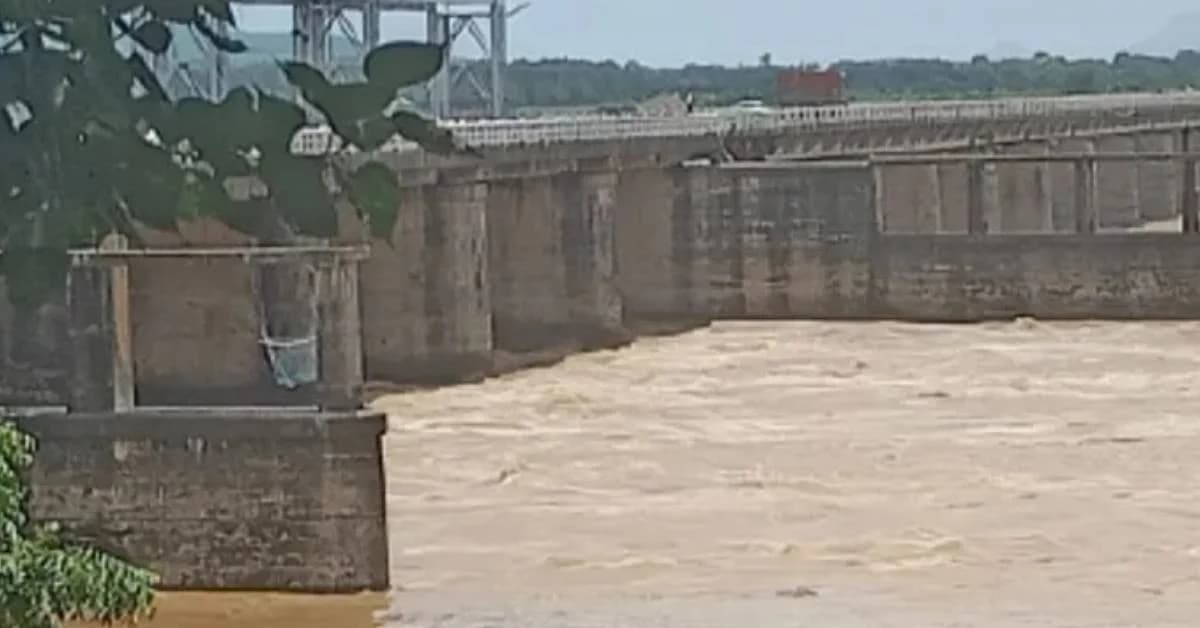
Water security is perhaps the most sensitive dimension of the controversy. Naraj's proximity to the Mahanadi river system makes the proposed industrial requirement a matter of public concern. The figure of 30 million litres daily, cited by the Opposition and former Union minister Srikant Jena, needs to be verified against the company's actual engineering and cooling requirements. The government should disclose the proposed source of water and whether the allocation will have any bearing on drinking-water supply, irrigation and downstream requirements.
The concerns are particularly relevant for Cuttack and Bhubaneswar, while Puri's longer-term water security also deserves consideration. But the government should avoid both extremes: dismissing the concerns as politically motivated or accepting unverified claims of an impending drinking-water crisis as established facts.
The first step towards resolving the controversy would be to publish a comprehensive water-balance report. It should specify the source of water, daily consumption, recycling capacity, wastewater discharge and arrangements during summer and drought conditions. The government should also examine the feasibility of using treated wastewater from sewage treatment plants instead of freshwater for cooling.
Electricity is another major consideration. A 1-GW facility operating at full capacity could require up to 2.4 crore units of electricity daily. The government must clarify the proposed power-supply arrangement, the role of renewable energy and the implications for the state's existing electricity commitments. A project intended to promote futuristic technology should also demonstrate its commitment to reducing its carbon footprint.
The employment question deserves equal attention. If the proposed investment generates around 1,000 jobs, as reported, the government should explain how local engineering graduates, IT professionals and technical institutions will benefit. A structured skill-development programme, local recruitment commitments and partnerships with Odisha's universities could ensure that the project creates opportunities beyond the construction phase.
Politically, the BJD's intervention places the government in a position where a defensive response could unnecessarily prolong the controversy. The BJP should not treat every question raised by the Opposition as an attempt to obstruct industrial development. Its MLA Santosh Khatua has argued that digital services require data centres. That proposition is valid, but it does not answer questions about the project's resource requirements and public benefits.
Majhi has an opportunity to address the issue through institutional transparency rather than political confrontation. He could announce an independent environmental and water-security assessment, followed by the publication of the relevant project documents and clearance conditions. A detailed discussion in the Assembly would also help distinguish technical facts from political allegations.
The government should additionally consider constituting a technical committee comprising water-resource specialists, environmental scientists, power-sector experts and representatives of relevant urban local bodies. Its findings should be placed in the public domain.
There is also a larger political dimension. The BJP government came to power promising accelerated development and employment after 24 years of BJD rule. Its credibility will depend not merely on attracting investments but on demonstrating that such investments translate into tangible benefits for ordinary people. Corporate investment and public interest need not be contradictory, provided the terms are transparent and safeguards are enforceable.
For Majhi, the Naraj controversy is therefore an opportunity to demonstrate that his government's industrial policy is guided by both economic ambition and public accountability.
Odisha needs investment in artificial intelligence, semiconductors and digital infrastructure. But the state also needs secure drinking water, affordable electricity, sustainable agriculture and employment for its young population. These priorities must advance together.
The government need not abandon the Naraj project merely because the Opposition has raised concerns. Nor should it proceed without satisfactorily answering them. A transparent assessment, credible safeguards and measurable public benefits could turn a political controversy into an opportunity to establish a more accountable model of industrial development.
Ultimately, the success of the Naraj project should not be judged by the amount of money invested, but by how much value it creates for Odisha without placing an unacceptable burden on its natural resources.
Related Topics
Explore more stories