



Nadda Launches SUMAN Roadmap 2030: 6 Odisha Districts Set for Special Maternal Healthcare Push Under 130-District National Mission | Special Story
Key Points
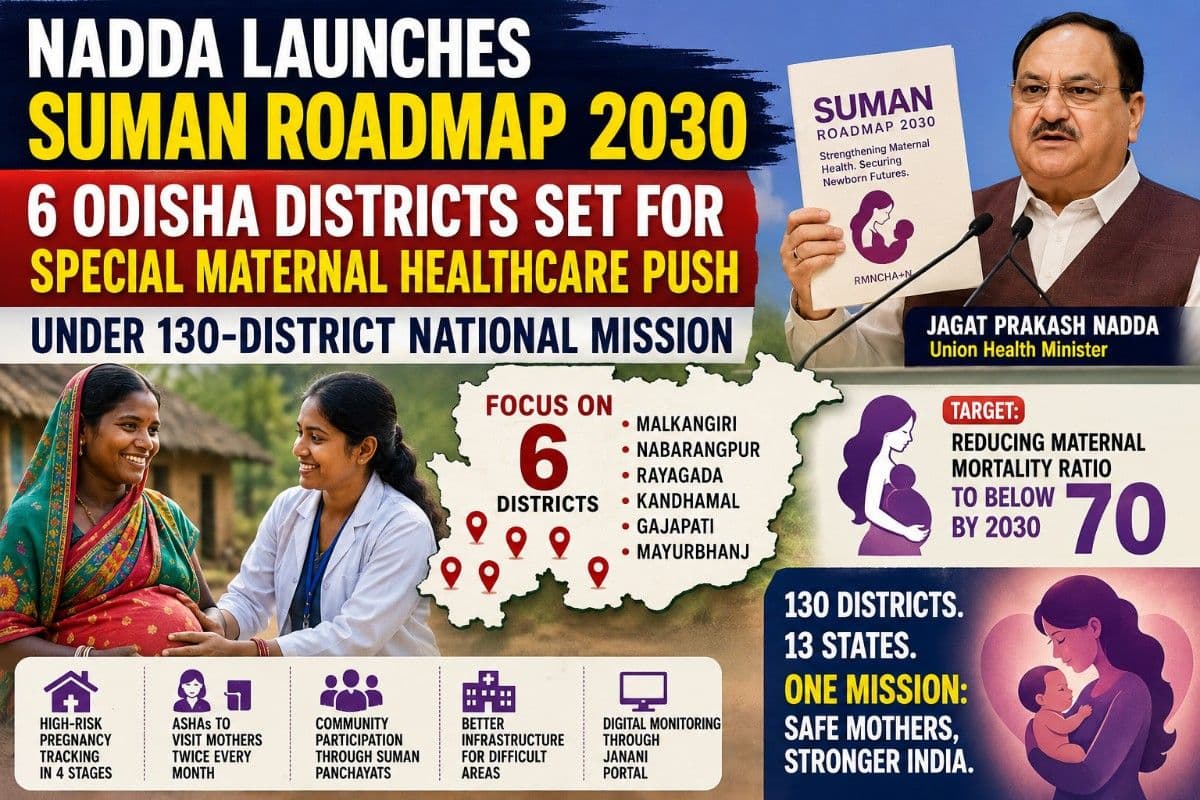
* High-risk pregnancies will be tracked across four stages, with ASHAs mandated to conduct bi-weekly home visits before delivery.
* The mission aims to reduce maternal mortality through targeted interventions in hard-to-reach tribal and high-burden regions.
Bhubaneswar: Even as Odisha has emerged as one of India's fastest-improving states in reducing maternal deaths, the state's most vulnerable tribal and hard-to-reach districts are poised to receive an unprecedented healthcare intervention under the Union government's newly launched SUMAN Roadmap 2030.
Launched on Monday by Union Health Minister Jagat Prakash Nadda during the 16th Conference of the Central Council of Health and Family Welfare (CCHFW), the roadmap marks a strategic shift from a one-size-fits-all maternal healthcare programme to a sharply targeted district-level intervention aimed at eliminating preventable maternal and newborn deaths by 2030.
Odisha is among the 13 high-focus states selected under the national strategy, which will concentrate intensive interventions across 130 high-burden districts identified through maternal mortality, neonatal mortality, tribal concentration and geographical accessibility indicators.
Odisha's Progress, But Persistent Challenges

📱 Get Argus News App
✨The timing of Odisha's inclusion is significant.
According to the latest Sample Registration System (SRS) Special Bulletin on Maternal Mortality, Odisha has recorded one of the sharpest declines in Maternal Mortality Ratio (MMR), bringing it down to 124 maternal deaths per one lakh live births, a reduction of 29 points from the previous estimate of 153.
Yet the figure remains substantially higher than the national average of 87, placing Odisha among the states requiring sustained intervention to meet the UN Sustainable Development Goal of reducing MMR below 70 by 2030.
The SUMAN Roadmap acknowledges precisely this reality – rewarding progress while directing additional resources to districts where geography, poverty and tribal habitation continue to delay safe motherhood outcomes.
Which Odisha Districts Are Likely to Be Prioritised?
While the Union Health Ministry has not yet officially released the district-wise list forming the 130-district mission, the operational criteria outlined in the roadmap clearly indicate which Odisha regions are expected to receive priority.
These include districts historically characterised by:
- high maternal mortality risk,
- difficult tribal terrain,
- Left Wing Extremism (LWE)-affected regions,
- poor antenatal coverage,
- challenging emergency referral transport.
And the likely focus districts include:
- Malkangiri
- Nabarangpur
- Rayagada
- Kandhamal
- Gajapati
- Mayurbhanj
Why These Districts Matter
The roadmap is not based merely on maternal death numbers.
Instead, the Ministry has identified districts where several risk indicators converge simultaneously.
Among the most significant concerns are low completion of four antenatal check-ups, high anaemia prevalence among pregnant women, gaps in institutional deliveries and inadequate postnatal care.
|
District |
4+ ANC Visits |
Institutional Deliveries |
Anaemia |
PNC within 48 hrs |
|
Malkangiri |
~43.5% |
~81.2% |
~68.4% |
~71.0% |
|
Nabarangpur |
~46.1% |
~84.7% |
~66.2% |
~73.4% |
|
Rayagada |
~49.0% |
~80.1% |
~67.9% |
~72.1% |
|
Kandhamal |
~51.4% |
~85.3% |
~62.1% |
~76.5% |
|
Gajapati |
~52.3% |
~82.6% |
~64.8% |
~74.2% |
|
Nuapada |
~54.6% |
~88.9% |
~65.0% |
~79.1% |
|
Mayurbhanj |
~58.2% |
~91.4% |
~71.2% |
~81.3% |
|
Odisha Average |
59.1% |
93.9% |
64.2% |
82.0% |
These figures demonstrate why the districts continue to require focused interventions despite statewide improvement.
From Generic Monitoring to High-Risk Pregnancy Tracking
Perhaps the biggest change under SUMAN Roadmap 2030 is the transition from routine pregnancy registration to mandatory tracking of high-risk pregnancies across four clinical stages:
- Antenatal Care
- Third Trimester Monitoring
- Intrapartum Care
- Postnatal Follow-up
Instead of treating all pregnancies similarly, frontline workers will identify mothers suffering from severe anaemia, hypertension, gestational diabetes and other complications much earlier.
For Odisha's tribal districts, where delayed diagnosis remains a major cause of maternal deaths, this represents a structural change in healthcare delivery.
ASHAs to Visit Mothers Twice Every Month Before Delivery
One of the roadmap's most notable provisions mandates bi-weekly home visits by ASHA workers during the eighth and ninth months of pregnancy.
These visits will focus on:
- monitoring iron-folic acid consumption,
- checking blood pressure,
- identifying danger signs,
- preparing families for institutional delivery,
- arranging emergency transport.
In scattered tribal hamlets across Malkangiri, Koraput, Rayagada and Kandhamal, such regular home-based monitoring could substantially reduce delays in recognising life-threatening complications.
Community Participation Becomes Central
The roadmap also seeks to strengthen local accountability through initiatives such as:
- SUMAN Panchayats,
- Mothers' Picnics,
- community-based maternal death reviews,
- village-level awareness campaigns.
The objective is to ensure maternal health becomes a community responsibility rather than remaining solely dependent on hospitals.
Why Anaemia Odisha's Biggest Concern
The roadmap places unusual emphasis on anaemia because it directly contributes to Odisha's leading cause of maternal mortality – Post-Partum Haemorrhage (PPH).
A severely anaemic mother has far less physiological reserve to survive blood loss during childbirth.
Districts such as Mayurbhanj, Malkangiri and Rayagada continue to report anaemia levels exceeding or approaching 70%, making intensive monitoring during late pregnancy critical.
This explains why the roadmap links ASHA home visits with strict monitoring of iron supplementation and nutritional counselling.
Better Infrastructure for Difficult Areas
Beyond community interventions, the roadmap promises to strengthen healthcare infrastructure through:
- Birth Waiting Homes,
- Maternal & Child Health Wings,
- Obstetric High Dependency Units,
- Intensive Care Units,
- strengthened referral transport,
- AI-enabled labour rooms,
- digital monitoring through the JANANI Portal.
For Odisha's remote tribal blocks where long travel distances often delay emergency obstetric care, these infrastructure upgrades could significantly improve survival outcomes.
The Road Ahead
For Odisha, the SUMAN Roadmap 2030 is less about correcting statewide performance and more about closing the persistent gap between its relatively better-performing coastal districts and its remote tribal interiors.
If
implemented effectively, the programme could transform maternal healthcare in
some of the state's most inaccessible regions by combining targeted
surveillance, stronger community participation, improved emergency referral
systems and technology-driven monitoring.
Also Read: Nadda Rolls Out NAS 2026: Odisha Holds Strong Edge But Remote Village GIS Mapping, Bike Ambulance Network Remain the Missing Link| Special Story
Related Topics
Explore more stories