



June Inflation Inches Up to 4.38%; Odisha Among Top Five Costliest States as Food Prices Continue to Pinch Consumers| Special Report
Key Points
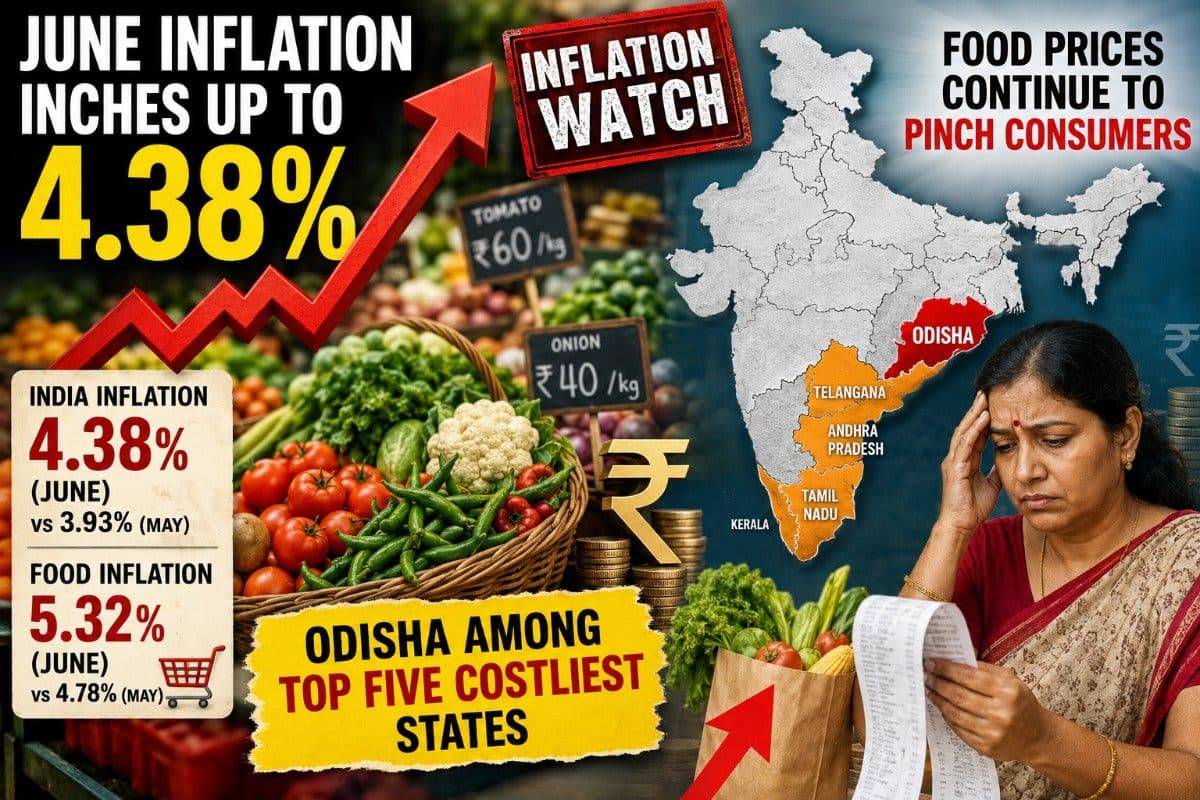
National retail inflation climbed to 4.38% in June, driven primarily by a sharp rise in food prices to 5.32%.
Odisha remains one of the top five states for retail inflation, with food costs in the state surging to an elevated 6.4%.
While gold prices moderated, silver stayed firm due to strong industrial demand across the electronics and renewable energy sectors.
Bhubaneswar: With June witnessing slower monsoon onset, the toll on the pockets of consumers has been clearly visible as the June inflation has inched up to 4.38% from 3.93% in May.
The Consumer Food Price Index (CFPI) has risen even faster, climbing to 5.32% from 4.78% in May, indicating that food continues to remain the biggest contributor to household expenses despite overall inflation remaining within the Reserve Bank of India's tolerance band.
For Odisha, however, the inflation story is far more pronounced than the national average.
The latest Consumer Price Index (CPI) released by the Ministry of Statistics and Programme Implementation (MoSPI) places Odisha among the five states recording the highest retail inflation in the country, underlining that consumers in the state continue to pay significantly more than the average Indian household.

📱 Get Argus News App
✨Although Odisha's headline inflation has eased marginally from the previous month, food inflation in the state remains elevated at around 6.4%, well above the national average of 5.32%, indicating that the relief has been limited for household kitchens.
Geographic Pattern In Inflation
The MoSPI data also reveals a distinct geographical pattern. Southern states such as Telangana, Andhra Pradesh and Tamil Nadu, along with Odisha, dominate the list of the highest inflation states, even as several northern states also witnessed price increases during June.
The absence of most northern states from the top inflation list suggests that regional factors, rather than a uniform nationwide price surge, are driving the divergence.
Economists attribute this variation to multiple structural reasons.
Consumption baskets differ from state to state, and southern states as well as Odisha assign relatively higher weights to food items that witnessed sharper price increases during June.
Besides, localized supply-chain disruptions, transportation costs and market integration issues tend to amplify price shocks in perishable commodities such as vegetables and spices.
States dependent on inter-state movement of high-weight food items also experience quicker transmission of price increases than surplus-producing regions.
In contrast, several northern states benefited from relatively smoother supply conditions and a more balanced food basket, preventing headline inflation from climbing to the levels witnessed in the southern region and Odisha.
What Became Costlier Across India
At the national level, food remained the principal driver of inflation during June.
Vegetables, especially Tomato, and spices like ginger registered another sharp increase after already recording a strong month-on-month jump in May. Pulses also continued their upward trajectory amid tight market conditions. These two categories contributed substantially to the rise in food inflation during the month.
Cereal inflation, however, remained relatively subdued, helping prevent a sharper rise in headline inflation. Government interventions through buffer stock releases and improved domestic availability continued to stabilise prices of rice and wheat.
Prices of vegetables like Potato, peas, and spices like Jeera softened. June marked good decline over the fall in May.
For consumers another good news has been consistent fall in prices of Jeeps/cars, motorcycles and scooters in June over the decline in May.
Among non-food items, the precious metals segment displayed contrasting trends. Gold prices moderated, reflecting a stronger US dollar and expectations that global interest rates may remain higher for longer, reducing the appeal of the yellow metal as a safe-haven investment.
Silver, on the other hand, remained firm. Unlike gold, silver derives substantial demand from industrial sectors including electronics, renewable energy and technology manufacturing. Continued expectations of healthy industrial demand helped cushion silver prices despite monetary tightening and currency pressures affecting precious metals globally.
Net Effect
The June inflation data indicates that the delayed onset of the southwest monsoon translated into higher food prices across the country, with Odisha and several southern states bearing a disproportionately larger burden than the national average. While headline inflation remains under control, elevated food inflation continues to strain household budgets.
There is cautious optimism for July. With the southwest monsoon now becoming widespread across most parts of the country, fresh arrivals of vegetables and other perishables are expected to improve market supplies, potentially easing food inflation in the coming weeks.
However, the outlook is not entirely risk-free. Excessive rainfall, flooding and waterlogging in several agricultural belts could disrupt harvesting, transportation and distribution networks, creating temporary supply shortages. Such disruptions may trigger fresh price spikes in vegetables and other perishables even as the broader inflation trend gradually moderates.
The July
inflation trajectory, therefore, will largely depend on whether the benefits of
widespread monsoon rains outweigh the risks of weather-induced supply
disruptions. For consumers in Odisha, where food inflation continues to remain
significantly above the national average, meaningful relief may take longer
unless supply conditions improve substantially.
Also Read: Tomato Prices Soar 48%, Gold 41%, Potatoes 24% Cheaper: Odisha Emerges as India's 5th Most Expensive State in May
Related Topics
Explore more stories