



BJD Faces Growing Desertions Amid Leadership Ambiguity and Ideological Drift
·4 months ago·4 min read
Key Points
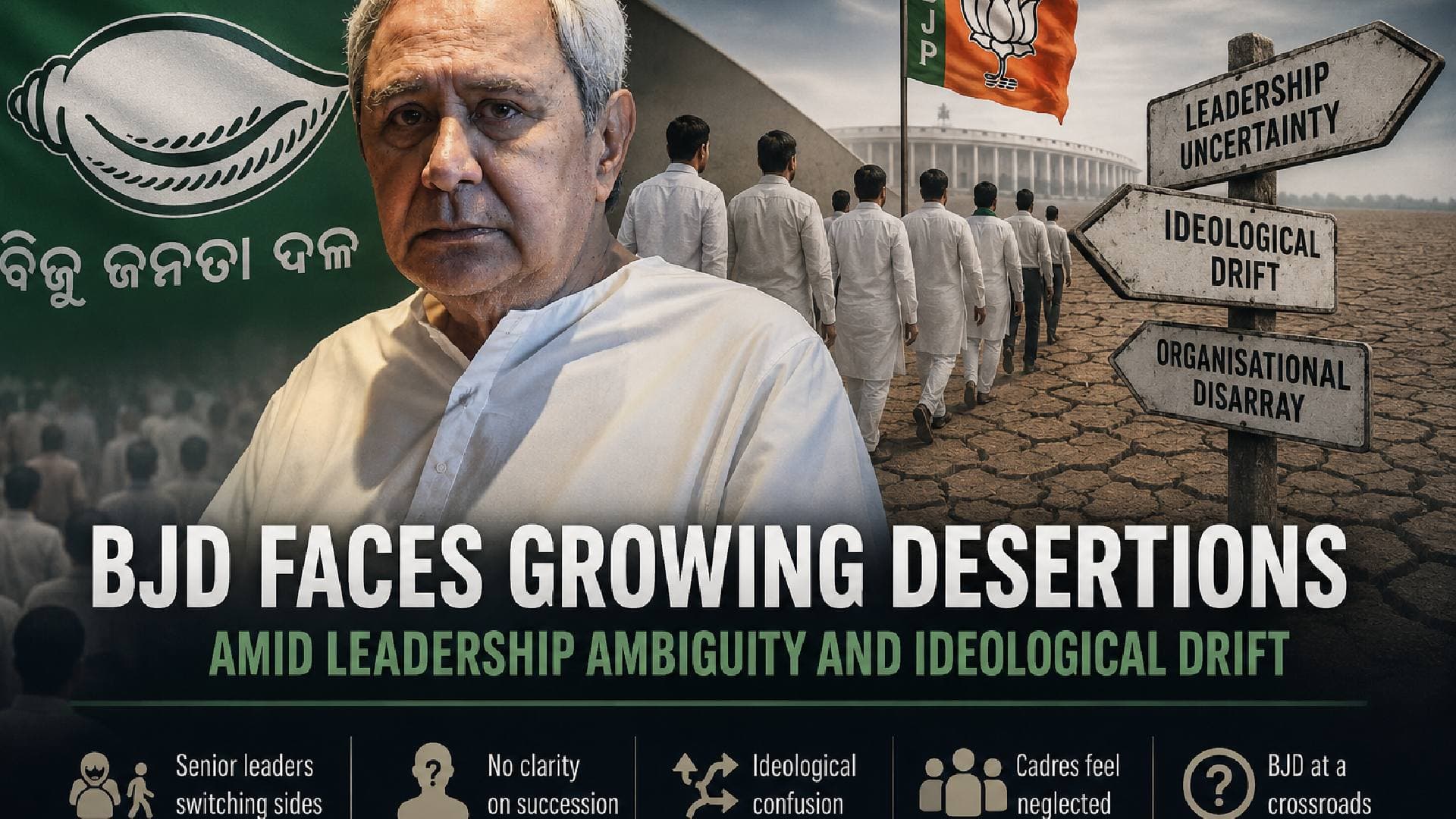
BJD is facing a deeper crisis after 2024 electoral defeat, struggling with leadership succession ambiguity, ideological clarity, and political direction.Growing defections to BJP reflect larger uncertainty within the party.
Bhubaneswar, May 26: The post-election phase of the Biju Janata Dal has exposed a deeper crisis within the party than merely an electoral setback. After losing power in the 2024 Odisha Assembly elections following nearly twenty-four years in government, the party appears to be struggling not only with organisational restructuring but also with questions related to leadership succession, ideological clarity and political direction.
Political observers believe that the growing tendency among senior leaders and Rajya Sabha members to leave the party and join the Bharatiya Janata Party is not an isolated phenomenon. Instead, it reflects a larger uncertainty prevailing within the BJD after its defeat.
For over two decades, the BJD’s strength revolved around the leadership and personal credibility of Naveen Patnaik. His clean image, welfare-centric governance model and centralised control over the party kept internal dissent largely under check. However, after the 2024 defeat, the absence of a clear roadmap for the party’s future has become increasingly visible.
One of the biggest concerns within the organisation is the lack of clarity over succession. While Naveen Patnaik continues to remain the undisputed face of the party, there is no publicly articulated plan regarding who will lead the organisation in the future or how the second and third line leadership will be empowered. Discussions around his advancing age and health have further intensified speculation within political circles.
Political observers believe that the growing tendency among senior leaders and Rajya Sabha members to leave the party and join the Bharatiya Janata Party is not an isolated phenomenon. Instead, it reflects a larger uncertainty prevailing within the BJD after its defeat.
For over two decades, the BJD’s strength revolved around the leadership and personal credibility of Naveen Patnaik. His clean image, welfare-centric governance model and centralised control over the party kept internal dissent largely under check. However, after the 2024 defeat, the absence of a clear roadmap for the party’s future has become increasingly visible.
One of the biggest concerns within the organisation is the lack of clarity over succession. While Naveen Patnaik continues to remain the undisputed face of the party, there is no publicly articulated plan regarding who will lead the organisation in the future or how the second and third line leadership will be empowered. Discussions around his advancing age and health have further intensified speculation within political circles.

📱 Get Argus News App
✨📰 60 Word News🎬 Argus Podcast📺 Live TV and Breaking News🔔 Free Notification Alerts
Download Free:
This uncertainty has created anxiety among many mid-level and senior leaders regarding their political future. In politics, organisational stability often depends on confidence in future leadership. When leaders are unsure about the direction of a party, many begin exploring alternatives that offer better political security and relevance.
Another factor contributing to the unease is the perceived ideological dilution within the BJD in recent years. Traditionally, the party positioned itself as a regional force committed to Odia identity, welfare politics and equidistance from national parties. However, critics argue that the BJD’s soft approach towards the BJP on several national issues created confusion among cadres and supporters regarding the party’s ideological positioning.
The growing influence of bureaucratic-style management in party affairs during the later years of the BJD government also alienated sections of grassroots leaders. Many leaders privately felt that political workers were increasingly sidelined while decision-making became highly centralised. The controversy surrounding the role of V. K. Pandian before the elections had already triggered internal discomfort among sections of the organisation.
Following the electoral defeat, the party was expected to undertake a comprehensive organisational overhaul by strengthening district-level structures, promoting younger leaders and reconnecting with grassroots workers. However, critics argue that such efforts have remained limited and slow.
The exits of leaders such as Mamata Mohanta, Sujit Kumar and Debashish Samantaray have therefore acquired symbolic significance. These departures indicate that dissatisfaction is not confined to isolated individuals but may reflect broader organisational unease.
Political analysts believe that the coming months will be crucial for the BJD. If the party succeeds in reorganising itself, empowering a new generation of leaders and presenting a clear political narrative, it may still retain its relevance as Odisha’s principal regional force. However, if uncertainty over leadership and organisational direction continues, the trend of defections could intensify further, weakening the party’s structure ahead of future elections.
Another factor contributing to the unease is the perceived ideological dilution within the BJD in recent years. Traditionally, the party positioned itself as a regional force committed to Odia identity, welfare politics and equidistance from national parties. However, critics argue that the BJD’s soft approach towards the BJP on several national issues created confusion among cadres and supporters regarding the party’s ideological positioning.
The growing influence of bureaucratic-style management in party affairs during the later years of the BJD government also alienated sections of grassroots leaders. Many leaders privately felt that political workers were increasingly sidelined while decision-making became highly centralised. The controversy surrounding the role of V. K. Pandian before the elections had already triggered internal discomfort among sections of the organisation.
Following the electoral defeat, the party was expected to undertake a comprehensive organisational overhaul by strengthening district-level structures, promoting younger leaders and reconnecting with grassroots workers. However, critics argue that such efforts have remained limited and slow.
The exits of leaders such as Mamata Mohanta, Sujit Kumar and Debashish Samantaray have therefore acquired symbolic significance. These departures indicate that dissatisfaction is not confined to isolated individuals but may reflect broader organisational unease.
Political analysts believe that the coming months will be crucial for the BJD. If the party succeeds in reorganising itself, empowering a new generation of leaders and presenting a clear political narrative, it may still retain its relevance as Odisha’s principal regional force. However, if uncertainty over leadership and organisational direction continues, the trend of defections could intensify further, weakening the party’s structure ahead of future elections.
For the first time in many years, the BJD is confronting a challenge that cannot be addressed solely through electoral strategy. It is now facing a larger existential question — whether it can successfully transition from a personality-driven movement into a structurally resilient political organisation capable of surviving beyond a single towering leader.
Related Topics
Explore more stories