



Odisha Politics / BJD At The Crossroads: Internal Dissent, Leadership Crisis, And The Struggle For Relevance
Key Points
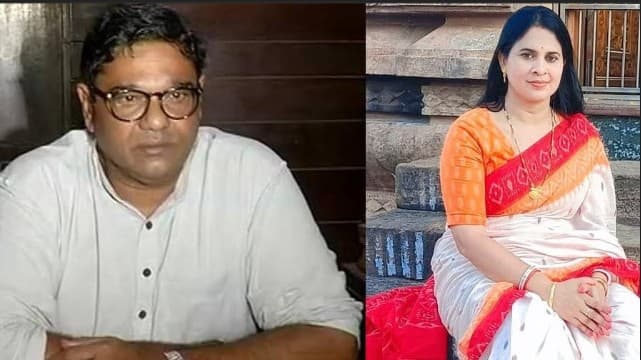
The recent support extended by Rajya Sabha MP Debashish Samantaray to party leader Shreemayee Mishra—who openly questioned the functioning of the party leadership—signals that what was once whispered discontent has now grown into open rebellion.
Bhubaneswar, Sept 20: The Biju Janata Dal (BJD), once the most formidable regional party in Odisha, is now staring at one of the most severe internal crises in its 28-year history. The recent support extended by Rajya Sabha MP Debashish Samantaray to party leader Shreemayee Mishra—who openly questioned the functioning of the party leadership—signals that what was once whispered discontent has now grown into open rebellion. This development comes barely 15 months after the party’s shock defeat in the 2024 Assembly elections, ending Naveen Patnaik’s uninterrupted 24-year reign.
At the heart of the crisis lies the perception that the party has transformed from being a collective movement under Patnaik’s stewardship into a tightly centralised entity revolving around V. Karthikeyan Pandian, the Tamil Nadu-born former bureaucrat-turned-politician. Mishra’s remarks, laced with allegorical references comparing Patnaik to Dhritarashtra and Pandian to a “fake monk,” directly questioned the legitimacy of decision-making within the party. Samantaray’s endorsement of these views has amplified the unease, emboldening other sidelined leaders to express discontent more openly.

📱 Get Argus News App
✨For much of its history, the BJD was held together by the towering figure of Naveen Patnaik, whose much advertised “clean” image, welfare-driven governance, and ability to win elections made him calmingly indispensable. The party had secured five consecutive terms in Odisha, often winning over 110 of the 147 Assembly seats. However, the 2024 elections marked a turning point: the BJD was reduced to just 51 seats, while the BJP swept to power with 78 seats, riding high on an aggressive campaign and consolidation of votes in western and coastal Odisha.
The electoral setback has triggered soul-searching within the BJD. Many senior leaders—including Prafulla Mallick, Amar Prasad Satpathy, and Dr Arun Kumar Sahoo—have alleged that the candidate selection process was opaque and dictated largely by Pandian, sidelining veteran politicians with grassroots appeal. According to Election Commission data, nearly 40 sitting MLAs were denied tickets in 2024, fueling resentment that now threatens to fragment the party’s core.
Also Read: MP Debashish Samantaray Sparks Row Over BJD’s Power Center
The key issue is not just discontent but a leadership vacuum. Naveen Patnaik, now 78, appears increasingly withdrawn from day-to-day politics. With his health frequently discussed in political circles and he making a to-and-fro journey to Mumbai and Delhi, Pandian has emerged as the de facto power centre. While his administrative acumen and ability to implement welfare schemes earned him recognition, his dominance has alienated many who see him as an outsider imposing authority in a regional party built on Odia identity.
Analysts argue that the party’s over-reliance on one unelected leader created fault lines that are now widening. The dissent is no longer confined to whispers in closed rooms but is spilling into the public domain—an unprecedented shift for a party long known for discipline and loyalty.
The BJD now faces a dual challenge: managing its internal crisis while remaining relevant in the Opposition. With the BJP consolidating its grip over Odisha and the Congress attempting a revival, the space for the BJD is shrinking. Unless the party leadership addresses grievances, decentralises decision-making, and rebuilds trust among sidelined leaders, it risks massive disintegration.
The irony is stark: a party that once prided itself on stability under Naveen Patnaik’s “quiet charisma” is today being torn apart by the very centralisation that sustained it for decades. Whether the BJD can reinvent itself in this new political reality—or fade into irrelevance like many other regional giants—is a question that will define Odisha’s political landscape in the years to come.
Related Topics
Explore more stories