



Wildlife Conservation / Bhitarkanika National Park Records 117 Estuarine Crocodile Nests
Key Points
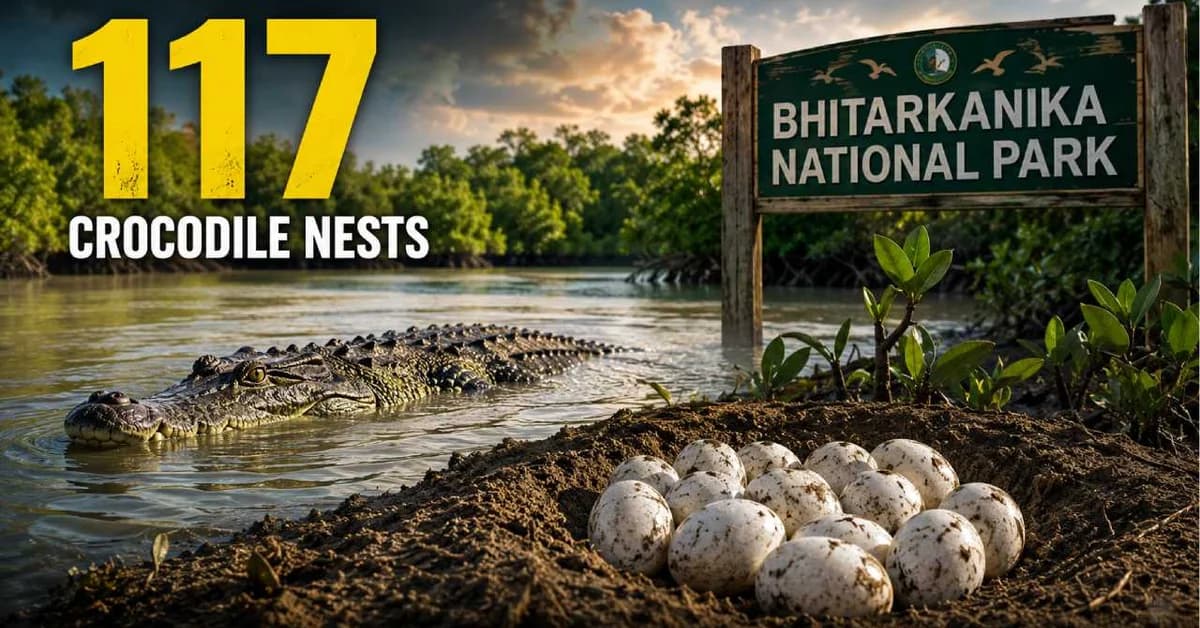
Kendrapara, Jul 27: The Bhitarkanika National Park in Odisha has reaffirmed its status as India’s prime estuarine crocodile habitat, recording 117 active nests in the latest annual survey, officials said on Monday.
Conducted by the Mangrove Forest Division (Wildlife), Rajnagar, between May 1 and June 30, the audit highlights a stable breeding population and sustained conservation success in the fragile mangrove ecosystem.
Officials said the Kanika Wildlife Range accounted for 106 nests, followed by 10 in Rajnagar and one in Mahakalpada. Bhitarkanika, a Ramsar-designated wetland, is home to 1,858 saltwater crocodiles, making it one of Asia’s richest estuarine crocodile habitats.
The nesting figures have remained consistently high over the past five years: 122 nests in 2022 and 2023, 114 in 2024, 116 in 2025, and 117 this year. Forest officials said the steady numbers reflect the success of habitat protection, scientific monitoring, and community-based conservation measures.

📱 Get Argus News App
✨“The annual nesting survey is a crucial component of our long-term monitoring programme. It helps us assess breeding status, identify critical nesting habitats, and strengthen protection measures,” a senior forest officer said.
Bhitarkanika’s mangrove ecosystem is unique not only for its
crocodile population but also for being the only site in India where all three
crocodilian species — saltwater crocodile, mugger, and gharial — coexist in the
wild. Conservationists note that the park’s success underscores the importance
of protecting wetlands, which serve as vital breeding grounds for endangered
species.
Also Read: Bhitarkanika National Park Records 1,858 Estuarine Crocodiles
Authorities, however, cautioned that challenges remain from climate change, rising sea levels, human–wildlife conflict, and tourism pressure. Officials stressed the need for stricter regulation to safeguard sensitive habitats.
With the nesting season drawing to a close, experts believe the latest figures will bolster ongoing conservation interventions and reinforce Bhitarkanika’s global ecological significance.
Related Topics
Explore more stories