



Breaking News: Odisha Parba 2026 in Delhi Sparks New Vision for Growth, Odia Language Preservation
Key Points
Odisha Parba 2026’s second day featured sessions on development and language. Experts stressed agriculture, MSMEs, renewable energy, and Odia preservation, while Kotpad handloom from Koraput drew strong interest in Delhi.
New Delhi, Mar 14: The second day of Odisha Parba 2026 in New Delhi witnessed vibrant discussions on the state’s development, cultural heritage, and language preservation.
At the Gyana Mandapa, two major sessions - Nabachetana Odisha and Bhasha Odisha - brought together eminent scholars, administrators, and technologists to deliberate on Odisha’s identity, heritage and future.
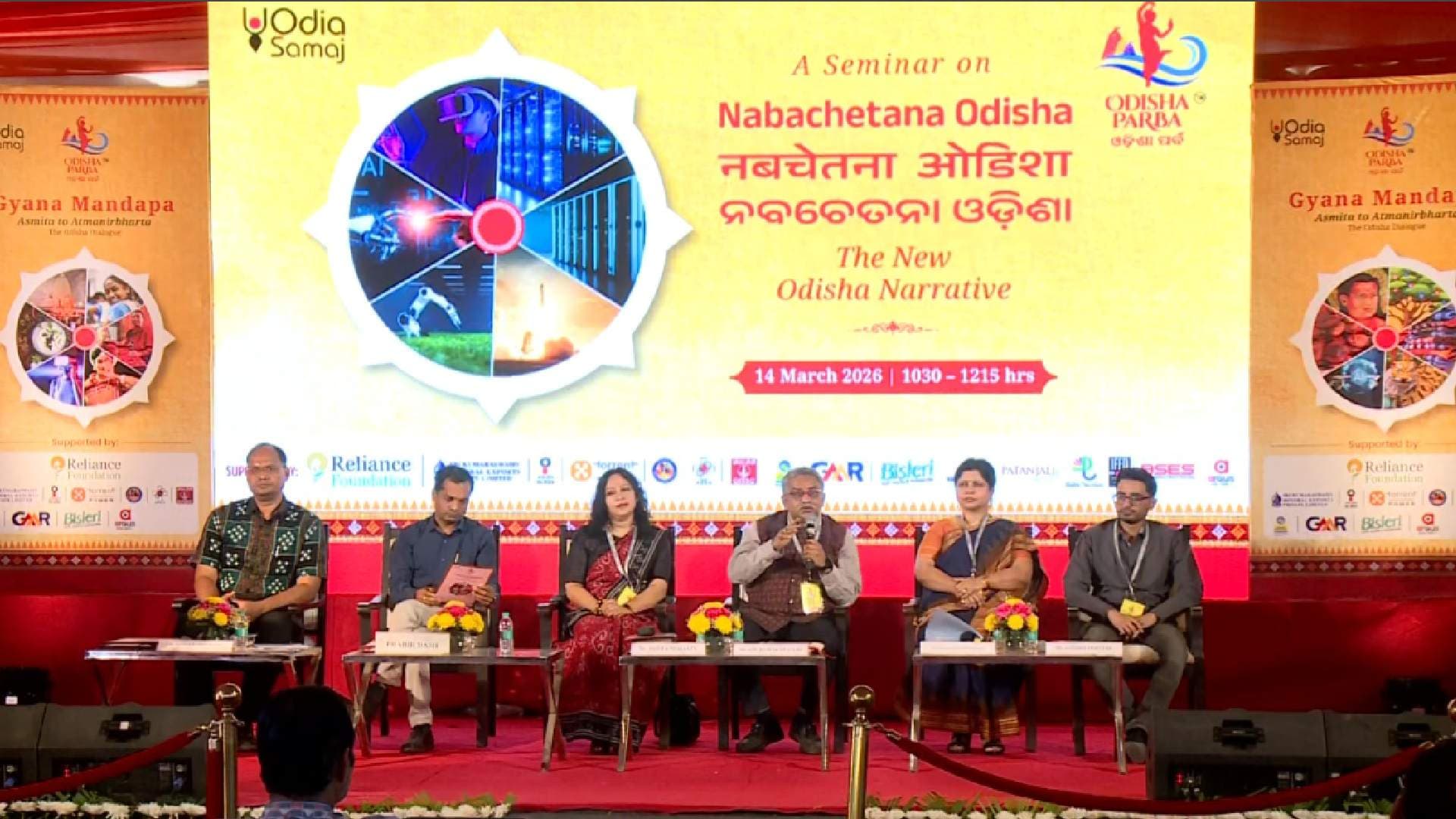
First Session: Nabachetana Odisha (The New Odisha Narrative)
CSIR-National Botanical Research Institute (Lucknow)
director Dr. Ajit Kumar Shasany chaired the session. He highlighted Odisha’s
immense potential, saying: “We have Konark, the Puri temple, architecture,
handicrafts, paintings, Sambalpuri sarees. Once, Odisha was the largest food
grain producing state. Wherever Odias go, they flourish.”
Also Read: Every Odia Must Rise for Viksit Odisha 2036 Vision, Says Pradhan
“Odisha has all kinds of climates, and 40% of its land is
agricultural. Yet, people are leaving farming for jobs. For growth, agriculture
is essential, because every industry depends on it. Odisha is rich in
agriculture and minerals. When we recognize opportunities, excellence will
follow. The Odia mindset is among the best in the world,” he pointed out.
Creative technologist Sandeep Tripathi urged youth to
harness technology for innovation: “We are a large group using technology. With
new ideas, we can become creators of technology. We have the skills to do
something new. Instead of endless scrolling on social media, we must create
fresh content that people will see and share.”
Economist and Ministry of Defence Joint Secretary Dr. Ishita Tripathy Ganguly highlighted Odisha’s MSME sector: “Odisha has 24 lakh registered MSMEs. Of these, 21% are in manufacturing and 32% in services. MSMEs face challenges in technology, finance, marketing, and skills. Awareness is crucial. Odisha can even develop clusters around products like Chenapoda. Tourism also holds immense potential.”
Her colleague, Defence Ministry Joint Secretary Meera Mohanty, stressed indigenous production: “We always prioritize swadeshi. Odisha is rich in minerals. With engineering focus, we can think of manufacturing aircraft frames and engines. With mines, refineries, manufacturing, skilled manpower, and logistics, Odisha can establish itself nationally in aerospace and defence.”
Scientist Prabir Dash spoke on renewable energy: “India is
advancing in renewable energy. Globally, India ranks third in solar and fourth
in wind power. Twenty-two per cent of India’s electricity comes from renewables.
Compared to coal, renewable energy is cheaper. Odisha has opportunities here.
Farmers can replace diesel pumps with solar pumps to reduce costs.”

📱 Get Argus News App
✨Economist and JNU Associate Professor Dr. Ramya Ranjan Patel reflected on Odisha’s transformation: “In the past decade, Odisha’s economy, culture, administration, and infrastructure have changed, enhancing Odia pride. Odias are hardworking, simple, truthful, and spiritual. Earlier, Odisha was known for poverty and distress, but today it has achieved excellence in many fields and brought glory.”
Second Session: Bhasha Odisha (Languages & Dialogues)
This session focused on Odia language preservation. Chaired
by NCERT professor Dr. Ramanujam Meghanathan, it featured writers Dr. Arabinda
Ray and Dr. Basanta Panda.
Dr. Ray passionately argued for strengthening Odia. “Every creature has a sound system - that is language. Odia is ancient, mentioned in our Puranas and Vedas. But usage is declining in villages and cities. In banks and colleges, we speak English instead of Odia. to unite Odias, a comprehensive dictionary is essential. If language dies, literature dies. Even in today’s AI world, Odia must find its place,” he explained.
The session emphasized that Odia literature, from Sarala
Das’ Mahabharata in the 15th century to Jagannath Das’ Bhagavata in the 16th
century, reflects a rich heritage that must be preserved.
Kotpad Handloom Hogs Limelight
Meanwhile, outside the discussion halls, Odisha’s textile
heritage captivated visitors. The traditional Kotpad handloom from Koraput,
woven with natural dyes and GI-tagged, drew strong interest. Delhiites flocked
to stalls, buying handwoven sarees and fabrics, celebrating Odisha’s artistry.
Related Topics
Explore more stories