



Iran US War / PM Modi Urges Return To Covid-Era Measures Amid Iran War, Global Supply Chain Crisis
·4 months ago·4 min read
Key Points
PM Modi urged citizens to adopt Covid-era practices like work-from-home, virtual meetings, reduced fuel consumption, and avoiding non-essential gold purchases amid global supply chain crisis due to Iran war.
New Delhi, May 11: More than 70 days into the ongoing US-Iran war, disruptions in global supply chains and rising crude oil prices have prompted Prime Minister Narendra Modi to urge Indians to adopt restraint-driven measures reminiscent of the Covid-19 period, including work-from-home practices, reduced fuel consumption and avoiding non-essential gold purchases.
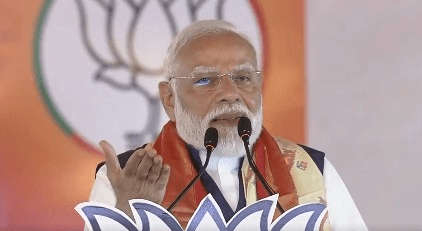
Addressing a public gathering in Hyderabad during the inauguration and foundation laying of projects worth around Rs 9,400 crore in Telangana on Sunday, PM Modi said patriotism during difficult times also means living responsibly and fulfilling duties towards the nation.
At the centre of the Prime Minister’s appeal was the need to reduce consumption of petrol and diesel amid mounting pressure on India’s import bill due to the prolonged conflict in West Asia.
“We do not have major oil reserves. We import petrol, diesel and gas in large quantities. Due to this war, the prices of petrol, diesel, gas and fertiliser have gone up significantly. The Indian government has been trying to insulate the people of the country from the impact of the war in the last two months,” Modi said.
Addressing a public gathering in Hyderabad during the inauguration and foundation laying of projects worth around Rs 9,400 crore in Telangana on Sunday, PM Modi said patriotism during difficult times also means living responsibly and fulfilling duties towards the nation.
At the centre of the Prime Minister’s appeal was the need to reduce consumption of petrol and diesel amid mounting pressure on India’s import bill due to the prolonged conflict in West Asia.
“We do not have major oil reserves. We import petrol, diesel and gas in large quantities. Due to this war, the prices of petrol, diesel, gas and fertiliser have gone up significantly. The Indian government has been trying to insulate the people of the country from the impact of the war in the last two months,” Modi said.

📱 Get Argus News App
✨📰 60 Word News🎬 Argus Podcast📺 Live TV and Breaking News🔔 Free Notification Alerts
Download Free:
“The government is taking the entire burden on its own, so that there is no pressure on the citizens. But when supply chains are under pressure, the challenges keep increasing, no matter how many steps we take,” he added.
The Prime Minister urged citizens to cut fuel usage by opting for metro services, public transport, car-pooling and railways for transportation of goods, while also encouraging the adoption of electric vehicles.
He also called for the revival of Covid-era practices such as remote work, virtual meetings and online conferences in the national interest.
“During the Corona period, we adopted work from home, online meetings, video conferences and developed many such systems. We had also become accustomed to them. Today, the need of the hour is that we restart those practices, as it would be in the national interest,” Modi said.
The Prime Minister further appealed to citizens to avoid overseas travel, destination weddings and foreign vacations for at least one year in order to conserve foreign exchange reserves.
“The growing culture of weddings abroad, travelling abroad and vacationing abroad is becoming prevalent among the middle class. We must decide that during this time of crisis, we should postpone travelling abroad for at least a year,” he stated.
The Prime Minister urged citizens to cut fuel usage by opting for metro services, public transport, car-pooling and railways for transportation of goods, while also encouraging the adoption of electric vehicles.
He also called for the revival of Covid-era practices such as remote work, virtual meetings and online conferences in the national interest.
“During the Corona period, we adopted work from home, online meetings, video conferences and developed many such systems. We had also become accustomed to them. Today, the need of the hour is that we restart those practices, as it would be in the national interest,” Modi said.
The Prime Minister further appealed to citizens to avoid overseas travel, destination weddings and foreign vacations for at least one year in order to conserve foreign exchange reserves.
“The growing culture of weddings abroad, travelling abroad and vacationing abroad is becoming prevalent among the middle class. We must decide that during this time of crisis, we should postpone travelling abroad for at least a year,” he stated.
In another key appeal, PM Modi urged people to refrain from buying gold unless absolutely necessary, especially for weddings, as India remains among the world’s largest importers of the precious metal.
He also advised households to reduce edible oil consumption, linking it both to economic savings and public health.
“If every household reduces the use of edible oil, it is a huge contribution to patriotism. This will improve the health of the national treasury and the health of every family member,” he said.
The Prime Minister additionally stressed the importance of supporting Made-in-India products and prioritising locally manufactured goods.
Why PM Modi Made The Appeal?
The Prime Minister’s remarks come against the backdrop of severe global economic strain triggered by the prolonged US-Iran conflict and the disruption of maritime trade routes, especially the Strait of Hormuz, through which nearly 20 per cent of the world’s oil supply passes.
The continued blockade and instability in the region have pushed global crude oil prices to around $126 per barrel, significantly increasing India’s import burden.
According to reports, state-run oil marketing companies such as Indian Oil Corporation, Bharat Petroleum Corporation Limited and Hindustan Petroleum Corporation Limited are facing massive under-recoveries while keeping petrol and diesel prices unchanged for consumers.
Reports suggest India is currently spending nearly Rs 1,600–1,700 crore daily to shield citizens from rising global fuel prices.
Also Read: PM Modi To Offer Prayers At Somnath Temple, Attend Amrut Mahotsav
More than 70 countries, including Thailand, Indonesia, Pakistan, Bangladesh and Philippines, have reportedly adopted energy-saving measures such as remote working to cope with the fuel crisis.
India’s foreign exchange reserves are also reportedly under pressure due to rising import costs and global uncertainty, with reports claiming that nearly Rs 1 lakh crore has been spent over the past 10 weeks.
The appeal to reduce gold purchases is also linked to India’s heavy gold imports, which account for substantial foreign exchange outflow annually.
He also advised households to reduce edible oil consumption, linking it both to economic savings and public health.
“If every household reduces the use of edible oil, it is a huge contribution to patriotism. This will improve the health of the national treasury and the health of every family member,” he said.
The Prime Minister additionally stressed the importance of supporting Made-in-India products and prioritising locally manufactured goods.
Why PM Modi Made The Appeal?
The Prime Minister’s remarks come against the backdrop of severe global economic strain triggered by the prolonged US-Iran conflict and the disruption of maritime trade routes, especially the Strait of Hormuz, through which nearly 20 per cent of the world’s oil supply passes.
The continued blockade and instability in the region have pushed global crude oil prices to around $126 per barrel, significantly increasing India’s import burden.
According to reports, state-run oil marketing companies such as Indian Oil Corporation, Bharat Petroleum Corporation Limited and Hindustan Petroleum Corporation Limited are facing massive under-recoveries while keeping petrol and diesel prices unchanged for consumers.
Reports suggest India is currently spending nearly Rs 1,600–1,700 crore daily to shield citizens from rising global fuel prices.
Also Read: PM Modi To Offer Prayers At Somnath Temple, Attend Amrut Mahotsav
More than 70 countries, including Thailand, Indonesia, Pakistan, Bangladesh and Philippines, have reportedly adopted energy-saving measures such as remote working to cope with the fuel crisis.
India’s foreign exchange reserves are also reportedly under pressure due to rising import costs and global uncertainty, with reports claiming that nearly Rs 1 lakh crore has been spent over the past 10 weeks.
The appeal to reduce gold purchases is also linked to India’s heavy gold imports, which account for substantial foreign exchange outflow annually.
Related Topics
Explore more stories