



Bhojshala Case / Muslim Side Moves Supreme Court Against MP High Court Verdict Recognising Bhojshala As Hindu Temple
·4 months ago·3 min read
Key Points
Muslim side has approached Supreme Court challenging MP High Court verdict that recognised Bhojshala complex in Dhar as Hindu temple and granted exclusive worship rights to Hindu community.
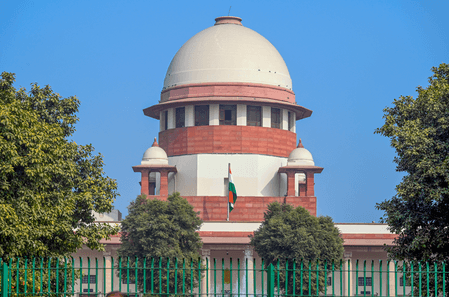
New Delhi, May 22: The Muslim side has approached the Supreme Court challenging a recent Madhya Pradesh High Court verdict that recognized the Bhojshala complex in Dhar as a Hindu temple and granted exclusive worship rights to the Hindu community.
As per details available on the apex court’s official website, a Special Leave Petition (SLP) has been filed by Quazi Moinuddin, and the matter has been registered as Diary No. 32281/2026.
The plea, filed at around 8.30 p.m. on Thursday, is currently listed as “pending”.
The SLP challenges the judgment delivered by the Indore Bench of the Madhya Pradesh High Court in the decades-old dispute concerning the Bhojshala and Kamal Maula Mosque complex situated in Dhar district.
As per details available on the apex court’s official website, a Special Leave Petition (SLP) has been filed by Quazi Moinuddin, and the matter has been registered as Diary No. 32281/2026.
The plea, filed at around 8.30 p.m. on Thursday, is currently listed as “pending”.
The SLP challenges the judgment delivered by the Indore Bench of the Madhya Pradesh High Court in the decades-old dispute concerning the Bhojshala and Kamal Maula Mosque complex situated in Dhar district.

📱 Get Argus News App
✨📰 60 Word News🎬 Argus Podcast📺 Live TV and Breaking News🔔 Free Notification Alerts
Download Free:
In a landmark ruling delivered on May 15, a Bench of Justices Vijay Kumar Shukla and Alok Awasthi had recognised the Bhojshala complex as a Hindu temple and the property of King Bhoj while holding that the Hindu community’s right to worship at the site “was never extinguished”.
The High Court observed that the continuity of Hindu worship at the site “has never been extinguished” and ruled that the previous arrangement allowing namaz at the premises was inconsistent with the established character of the monument.
Consequently, it had set aside the previous Archaeological Survey of India (ASI) order dated April 7, 2003, which permitted the Muslim community to offer namaz at the premises on Fridays.
“The right to worship shall remain with the Hindu side,” the Madhya Pradesh High Court had said, while also suggesting that the state government may consider allocating alternative land to the Muslim community for construction of a mosque.
The judgment relied extensively on the findings of the 2024 archaeological survey, which recorded the presence of Sanskrit inscriptions, a “Havan Kund”, and other structural features associated with Hindu temple architecture and centres of Vedic learning.
Following the ruling, the ASI issued fresh directions granting unrestricted access to the Hindu community for worship and learning activities linked to Goddess Saraswati at the Bhojshala complex, while retaining administrative control over the protected monument.
The High Court observed that the continuity of Hindu worship at the site “has never been extinguished” and ruled that the previous arrangement allowing namaz at the premises was inconsistent with the established character of the monument.
Consequently, it had set aside the previous Archaeological Survey of India (ASI) order dated April 7, 2003, which permitted the Muslim community to offer namaz at the premises on Fridays.
“The right to worship shall remain with the Hindu side,” the Madhya Pradesh High Court had said, while also suggesting that the state government may consider allocating alternative land to the Muslim community for construction of a mosque.
The judgment relied extensively on the findings of the 2024 archaeological survey, which recorded the presence of Sanskrit inscriptions, a “Havan Kund”, and other structural features associated with Hindu temple architecture and centres of Vedic learning.
Following the ruling, the ASI issued fresh directions granting unrestricted access to the Hindu community for worship and learning activities linked to Goddess Saraswati at the Bhojshala complex, while retaining administrative control over the protected monument.
The ASI order, issued on May 16, 2026, stated that the new framework supersedes all previous arrangements and will be implemented in coordination with local authorities to ensure preservation of the site.
The MP High Court had also directed the Union government to make efforts to repatriate the ancient idol of Goddess Saraswati, believed to be currently housed in the British Museum in London.
Meanwhile, the Hindu side has already lodged a caveat in the Supreme Court seeking to ensure that no ex parte order is passed on any challenge to the High Court verdict without hearing them.
Also Read: The Ayodhya Blueprint: How Science and Precedent Redefined the Bhojshala Verdict
The caveat petition was filed by Jitendra Singh Vishen through his counsel, requesting that the Hindu side be granted an opportunity to present its case before any interim relief is considered by the apex court.
The Bhojshala dispute has remained one of central India’s most sensitive religious and historical litigations, with the Hindu side claiming that the site was originally established by King Bhoj in 1034 AD as a temple dedicated to Goddess Saraswati and a centre for Sanskrit learning, while the Muslim side has maintained that the Kamal Maula Mosque has existed at the site for centuries and that the legal status of the site had already been settled through earlier administrative arrangements.
(IANS)
The MP High Court had also directed the Union government to make efforts to repatriate the ancient idol of Goddess Saraswati, believed to be currently housed in the British Museum in London.
Meanwhile, the Hindu side has already lodged a caveat in the Supreme Court seeking to ensure that no ex parte order is passed on any challenge to the High Court verdict without hearing them.
Also Read: The Ayodhya Blueprint: How Science and Precedent Redefined the Bhojshala Verdict
The caveat petition was filed by Jitendra Singh Vishen through his counsel, requesting that the Hindu side be granted an opportunity to present its case before any interim relief is considered by the apex court.
The Bhojshala dispute has remained one of central India’s most sensitive religious and historical litigations, with the Hindu side claiming that the site was originally established by King Bhoj in 1034 AD as a temple dedicated to Goddess Saraswati and a centre for Sanskrit learning, while the Muslim side has maintained that the Kamal Maula Mosque has existed at the site for centuries and that the legal status of the site had already been settled through earlier administrative arrangements.
(IANS)
Related Topics
Explore more stories