



Space Technology / ISRO set to launch NVS-03 navigation satellite to strengthen NavIC network
Key Points
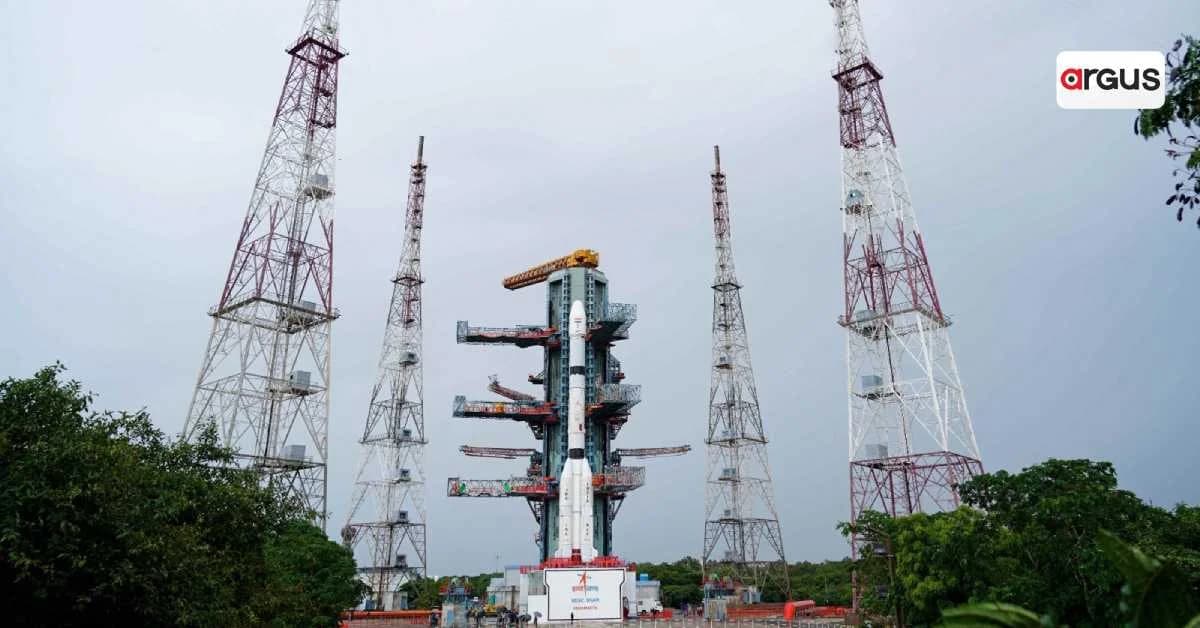
Sriharikota, Oct 30: The Indian Space Research Organisation (ISRO) is set to launch the NVS-03 navigation satellite aboard the GSLV-F18 rocket at 11:51 p.m. IST on Friday from the Satish Dhawan Space Centre in Sriharikota, marking another important step in strengthening India's indigenous satellite navigation capabilities.
The mission is aimed at enhancing the Navigation with Indian Constellation (NavIC) system, India's regional satellite-based navigation network that provides positioning, navigation and timing services across the country and surrounding regions.
Next-Generation NavIC Satellite
NVS-03 is the third satellite in the second-generation NavIC series and the twelfth satellite in the broader Indian Regional Navigation Satellite System (IRNSS). The spacecraft has been designed to improve the reliability, continuity and accuracy of navigation services for both civilian and strategic users.

📱 Get Argus News App
✨One of the major technological highlights of the satellite is its indigenous atomic clock, a critical component for delivering precise location and timing information. The satellite also carries enhanced navigation payloads, including the L1 signal, which is expected to improve compatibility with a wider range of navigation devices.
NavIC serves as India's independent alternative to global navigation systems such as the United States' GPS. The system supports applications ranging from road transportation, maritime navigation and disaster management to emergency response services and strategic operations.
Strategic Significance
The development of an indigenous navigation network has long been viewed as strategically important for India. The need for self-reliance in navigation technologies gained prominence after limitations experienced during the 1999 Kargil conflict underscored the risks of depending on foreign systems.
The GSLV-F18 mission will place NVS-03 into a Geosynchronous
Transfer Orbit, after which the satellite will perform a series of orbital
manoeuvres before reaching its designated operational position.
Also Read: NIT Rourkela Scientists Develop Lead-Free Light-Emitting Material for Safer Technologies
The launch also comes as ISRO works to further strengthen the NavIC constellation following technical challenges encountered by the NVS-02 satellite launched in January 2025. Additional satellites, including NVS-04 and NVS-05, are planned to enhance the resilience and continuity of the network.
A successful launch and deployment of NVS-03 would represent another milestone in India's pursuit of technological self-reliance and its efforts to build a robust navigation infrastructure for future civilian, commercial and strategic needs.
Related Topics
Explore more stories