



Celestial Event / First Solar Eclipse Of 2026 On Feb 17: Know The Timing
·7 months ago·2 min read
Key Points
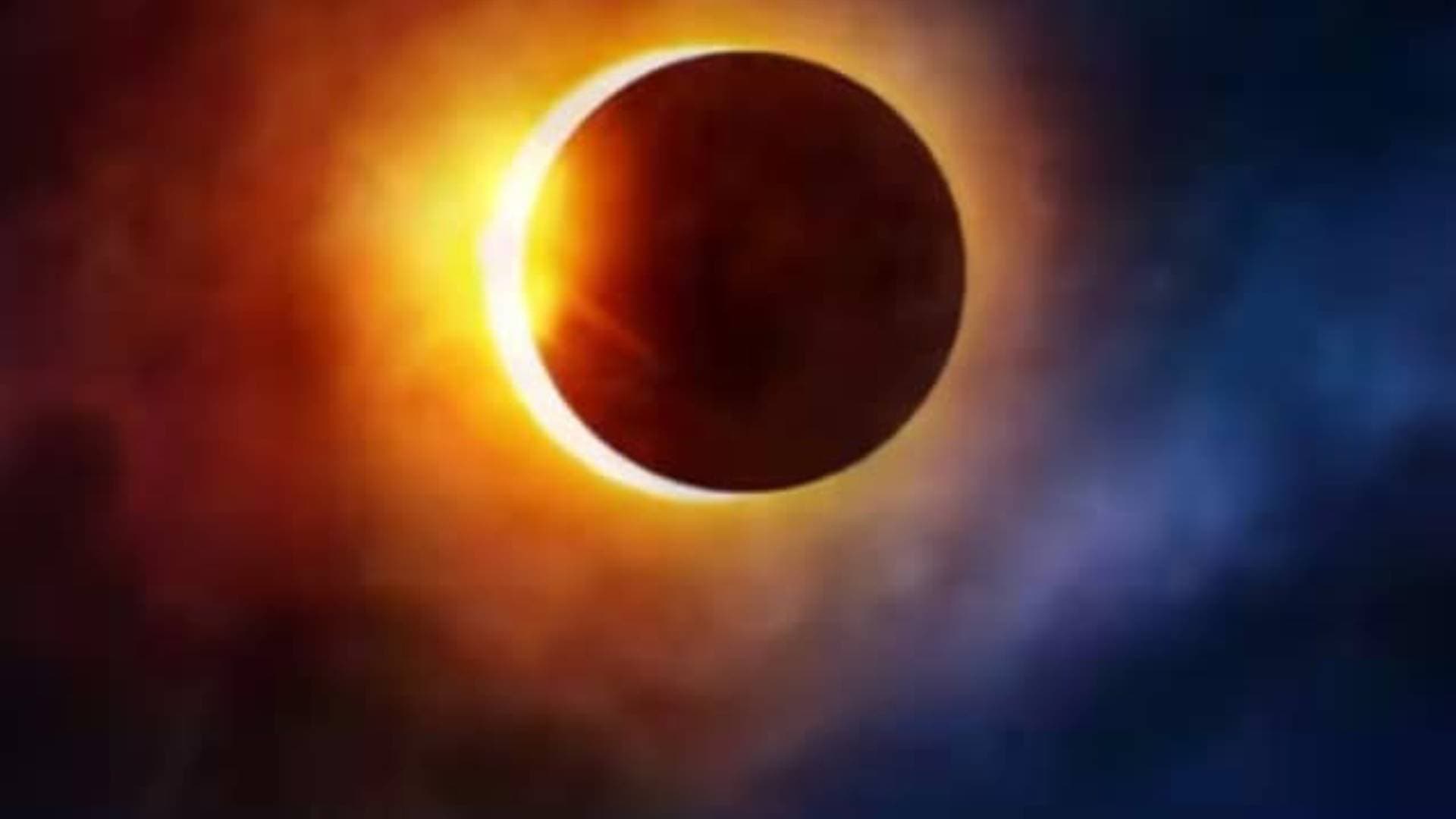
- The first solar eclipse of 2026 will occur on Tuesday, February 17. It will be an annular solar eclipse, also known as the “Ring of Fire,” where the Moon covers the Sun’s center, leaving a glowing rim around the edges.
- The eclipse will last up to 2 minutes and 20 seconds, obscuring nearly 96% of the Sun’s center.
- Best visibility will be over Antarctica, with partial phases seen in Southern Argentina, Chile, South Africa, and nearby oceans. It will not be visible in India.
New Delhi, Feb 17: People across the world will witness the first solar eclipse of 2026 which is on Tuesday, February 17. This celestial event is popularly known as the “Ring of Fire,” where the Moon covers the center of the Sun, leaving a bright rim of light visible around its edges.
As per the astronomers, the eclipse will last for up to 2 minutes and 20 seconds, with nearly 96 percent of the Sun’s center obscured.
The phenomenon will be most prominently visible over Antarctica, while partial phases can be observed in parts of Southern Argentina, Chile, South Africa, and nearby oceans. However, the eclipse will not be visible for the citizens of India.
Ahead of this, scientists and skywatchers are excited as annular eclipses are less common compared to partial ones.
As per the astronomers, the eclipse will last for up to 2 minutes and 20 seconds, with nearly 96 percent of the Sun’s center obscured.
The phenomenon will be most prominently visible over Antarctica, while partial phases can be observed in parts of Southern Argentina, Chile, South Africa, and nearby oceans. However, the eclipse will not be visible for the citizens of India.
Ahead of this, scientists and skywatchers are excited as annular eclipses are less common compared to partial ones.

📱 Get Argus News App
✨📰 60 Word News🎬 Argus Podcast📺 Live TV and Breaking News🔔 Free Notification Alerts
Download Free:
Also read: India Aims To Achieve ‘AI For All’ Via 7-Sutra Roadmap
People viewing the eclipse directly must use certified solar eclipse glasses to protect their eyes.
Date And Time
As per some reports, the eclipse will begin at 07:01 UTC on February 17. It will be formed for up to 2 minutes and 20 seconds, while the Moon is expected to eclipse 96% of the Sun's centre
People viewing the eclipse directly must use certified solar eclipse glasses to protect their eyes.
Date And Time
As per some reports, the eclipse will begin at 07:01 UTC on February 17. It will be formed for up to 2 minutes and 20 seconds, while the Moon is expected to eclipse 96% of the Sun's centre
Related Topics
Explore more stories