



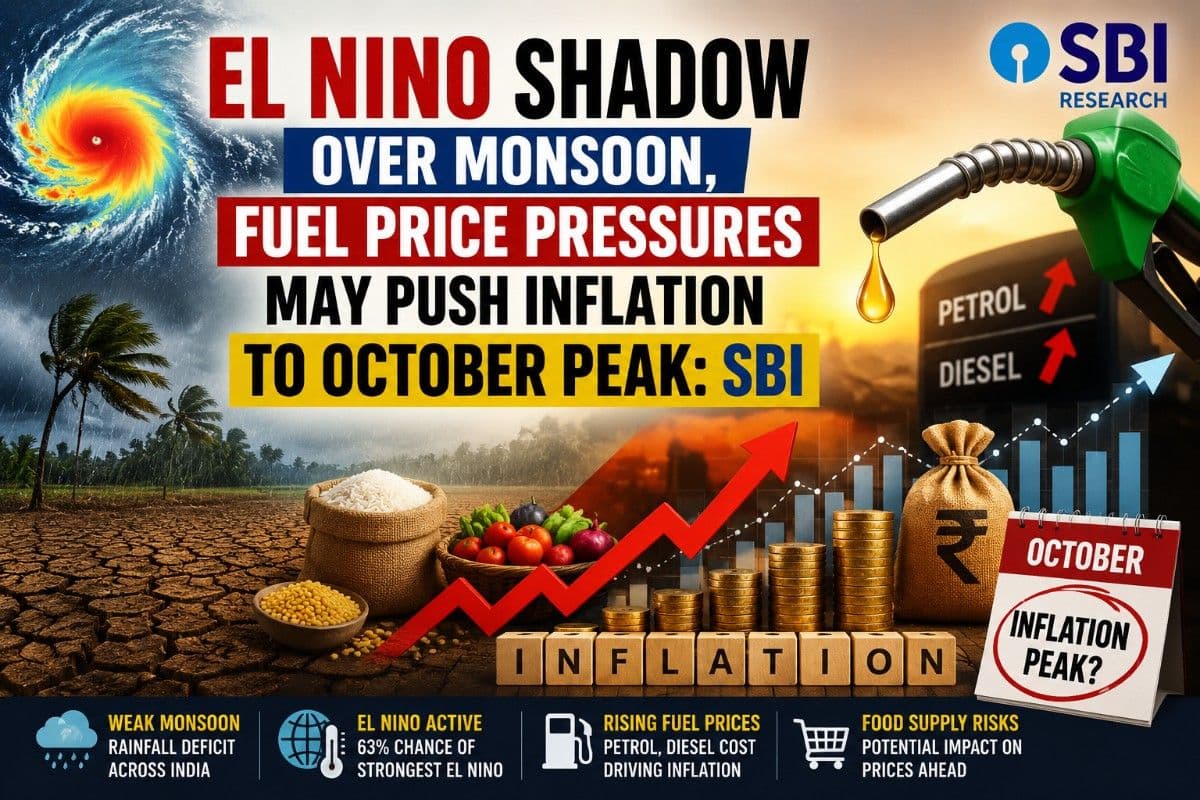
El Nino Shadow Over Monsoon, Fuel Price Pressures May Push Inflation to October Peak: SBI
Key Points
* Deficient monsoon rainfall, fuel price increases and rising imported inflation are emerging as key inflation risks.
* SBI does not foresee a repo rate hike in August, saying inflation remains manageable for now.
Bhubaneswar: With rainfall remaining significantly below normal midway through June and concerns growing over the progress of the southwest monsoon following El Nino becoming active over pacific, SBI Research has projected that retail inflation could peak around October, even as current price pressures remain within the Reserve Bank of India's comfort zone.
According
to the latest Ecowrap report by SBI Research, headline consumer inflation rose
to 3.93 per cent in May from 3.48 per cent in April. While still below the
RBI's medium-term target of 4 per cent, the increase was driven by higher fuel
costs, supply-side disruptions and rising imported inflation.
SBI Lens on Monsoon
The inflation outlook comes at a time when the monsoon has shown signs of weakness across large parts of the country. Data from the India Meteorological Department (IMD) show that cumulative rainfall since June 1 remains substantially below normal, with particularly large deficits reported in eastern, northern and central India.
Even Kerala, where the southwest monsoon made almost normal onset this season, has recorded 13 percent less rainfall so far. While monsoon activity has strengthened over parts of peninsular India in recent days, rainfall across the southern region remains below the seasonal average.

📱 Get Argus News App
✨SBI Research cautioned that a prolonged rainfall deficit could delay the sowing of major kharif crops such as rice, pulses, cotton and soybeans, potentially creating food supply pressures later in the year. Such pressures typically affect consumer prices with a lag, making the second half of the year particularly important for the inflation outlook.
What the Report Further Says
Apart from monsoon-related risks, the report pointed to rising imported inflation, exchange-rate movements, global energy prices and geopolitical uncertainties as factors that could influence price trends in the coming months.
The bank's economists also noted that transport inflation surged in May following increases in petrol and diesel prices, while shortages of LPG contributed to higher inflation in restaurants and accommodation services. Imported inflation, meanwhile, climbed sharply, suggesting growing transmission of global price pressures into the domestic economy.
Although SBI Research expects inflation to peak around October, the report does not provide a detailed month-wise forecast explaining the timing of the projected peak. However, economists generally associate delayed monsoon effects, fuel-price pass-through and festive-season demand with a build-up in inflationary pressures during September and October.
Despite
these risks, SBI Research said it does not currently expect the RBI to raise
the repo rate in August, indicating that inflation remains broadly manageable
for now.
Also Read: Tomato Prices Soar 48%, Gold 41%, Potatoes 24% Cheaper: Odisha Emerges as India's 5th Most Expensive State in May
Related Topics
Explore more stories