



Indian Economy / Economic Survey Raises India's Potential Growth Estimate to 7% for 2025-26
·8 months ago·2 min read
Key Points
- India's Economic Survey 2025-26 estimates the country's potential growth rate at 7%, up from 6.5% three years ago.
- The report credits sustained domestic reforms, public investment, and infrastructure expansion for strengthening economic capacity.
- Survey highlights subdued core inflation, state-level deregulation, and a credible fiscal glide path as key stabilizing factors.
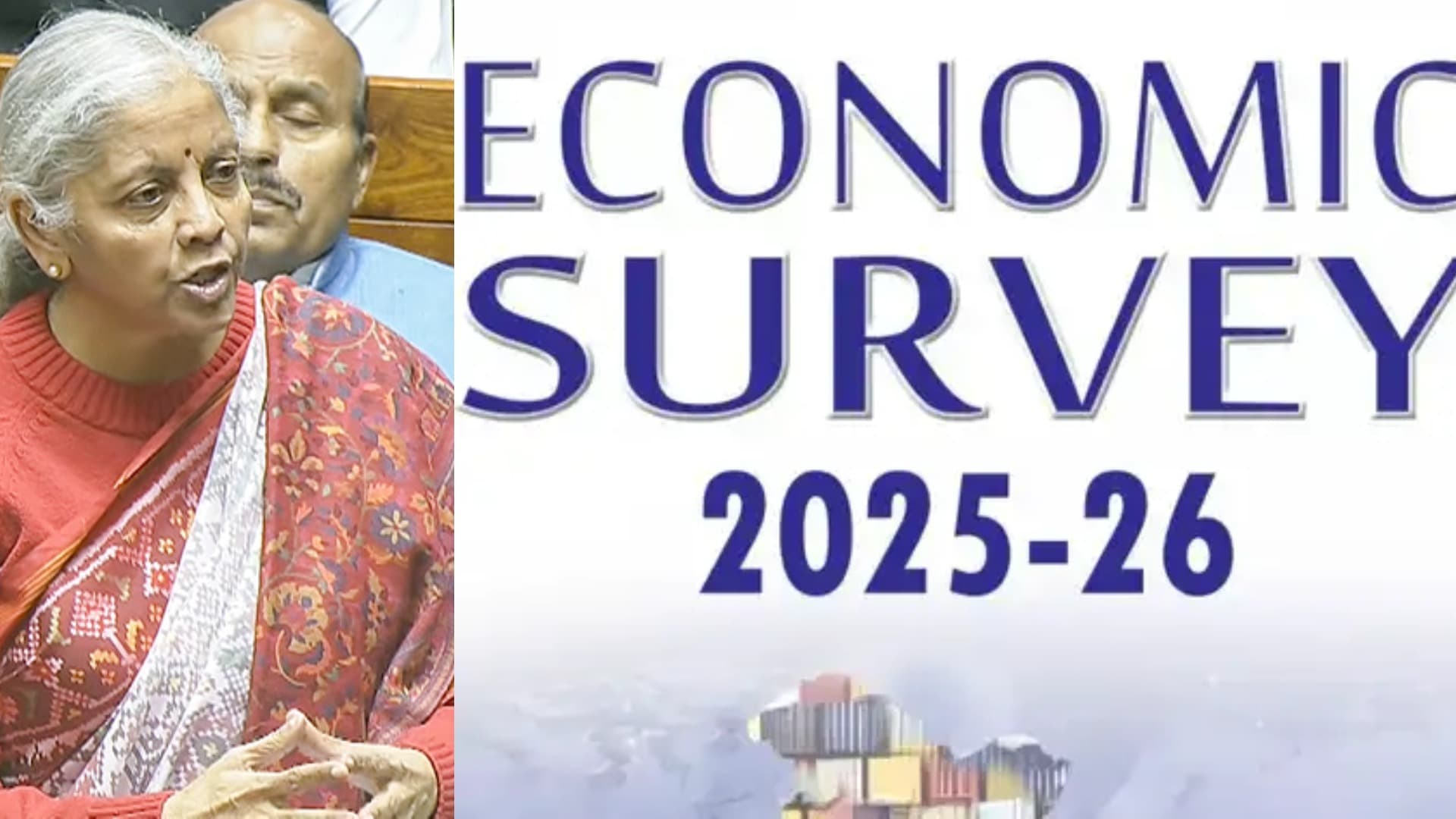
New Delhi, Jan 29: India’s Economic Survey for 2025-26, presented in Parliament on Thursday, estimates the country’s potential growth rate at 7%, a rise from 6.5% three years ago. The report credits sustained domestic reforms and public investment for strengthening the economy's capacity.
“The expansion of infrastructure -- illustrated by the doubling of the airport network over the past decade and the rapid growth of freight movement through inland waterways -- is easing logistics constraints and raising economy-wide efficiency,” the economic survey notes.
At the same time, while headline inflation continues to reflect volatility in food prices, the subdued trajectory of core inflation (excluding gold and silver) indicates a strengthening of supply-side conditions across the economy, consistent with rising productive capacity and improved logistics. In parallel, sustained state-level deregulation efforts are enabling small and medium enterprises to expand and integrate more effectively into formal value chains, elevating the economy’s medium-term growth potential, the survey observes.
Watch today’s gold rate here. Read more for daily updates.
“The expansion of infrastructure -- illustrated by the doubling of the airport network over the past decade and the rapid growth of freight movement through inland waterways -- is easing logistics constraints and raising economy-wide efficiency,” the economic survey notes.
At the same time, while headline inflation continues to reflect volatility in food prices, the subdued trajectory of core inflation (excluding gold and silver) indicates a strengthening of supply-side conditions across the economy, consistent with rising productive capacity and improved logistics. In parallel, sustained state-level deregulation efforts are enabling small and medium enterprises to expand and integrate more effectively into formal value chains, elevating the economy’s medium-term growth potential, the survey observes.
Watch today’s gold rate here. Read more for daily updates.

📱 Get Argus News App
✨📰 60 Word News🎬 Argus Podcast📺 Live TV and Breaking News🔔 Free Notification Alerts
Download Free:
The survey also observes that a predictable and credible fiscal trajectory by the Centre over the past years has anchored overall macroeconomic stability by balancing growth imperatives with fiscal sustainability.
The Central government’s fiscal consolidation experience underscores the value of clearly defined fiscal targets alongside retained flexibility, thereby allowing fiscal policy to support rather than constrain growth during periods of uncertainty.
In this context, the Union Budget for FY22 articulated a medium-term glide path, targeting a fiscal deficit below 4.5 per cent of GDP by FY26, instead of binding annual targets, to ensure that growth-enhancing expenditure, particularly capex, was not compromised, the survey points out.
The global environment is being reshaped by geopolitical realignments that will influence investment, supply chains and growth prospects for years to come. Against today’s global churn, India must choose to build resilience, innovate relentlessly, and stay the course towards Viksit Bharat, rather than seek quick fixes to visible, short-term pressures, Chief Economic Adviser V. Anantha Nageswaran has noted in his comment.
Also Read: Gold Hits All-time High, Check Today's Price
“The good news is that, on balance, the evidence presented in this Survey shows that India will choose well,” he added.
The Central government’s fiscal consolidation experience underscores the value of clearly defined fiscal targets alongside retained flexibility, thereby allowing fiscal policy to support rather than constrain growth during periods of uncertainty.
In this context, the Union Budget for FY22 articulated a medium-term glide path, targeting a fiscal deficit below 4.5 per cent of GDP by FY26, instead of binding annual targets, to ensure that growth-enhancing expenditure, particularly capex, was not compromised, the survey points out.
The global environment is being reshaped by geopolitical realignments that will influence investment, supply chains and growth prospects for years to come. Against today’s global churn, India must choose to build resilience, innovate relentlessly, and stay the course towards Viksit Bharat, rather than seek quick fixes to visible, short-term pressures, Chief Economic Adviser V. Anantha Nageswaran has noted in his comment.
Also Read: Gold Hits All-time High, Check Today's Price
“The good news is that, on balance, the evidence presented in this Survey shows that India will choose well,” he added.
(IANS)
Related Topics
Explore more stories