



After Latest LPG Price Hike, Govt Releases Data Showing Indians Pay Far Less Than Global Cooking Gas Rates
Key Points
* Global LPG prices have surged 46% since February amid the Strait of Hormuz disruption, pushing the supply cost above Rs1,600 per cylinder.
* India continues to offer some of the world's cheapest cooking gas, with Ujjwala beneficiaries paying an effective Rs642 per cylinder
Bhubaneswar: After the second LPG price hike in three months, the Petroleum Ministry has released data claiming Indian households still pay among the world's lowest cooking gas prices despite soaring global energy costs.
The data shows how when geopolitical tensions rattled global energy markets and pushed fuel prices higher across continents, millions of Indian households barely felt the heat in their kitchens.
The reason lies in a massive but largely invisible financial cushion built by the government and public sector oil companies, which have absorbed soaring international LPG costs instead of passing them on to consumers.
The numbers reveal the scale of the intervention.

📱 Get Argus News App
✨Cylinder Economics
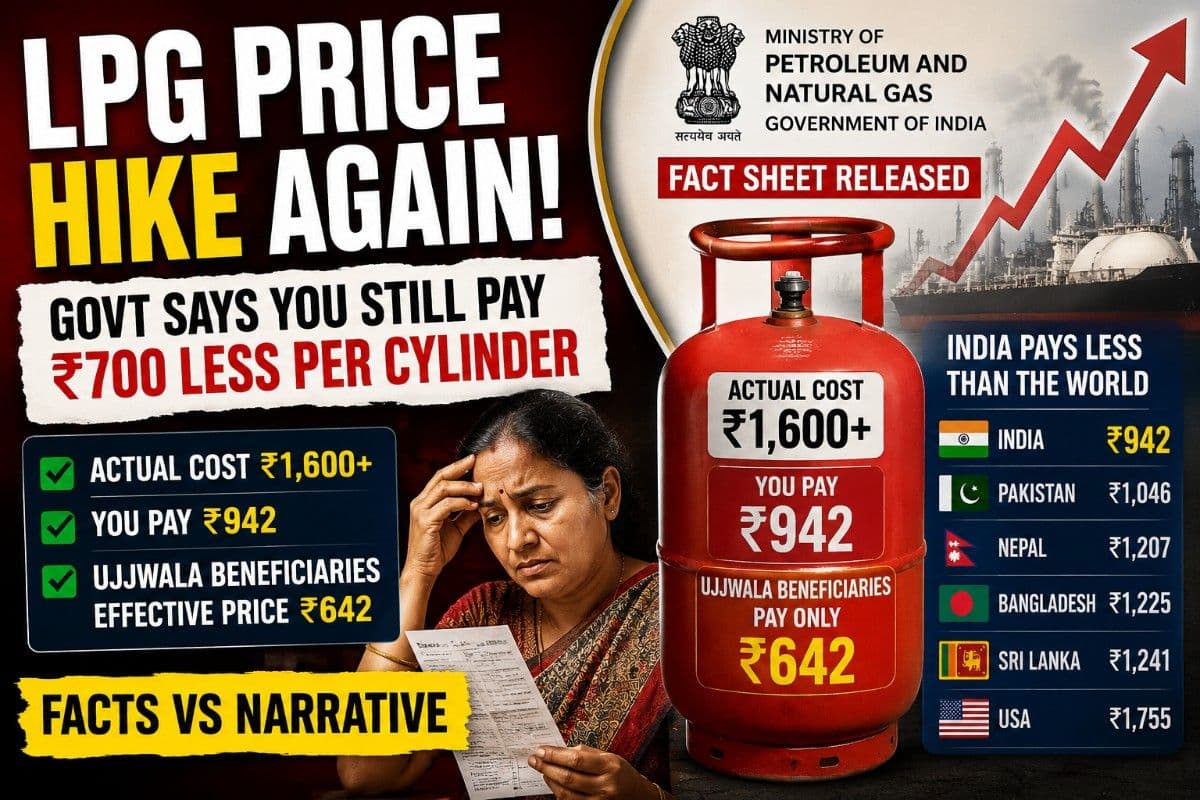
A 14.2-kg LPG cylinder now costs a general consumer in Delhi Rs942, while beneficiaries of the Pradhan Mantri Ujjwala Yojana (PMUY) effectively pay just Rs642 after receiving the Rs300 direct benefit transfer on their first four refills each year. Yet the actual cost of supplying that same cylinder has climbed to more than Rs1,600 due to a sharp rise in global LPG prices.
A Global Energy Crisis, An Indian Exception
The surge began after disruptions around the Strait of Hormuz, one of the world's most critical energy chokepoints.
Saudi Arabia's Contract Price (CP) benchmark for LPG – a key indicator for global gas prices – jumped from around $543 per tonne in February to nearly $790 per tonne by June 2026, an increase of about 46 percent.
Ordinarily, such a dramatic rise would have translated into sharply higher cooking gas bills for consumers.
Instead, Indian households were largely insulated.
The government says the under-recovery – the gap between the actual import-linked cost and the regulated retail price – has reached about Rs 700 on every domestic cylinder.
Cheaper Than Pakistan, Nepal and Even the US
Perhaps the most striking aspect of the data is India's relative position globally.
An effective Ujjwala cylinder costs Rs642, compared with approximately
· Rs 1,046 in Pakistan,
· Rs 1,207 in Nepal,
· Rs 1,225 in Bangladesh and
· Rs 1,241 in Sri Lanka.
In advanced economies, the gap is even wider, with equivalent cylinders costing around
· Rs 1,755 in the United States,
· Rs 1,765 in Australia and over
· Rs 2,400 in Canada.
For policymakers, the comparison underscores a key message: despite importing a large portion of its LPG requirements, India has managed to keep household cooking fuel among the cheapest in the world.
The Hormuz Test
The real challenge emerged when tensions around the Strait of Hormuz threatened global energy supplies.
With more than half of India's LPG consumption dependent on shipments passing through the waterway, the risk of disruption was significant. Yet authorities say Indian-flagged tankers continued operating, ensuring uninterrupted delivery of crude oil and LPG cargoes. No shortages of petroleum products were reported.
To strengthen supplies, domestic LPG production was increased by over 60 percent, alternative international suppliers were tapped, and stricter monitoring was introduced to prevent diversion of subsidised cylinders into the commercial market.
A Rs 60,000-Crore Cushion
Keeping prices low has come at a cost.
The cumulative under-recovery on domestic LPG rose to around Rs 60,000 crore by the end of the last financial year, up from Rs 41,338 crore a year earlier. The Union Cabinet has approved Rs30,000 crore in compensation to oil marketing companies to help offset the burden.
Meanwhile, more than 10.58 crore Ujjwala beneficiaries continue receiving direct subsidy support on cooking gas purchases.
The Bottom Line
At a time when global energy markets remain volatile and geopolitical tensions continue to influence fuel costs, India's LPG pricing model has effectively acted as a shock absorber for households.
While international prices suggest a cylinder should cost more than Rs1,600, consumers are paying substantially less – Rs 942 for regular users and an effective Rs 642 for Ujjwala beneficiaries. The difference is being borne by the state and public-sector energy companies in an effort to protect household budgets from global turbulence.
For millions
of families, it means that even as a global gas storm rages outside, the
kitchen flame continues to burn at one of the lowest costs anywhere in the
world.
Also Read: RBI Monetary Policy / India GDP Surges 7.7% in FY 26, RBI Holds Rates: What Does It Mean for Your EMI, FDs, Fuel Bill and Daily Expenses?| EXPLAINER
Related Topics
Explore more stories