



Bedding Ritual / Europe’s Strange Tradition: When Wedding Guests Watched Newlyweds Go To Bed
·2 weeks ago·3 min read
Key Points
In parts of medieval and early modern Europe, newlyweds were ceremonially escorted to bed by relatives, nobles, clergy and witnesses in rituals known as Beilager or Bettsetzung.
Bhubaneswar, Sep 13: What if your wedding guests didn’t leave after the reception, but followed you to your bed?
It sounds ridiculous. Right? But what if I tell you that this was actually happening once upon a time in Europe?
In parts of Europe, newlyweds really were ceremonially escorted to bed, sometimes surrounded by relatives, nobles, clergy and other witnesses.
The practice, known in German-speaking lands as the Beilagen or Bettsetzung, was part of a broader European tradition of “bedding ceremonies”. And no, this did not necessarily mean that an audience sat around watching the couple have intercourse.
It sounds ridiculous. Right? But what if I tell you that this was actually happening once upon a time in Europe?
In parts of Europe, newlyweds really were ceremonially escorted to bed, sometimes surrounded by relatives, nobles, clergy and other witnesses.
The practice, known in German-speaking lands as the Beilagen or Bettsetzung, was part of a broader European tradition of “bedding ceremonies”. And no, this did not necessarily mean that an audience sat around watching the couple have intercourse.

📱 Get Argus News App
✨📰 60 Word News🎬 Argus Podcast📺 Live TV and Breaking News🔔 Free Notification Alerts
Download Free:
In fact, the Germanisches Nationalmuseum says the ritual was intended to establish that the bride and groom had entered the same bed and been placed “under one blanket”. What happened afterwards was private, the museum notes.
When The Wedding Bed Became A Public Affair
The custom varied enormously across Europe. But the symbolism was powerful: the couple had crossed from the public ceremony of marriage into married life, with witnesses present to mark the transition.
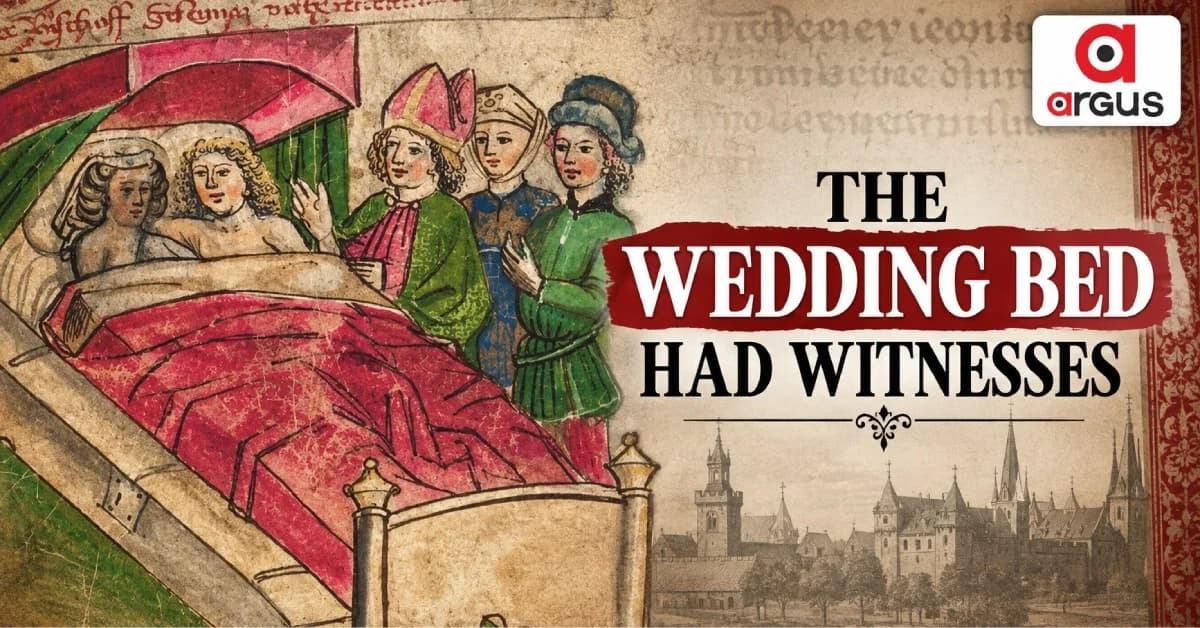
A 15th-century manuscript preserved by Heidelberg University Library shows a newly married couple lying in bed, still apparently dressed, surrounded by relatives and dignitaries while a bishop spreads a blanket over them. The library explains that this public procession to the wedding bed marked the beginning of married life and carried property-law consequences.
That helps explain why the ritual mattered. Marriage was not simply about romance. It could involve dynastic alliances, property, inheritance and questions of legitimacy.
Germany Took The Drama Up A Notch
By the late medieval period, aristocratic German weddings could turn the bedding ritual into elaborate theatre.
The Bavarian Palace Administration describes a 1500 wedding in which Johann of Saxony and Sophia of Mecklenburg-Torgau entered a ceremonial bed fully clothed, while trumpets and drums played. Their parents spread a blanket over them before the couple rose and returned to the celebrations.
When The Wedding Bed Became A Public Affair
The custom varied enormously across Europe. But the symbolism was powerful: the couple had crossed from the public ceremony of marriage into married life, with witnesses present to mark the transition.
A 15th-century manuscript preserved by Heidelberg University Library shows a newly married couple lying in bed, still apparently dressed, surrounded by relatives and dignitaries while a bishop spreads a blanket over them. The library explains that this public procession to the wedding bed marked the beginning of married life and carried property-law consequences.
That helps explain why the ritual mattered. Marriage was not simply about romance. It could involve dynastic alliances, property, inheritance and questions of legitimacy.
Germany Took The Drama Up A Notch
By the late medieval period, aristocratic German weddings could turn the bedding ritual into elaborate theatre.
The Bavarian Palace Administration describes a 1500 wedding in which Johann of Saxony and Sophia of Mecklenburg-Torgau entered a ceremonial bed fully clothed, while trumpets and drums played. Their parents spread a blanket over them before the couple rose and returned to the celebrations.
At another aristocratic wedding, guests escorted the bride to the bed, parts of her clothing were removed, the groom joined her and a blanket was pulled over them before most of the company withdrew.
The ceremony therefore created an extraordinary compromise: the marriage bed was public, but s*x was not necessarily so.
Also Read: Women of This Area Hate To Marry Men, Here's Why
And Yes, Ireland Had Its Version Too
The custom was not confined to German lands. Historian Fiona Fitzsimons, writing in History Ireland, notes that bedding ceremonies were popular across Europe and that evidence survives for their practice in Ireland.
Irish versions could involve a priest blessing the marital bed before guests put the newlyweds to bed amid bawdy jokes, music and dancing. In some accounts, musicians accompanied the ritual, with one description even mentioning a “volley of cabbage stalks”.
Over time, such customs faded as marriage, law and ideas about privacy changed.
Today, the wedding night is generally considered nobody’s business but the couple’s.
For medieval and early modern Europeans, however, the bed could be a stage, a symbol and even a matter of law; before finally becoming what we think it should have been all along: private.
The ceremony therefore created an extraordinary compromise: the marriage bed was public, but s*x was not necessarily so.
Also Read: Women of This Area Hate To Marry Men, Here's Why
And Yes, Ireland Had Its Version Too
The custom was not confined to German lands. Historian Fiona Fitzsimons, writing in History Ireland, notes that bedding ceremonies were popular across Europe and that evidence survives for their practice in Ireland.
Irish versions could involve a priest blessing the marital bed before guests put the newlyweds to bed amid bawdy jokes, music and dancing. In some accounts, musicians accompanied the ritual, with one description even mentioning a “volley of cabbage stalks”.
Over time, such customs faded as marriage, law and ideas about privacy changed.
Today, the wedding night is generally considered nobody’s business but the couple’s.
For medieval and early modern Europeans, however, the bed could be a stage, a symbol and even a matter of law; before finally becoming what we think it should have been all along: private.
Related Topics
Explore more stories