



West Asia Conflict / US Claims Strait of Hormuz Control, Says Iran in Economic 'Death Spiral'
Key Points
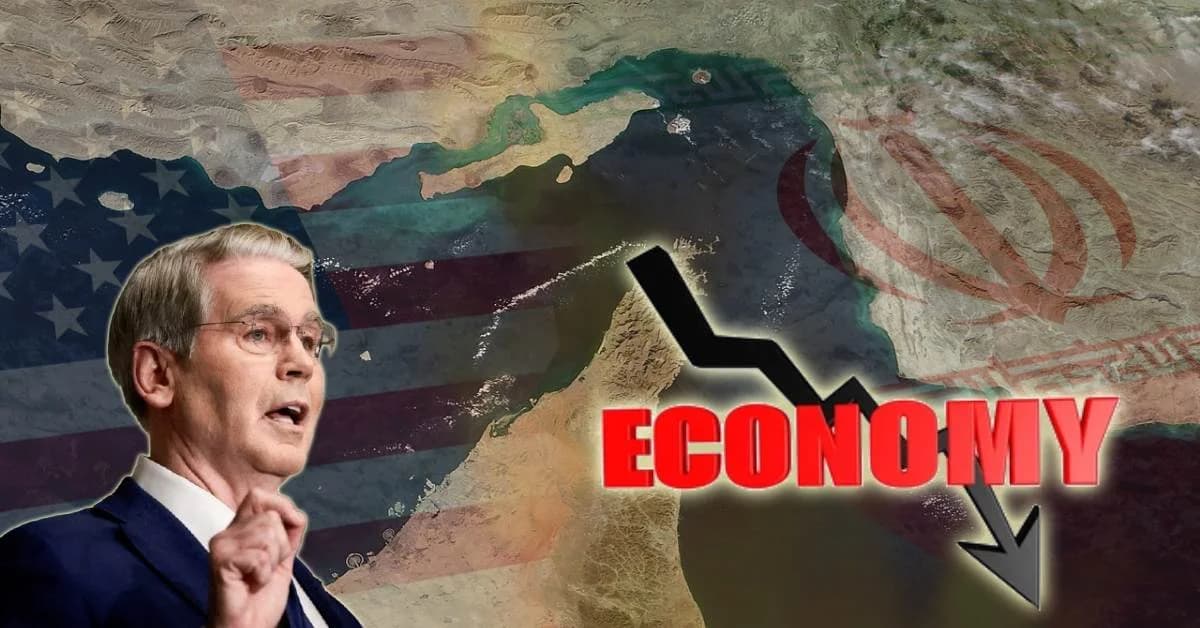
US Treasury Secretary Scott Bessent says Iran is in an economic “death spiral,” citing sanctions, currency collapse, and military pressure, while dismissing Tehran’s claims of controlling the Strait of Hormuz.
Asheville, Sep 2: US Treasury Secretary Scott Bessent warned that Iran’s economy is collapsing under the weight of sanctions and military pressure, describing the situation as an irreversible “death spiral.”
He argued that the combination of financial restrictions and targeted US operations would eventually leave Tehran with no choice but to re‑enter negotiations.
Speaking after the G20 finance ministers’ meeting in Asheville, Bessent dismissed claims that Iran had successfully closed the Strait of Hormuz, one of the world’s most critical energy chokepoints. “Iran does not have control of the Strait, and they are in a death spiral. We have control of the Strait,” he told reporters.
Also read: Iran President Masoud Pezeshkian Calls US Peace MoU in Interests of Tehran

📱 Get Argus News App
✨Bessent revealed that recent US strikes had targeted radar equipment Iran was attempting to rebuild along the waterway. He added that approximately 17 million barrels of crude oil had passed through the Strait in the previous 24 hours. “That is not Iranian control of the strait,” he said.
The Treasury Secretary argued that Tehran’s military actions were a desperate response to intensifying economic restrictions. “They are panicked. They are resorting to kinetic because they are getting squeezed economically,” he said, pointing to fuel shortages and long queues inside Iran despite its vast energy reserves.
According to Bessent, the growing strain on Iran’s leadership could lead to one of three outcomes: internal divisions within the Islamic Revolutionary Guard Corps (IRGC), public resistance, or renewed negotiations with Washington. “At a point, either the IRGC are going to turn on each other, the people are going to turn on them, or they’re going to come to the table and want to do a deal that they can stick with,” he said.
He noted that President Donald Trump believed an earlier memorandum of understanding had failed because Iran was unwilling to reach a genuine agreement. “We will see when they are ready for a deal,” Bessent remarked.
The Treasury chief also outlined measures aimed at restricting Iran’s access to dollars and disrupting financial channels used to convert payments received in Chinese renminbi. “The Chinese pay the Iranians in RMB. The RMB comes back to the Gulf region,” he explained, adding that Washington was targeting banks, cash houses and supply networks involved in conversion. He referred to recent action against a bank in Dubai but did not disclose its name. “So when that money cannot be converted to dollars, then the regime will starve,” he said.
Bessent cited the sharp depreciation of Iran’s currency as evidence of its worsening financial position. He noted that the rial had fallen from about 800,000 to the dollar 16 months ago to 2.1 million today. “That just means that they have no access to dollars and that they are in the death throes,” he said.
Acknowledging that Iran might escalate militarily as pressure mounts, Bessent predicted that its deteriorating economy would ultimately force a recalibration. “Will they lash out more kinetically? Maybe, but they will be ready for a deal,” he said.
The United States has imposed successive sanctions on Iran’s oil industry, banking system and government institutions over its nuclear program, missile development and support for armed groups. The Strait of Hormuz, linking the Persian Gulf with the Gulf of Oman and Arabian Sea, remains vital for global energy flows, with any disruption posing significant risks to international markets.
(IANS)
Related Topics
Explore more stories