



Security Council Reform / Russia Backs India, Brazil for Permanent UNSC Seats
Key Points
Russia endorsed India and Brazil for UNSC permanent seats, rejected Germany and Japan as “militarist, revanchist,” exposing G4 divisions, while Africa and other nations pressed for broader representation.
United Nations, Sep 27: Russia’s intervention at the United Nations General Assembly has reignited the debate over Security Council reform, as Foreign Minister Sergei Lavrov openly endorsed India and Brazil for permanent membership while rejecting Germany and Japan.
By framing the latter as “militarist” and “revanchist,” Moscow drew a clear line between its support for emerging powers of the Global South and its opposition to expanding Western influence within the Council.
Foreign Minister Sergei Lavrov outlined Moscow’s position during his address to the 81st session of the UN General Assembly in New York on Saturday. His remarks placed India’s candidature at the centre of renewed debate over how to make the Council more representative.
Also read: Donald Trump, Xi Jinping Agree to Establish AI Communication Channel

📱 Get Argus News App
✨“UN Security Council reform cannot involve any additional seats being allocated to Western countries, especially to Germany and Japan, who are now on the path to militarism and revanchism,” Lavrov declared. He added: “We are in favour of broadening the representation of Asia, Africa, and Latin America. We support Brazil's and India's candidatures for a permanent seat.”
The statement marked an explicit endorsement of India’s long‑standing campaign but also exposed fault lines within the G4, which unites India, Brazil, Germany and Japan in a joint push for permanent membership. The four countries met on the sidelines of the Assembly this week, with their foreign ministers calling for expansion in both permanent and non‑permanent categories and stronger representation for Africa, Asia‑Pacific, Latin America and the Caribbean.
Russia’s stance supports two G4 members but rejects the other two, while also backing greater African representation. India, meanwhile, received endorsements from other nations during the high‑level debate. Mauritius Foreign Minister Dhananjay Ramful said: “We support the positions of the G4 and of L69 on Council reform, and we reiterate our support for India's candidature for a permanent seat, commensurate with its constructive role in global affairs.”
Portuguese Prime Minister Luis Montenegro also voiced support for permanent representation for Africa, Brazil and India. The Marshall Islands, however, backed Japan and its G4 partners. “The Marshall Islands affirms its longstanding support for Japan and its G4 partners to achieve permanent membership on the UN Security Council,” President Hilda Heine said.
African leaders pressed their case for inclusion. Sierra Leone’s President Julius Maada Bio argued that the Council still reflected the power structure of 1945, while Ghana’s President John Dramani Mahama linked reform to the UN’s legitimacy and credibility.
The UN Secretariat has avoided endorsing individual candidates. Spokesperson Stéphane Dujarric said Friday: “Well, it’s not for the Secretary‑General to take position on the individual candidacies or proposals for specific Member States for a permanent seat on the Security Council.” He emphasized that broader representation was needed so people worldwide could feel represented.
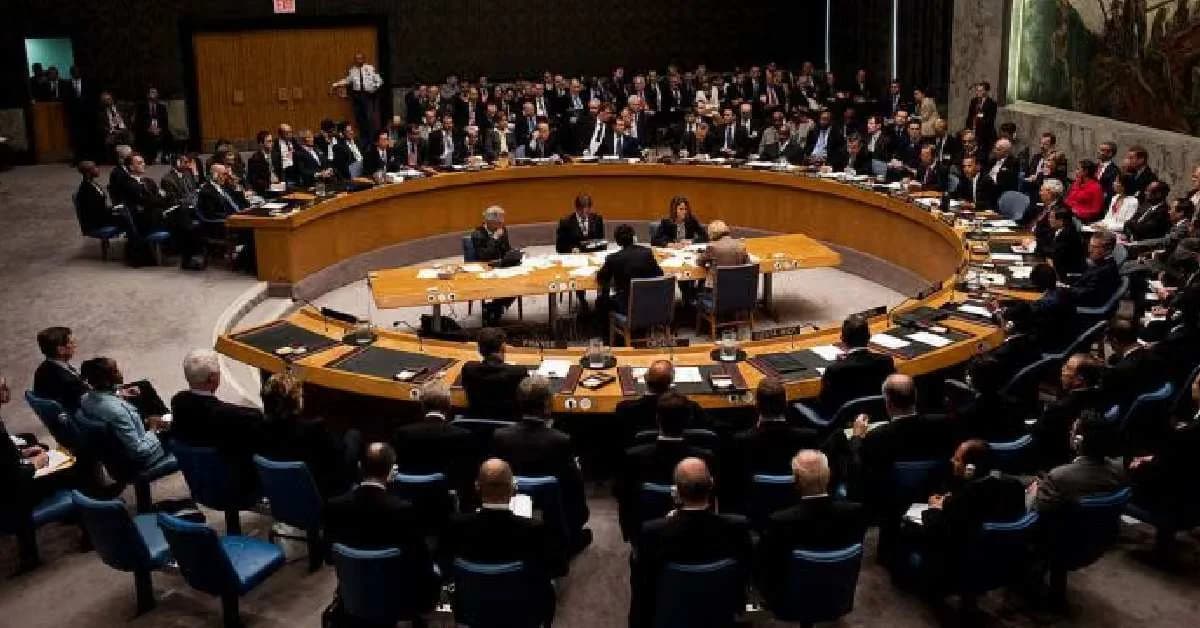
The UNSC currently has 15 members, with five permanent veto‑holding powers—China, France, Russia, the UK and the US—and ten elected for two‑year terms. Any change would require amending the UN Charter, approved by two‑thirds of the General Assembly and ratified by two‑thirds of member states, including all five permanent members.
India has long argued that the Council no longer reflects contemporary realities, citing its population, global role, peacekeeping record and representation of the Global South. Having served eight terms as an elected member, New Delhi continues to campaign alongside Brazil, Germany and Japan for permanent seats.
(IANS)