



Geopolitics / Oil Prices Tumble as Trump Pauses Iran Strikes
·6 months ago·2 min read
Key Points
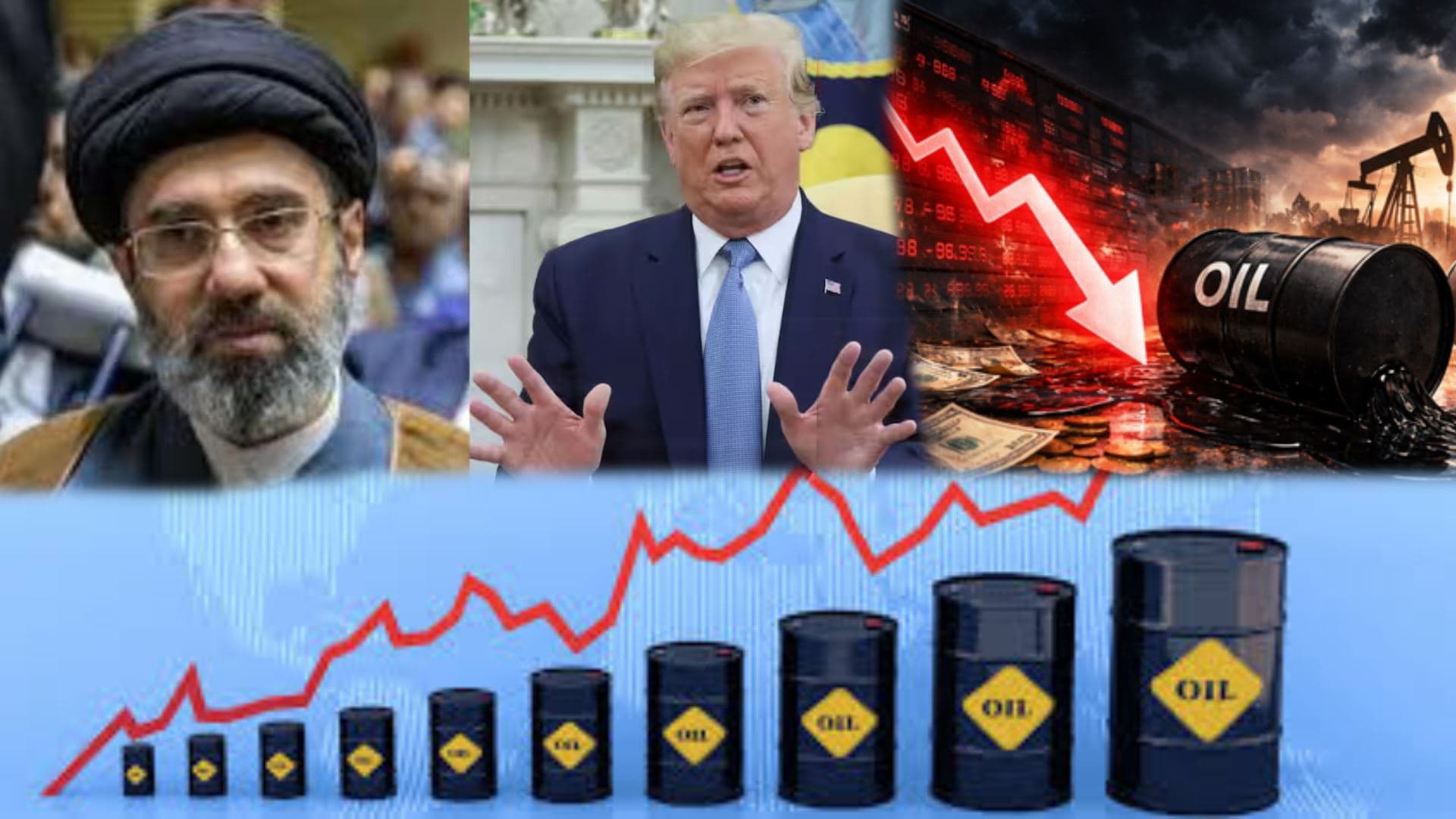
Oil prices fell below $100 a barrel after President Trump announced a two-week pause on planned strikes against Iran, easing fears of conflict in the Gulf. Global stock markets rallied, though analysts warn the situation remains fragile.
Washington, April 8: Oil markets witnessed a sharp downturn on Tuesday after US President Donald Trump announced a temporary suspension of planned military strikes against Iran, calming fears of a wider conflict in the Gulf region.
US Crude futures slipped below the $100 per barrel mark, reversing weeks of gains fueled by escalating tensions around the Strait of Hormuz, a vital global oil transit route. The Wall Street Journal reported that Trump’s decision to pause military action for two weeks, contingent on Tehran reopening the strait, triggered immediate relief across energy and equity markets.
Stock markets responded positively to the announcement. Futures tied to major US indexes surged more than 2 percent, while Asian equities also rallied, with Japan’s Nikkei and South Korea’s Kospi advancing. Investors interpreted the move as a sign of potential de-escalation, reducing the risk of immediate supply disruptions.
The Strait of Hormuz, through which nearly one-fifth of the world’s oil flows, has been at the center of recent tensions. Iran’s restrictions on passage had driven oil prices higher in recent weeks, raising concerns about global supply chains. Analysts noted that while the pause offers a window for diplomacy, the situation remains fragile, with reports of missile and drone activity continuing in parts of the Gulf.
US Crude futures slipped below the $100 per barrel mark, reversing weeks of gains fueled by escalating tensions around the Strait of Hormuz, a vital global oil transit route. The Wall Street Journal reported that Trump’s decision to pause military action for two weeks, contingent on Tehran reopening the strait, triggered immediate relief across energy and equity markets.
Stock markets responded positively to the announcement. Futures tied to major US indexes surged more than 2 percent, while Asian equities also rallied, with Japan’s Nikkei and South Korea’s Kospi advancing. Investors interpreted the move as a sign of potential de-escalation, reducing the risk of immediate supply disruptions.
The Strait of Hormuz, through which nearly one-fifth of the world’s oil flows, has been at the center of recent tensions. Iran’s restrictions on passage had driven oil prices higher in recent weeks, raising concerns about global supply chains. Analysts noted that while the pause offers a window for diplomacy, the situation remains fragile, with reports of missile and drone activity continuing in parts of the Gulf.

📱 Get Argus News App
✨📰 60 Word News🎬 Argus Podcast📺 Live TV and Breaking News🔔 Free Notification Alerts
Download Free:
Also Read: US and Iran Agree to Two-week Ceasefire, Strait of Hormuz to Reopen
Gold prices also climbed, reflecting lingering uncertainty, even as equities rallied. Market watchers cautioned that the ceasefire’s durability depends on Iran’s willingness to fully reopen the strait and both sides refraining from further escalation.
For India, heavily reliant on Gulf crude imports, the volatility in oil prices carries significant economic implications. Sustained fluctuations could affect inflation, currency stability, and overall growth.
The two-week pause now provides an opportunity for negotiations to stabilize the region. However, traders remain wary of sudden policy shifts or renewed military action that could once again disrupt energy markets.
The Strait of Hormuz continues to be one of the world’s most critical energy chokepoints, where even minor disruptions can ripple across global economies.
Gold prices also climbed, reflecting lingering uncertainty, even as equities rallied. Market watchers cautioned that the ceasefire’s durability depends on Iran’s willingness to fully reopen the strait and both sides refraining from further escalation.
For India, heavily reliant on Gulf crude imports, the volatility in oil prices carries significant economic implications. Sustained fluctuations could affect inflation, currency stability, and overall growth.
The two-week pause now provides an opportunity for negotiations to stabilize the region. However, traders remain wary of sudden policy shifts or renewed military action that could once again disrupt energy markets.
The Strait of Hormuz continues to be one of the world’s most critical energy chokepoints, where even minor disruptions can ripple across global economies.
Related Topics
Explore more stories