



Nobel Prize 2026 / Nobel Prize in Physics 2026: Francis Halzen Honoured for Pioneering Neutrino Astronomy
Key Points
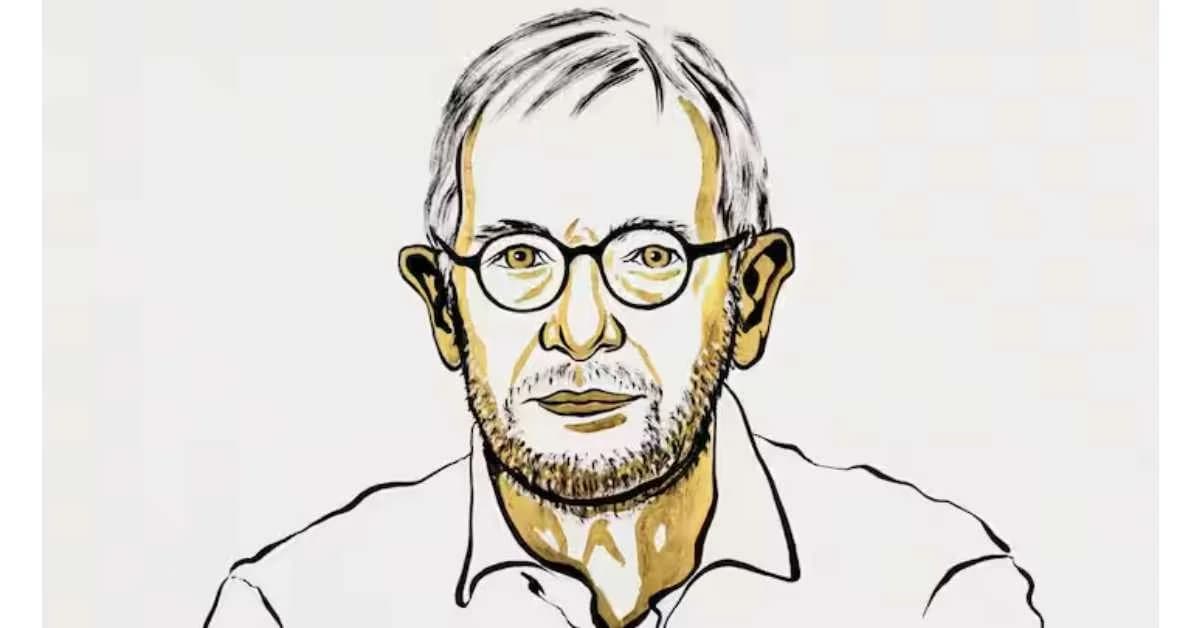
New Delhi, Oct 6: The 2026 Nobel Prize in Physics has been awarded to Belgian-American physicist Francis Halzen for his decisive contributions to the IceCube Neutrino Observatory and the discovery of high-energy neutrinos originating from distant astrophysical sources, officials said on Tuesday.
The Royal Swedish Academy of Sciences recognised his
groundbreaking work that has opened an entirely new way of exploring the
universe.
BREAKING NEWS The Royal Swedish Academy of Sciences has decided to award the 2026 #NobelPrize in Physics to Francis Halzen “for decisive contributions to the IceCube Neutrino Observatory and the discovery of high-energy neutrinos of astrophysical origin.” https://t.co/UcPBWk0RiK
— The Nobel Prize (@NobelPrize) October 6, 2026
Halzen's research has transformed the field of astronomy by enabling scientists to study the cosmos through neutrinos, elusive subatomic particles that can travel immense distances without being significantly altered by matter or magnetic fields. These particles carry unique information about some of the universe's most energetic and mysterious phenomena.

📱 Get Argus News App
✨IceCube beneath Antarctic ice
At the heart of the achievement is the IceCube Neutrino Observatory, an enormous detector embedded deep within the Antarctic ice at the South Pole. Covering roughly one cubic kilometre, the facility contains thousands of sensitive optical sensors designed to detect tiny flashes of light produced when neutrinos interact with particles in the ice.
Recognising the scientific potential of the vast Antarctic ice sheet, Halzen played a pivotal role in developing the observatory and advancing its scientific mission. His vision transformed the frozen landscape into one of the world's most sophisticated instruments for studying the universe.
Unlocking cosmic mysteries
Neutrinos are exceptionally difficult to detect because they
carry no electric charge and interact only weakly with matter. Trillions pass
through Earth, and even through the human body, every second without leaving a
trace. However, a small fraction originates from extremely energetic cosmic
events, making them valuable messengers from distant regions of space.
Also Read: 2026 Nobel Prize in Medicine Honours Optogenetics Pioneers Karl Deisseroth, Peter Hegemann, Georg Nagel
The IceCube Observatory's detection of high-energy astrophysical neutrinos provided the first compelling evidence that these particles could be used to trace powerful cosmic sources. The discovery has established neutrino astronomy as a major branch of modern astrophysics, complementing traditional observations based on light and electromagnetic radiation.
The Nobel Committee said Halzen's work has fundamentally broadened humanity's ability to investigate the universe, offering scientists a powerful new tool to probe some of its deepest mysteries.
Related Topics
Explore more stories