



No Oil Sanctions, No Missile Curbs: Why the Leaked US-Iran Deal Looks Like a Strategic Victory for Tehran| Analysis
Key Points
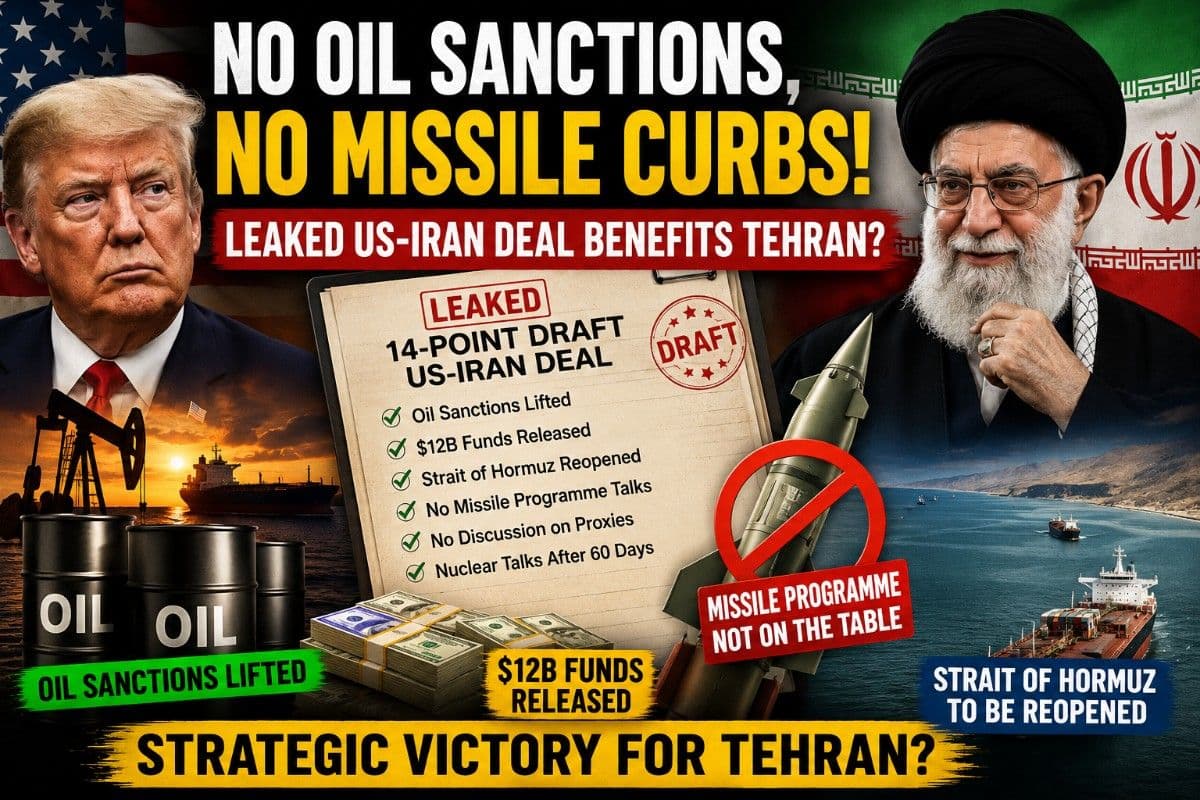
* Iran's ballistic missile programme reportedly excluded from final negotiations despite years of US objections.
* Nuclear issues remain unresolved, with critical enrichment talks deferred to a separate 60-day process.
Bhubaneswar: A leaked 14-point draft memorandum
reportedly negotiated between the United States and Iran, published in
Mehr News Agency, a prominent govt-linked media outlet in Tehran, is triggering fresh debate
across diplomatic circles, energy markets and security establishments, not
because of what it demands from Tehran, but because of what it appears willing
to leave untouched. The published MoU terms reproduced below courtesy Mehr News Agency.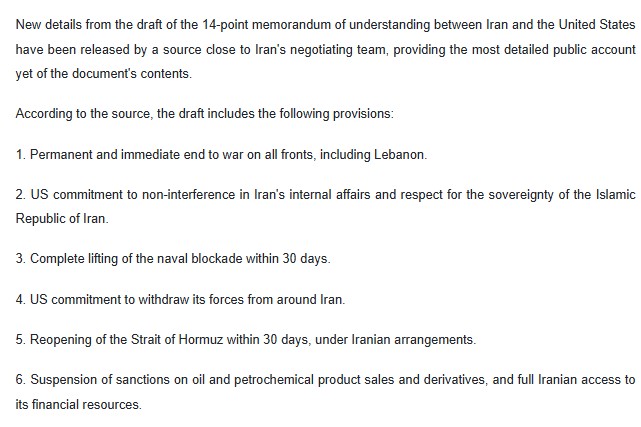
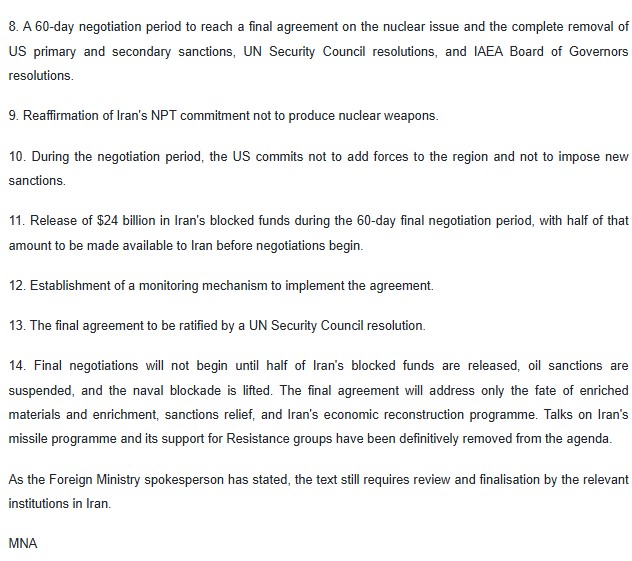
Courtesy: Mehr News Agency.
While
neither Washington nor Tehran has officially confirmed the authenticity of the
document published by Iran's ruling party linked media outlet, the contents, however, suggest a dramatic shift in negotiating priorities: It seems securing regional calm
and restoring energy flows may now be taking precedence over forcing Iran to
abandon its missile programme or broader regional influence.
If the framework survives final agreement to be signed on Friday between US and Iran, it could become the most consequential US-Iran understanding since the landmark 2015 nuclear agreement.
Oil Before Everything Else

📱 Get Argus News App
✨The most immediate impact of the proposed arrangement would be on global energy markets.
The draft reportedly calls for suspension of sanctions on Iranian oil and petrochemical exports, restoration of access to Iran's financial resources, reopening of the Strait of Hormuz and lifting maritime restrictions within 30 days.
For markets, the implication is straightforward.
Iran possesses some of the world's largest hydrocarbon reserves and can rapidly increase exports once restrictions are eased. Additional Iranian barrels entering global markets would expand supply at a time when many economies are struggling with inflationary pressures and energy costs.
That prospect alone helps explain why crude markets reacted positively to reports of progress in negotiations.
Tehran Secures What Matters Most
Perhaps the most striking aspect of the leaked draft is what has been excluded from negotiations.
According to the reported text, discussions on Iran's ballistic missile programme and support for regional resistance groups would be removed entirely from the final agenda.
For years, successive US administrations and regional allies have argued that Iran's missile capability represents one of the greatest long-term security threats in the Middle East.
Yet the draft suggests Washington may be willing to separate those concerns from the immediate objective of preventing a broader regional war.
For Tehran, that would represent a major diplomatic achievement.
Iran would potentially receive sanctions relief and economic breathing room while retaining one of its most important strategic deterrents.
The Nuclear Question Is Deferred, Not Settled
The agreement also reveals an important distinction often lost in public debate.
The draft does not reportedly require Iran to abandon nuclear technology.
Instead, Tehran would reaffirm its commitment under the Nuclear Non-Proliferation Treaty (NPT) not to develop nuclear weapons.
The most sensitive negotiations concerning enriched uranium stocks, enrichment levels and final monitoring arrangements would take place during a subsequent 60-day negotiation period.
In effect, the framework creates a pause button rather than a final resolution.
The core nuclear dispute remains unresolved.
A Lesson From 2015
The leaked framework inevitably invites comparisons with the 2015 Joint Comprehensive Plan of Action (JCPOA), under which Iran accepted restrictions on its nuclear programme in exchange for sanctions relief.
The difference is notable.
The 2015 agreement focused primarily on nuclear limitations before economic normalization.
This draft appears to reverse that sequence.
Several forms of economic relief would arrive before the most difficult nuclear questions are fully settled.
That change has already prompted criticism from observers who argue that Washington could surrender substantial leverage before obtaining verifiable concessions.
Why Washington May Still Accept It
Viewed through a purely transactional lens, the draft appears favourable to Iran.
Yet the broader strategic context may explain why US negotiators are pursuing such an approach.
After months of regional instability, attacks on shipping lanes, rising military tensions and fears of wider conflict involving Israel, Lebanon and the Gulf, Washington's immediate priority may be de-escalation rather than comprehensive resolution.
Reopening Hormuz, lowering oil prices, reducing the risk of regional war and freezing further escalation could offer immediate geopolitical benefits even if deeper disputes remain unresolved.
The Real Test Lies Ahead
The leaked text is only a draft of Mou reached. All eyes on the Final wor to be unveiled on Friday.
The proposed sanctions relief, release of frozen Iranian funds and eventual removal of UN-related restrictions would likely face intense scrutiny both inside the United States and among regional partners.
Israel, which continues to view Iran's missile programme and regional network as existential threats, could emerge as the biggest obstacle to any final settlement. Its Defense Minister Katz has already said Israel is a soverign nation, it is not bound to accept the deal.
For now, however, the leaked memorandum points to an unmistakable reality: the negotiations are no longer centered solely on Iran's nuclear programme.
They are increasingly about stabilizing energy markets, preventing a wider Middle East war and finding a political formula both sides can live with.
Whether that formula ultimately produces lasting peace – or merely postpones the next crisis – will become clear only after the proposed 60-day negotiating window concludes.Also Read: The Jaishankar Style: Why Efforts to Put India on the Defensive Often Backfire Western Powers| Special Story
Related Topics
Explore more stories