



US Iran Peace Deal / Mojtaba Khamenei Says ‘Desperate’ Trump Used Every Lever to Secure Iran Deal
·3 months ago·3 min read
Key Points
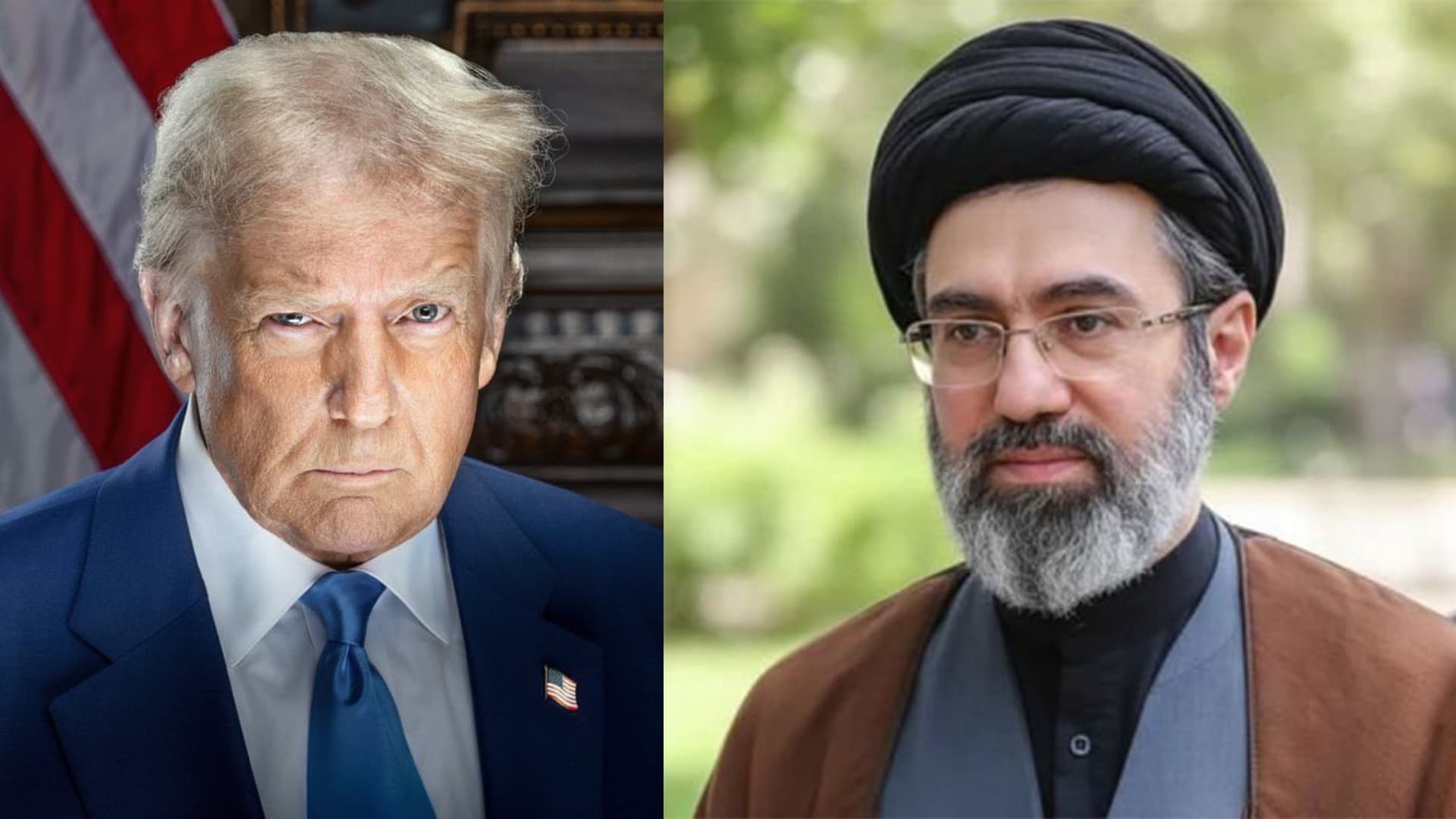
Iranian Supreme Leader Mojtaba Khamenei accused US President Trump of being "desperate" to secure a deal with Tehran, in his first public remarks since the US-Iran memorandum of understanding was signed on June 18.
Tehran, Jun 19: Iranian Supreme Leader Mojtaba Khamenei accused US President Donald Trump of being "desperate" to secure a deal with Tehran, a day after the United States and Iran signed a memorandum of understanding aimed at ending months of conflict.
In his first public remarks since the agreement was signed, Khamenei said he initially opposed the deal "as a matter of principle" but ultimately approved it after receiving assurances from Iranian President Masoud Pezeshkian and members of the Supreme National Security Council that Iran's interests and those of the "Resistance Front" would be protected.
"Officials in charge, out of sincere concern and goodwill, made extensive efforts — and of course, it was the American President who, out of desperation, used all kinds of leverage to bring this about," Khamenei said.
Deal Signed After Months of Tensions
On June 18, Trump and Pezeshkian formally signed an agreement intended to halt military hostilities and pave the way for broader negotiations between Washington and Tehran.
In his first public remarks since the agreement was signed, Khamenei said he initially opposed the deal "as a matter of principle" but ultimately approved it after receiving assurances from Iranian President Masoud Pezeshkian and members of the Supreme National Security Council that Iran's interests and those of the "Resistance Front" would be protected.
"Officials in charge, out of sincere concern and goodwill, made extensive efforts — and of course, it was the American President who, out of desperation, used all kinds of leverage to bring this about," Khamenei said.
Deal Signed After Months of Tensions
On June 18, Trump and Pezeshkian formally signed an agreement intended to halt military hostilities and pave the way for broader negotiations between Washington and Tehran.

📱 Get Argus News App
✨📰 60 Word News🎬 Argus Podcast📺 Live TV and Breaking News🔔 Free Notification Alerts
Download Free:
The document was virtually signed by both leaders after initial signatures were placed by US Vice President JD Vance and Iranian negotiator Mohammad Baqer Qalibaf.
The agreement serves as an interim framework rather than a final settlement and establishes a 60-day negotiation period focused on issues including sanctions relief and Iran's nuclear programme.
Tehran Signals Red Lines for Future Talks
Khamenei said Iranian officials had assured him that Tehran would reject any future US demands it considers excessive.
"He explicitly stated that if the American side seeks to make excessive demands, they will not submit to them," Khamenei said, referring to President Pezeshkian.
The Iranian leader also stressed that future face-to-face talks with Washington should not be interpreted as acceptance of US positions.
"It is self-evident that the in-person negotiations in the future will not mean acceptance of the enemy's position," he said.
The agreement serves as an interim framework rather than a final settlement and establishes a 60-day negotiation period focused on issues including sanctions relief and Iran's nuclear programme.
Tehran Signals Red Lines for Future Talks
Khamenei said Iranian officials had assured him that Tehran would reject any future US demands it considers excessive.
"He explicitly stated that if the American side seeks to make excessive demands, they will not submit to them," Khamenei said, referring to President Pezeshkian.
The Iranian leader also stressed that future face-to-face talks with Washington should not be interpreted as acceptance of US positions.
"It is self-evident that the in-person negotiations in the future will not mean acceptance of the enemy's position," he said.
Foreign Minister Backs Supreme Leader's Position
Iranian Foreign Minister Abbas Araqchi welcomed Khamenei's statement and pledged to use the country's "full capacity" to safeguard Iran's interests during the next phase of negotiations.
According to Iranian state media, Araqchi said the Foreign Ministry would follow the Supreme Leader's guidance while protecting Iran's rights, dignity and independence in discussions with Washington.
Both Sides Begin Implementing Agreement
The first signs of implementation emerged on Thursday.
US Central Command announced it had halted enforcement operations linked to the maritime blockade around the Strait of Hormuz. In a statement, CENTCOM said American forces were no longer restricting vessels entering or leaving Iranian ports and coastal waters.
Iran also announced measures aimed at restoring commercial shipping through the strategic Strait of Hormuz, one of the world's most important energy corridors.
Iranian authorities said vessels would receive expedited transit approvals and that passage fees through the strait would be waived for 60 days.
Also Read: US President Donald Trump Calls Iran Agreement a Defining Diplomatic Win
Focus Shifts to Long-Term Negotiations
While the agreement has reduced immediate military tensions, major issues remain unresolved.
The 60-day negotiating window is expected to focus on sanctions, regional security concerns and Iran's nuclear programme, with both sides seeking a broader framework to prevent a return to conflict.
The developments mark the latest chapter in the complex relationship between Washington and Tehran, as diplomats work to convert a temporary ceasefire into a more durable agreement.
Iranian Foreign Minister Abbas Araqchi welcomed Khamenei's statement and pledged to use the country's "full capacity" to safeguard Iran's interests during the next phase of negotiations.
According to Iranian state media, Araqchi said the Foreign Ministry would follow the Supreme Leader's guidance while protecting Iran's rights, dignity and independence in discussions with Washington.
Both Sides Begin Implementing Agreement
The first signs of implementation emerged on Thursday.
US Central Command announced it had halted enforcement operations linked to the maritime blockade around the Strait of Hormuz. In a statement, CENTCOM said American forces were no longer restricting vessels entering or leaving Iranian ports and coastal waters.
Iran also announced measures aimed at restoring commercial shipping through the strategic Strait of Hormuz, one of the world's most important energy corridors.
Iranian authorities said vessels would receive expedited transit approvals and that passage fees through the strait would be waived for 60 days.
Also Read: US President Donald Trump Calls Iran Agreement a Defining Diplomatic Win
Focus Shifts to Long-Term Negotiations
While the agreement has reduced immediate military tensions, major issues remain unresolved.
The 60-day negotiating window is expected to focus on sanctions, regional security concerns and Iran's nuclear programme, with both sides seeking a broader framework to prevent a return to conflict.
The developments mark the latest chapter in the complex relationship between Washington and Tehran, as diplomats work to convert a temporary ceasefire into a more durable agreement.
Related Topics
Explore more stories