



Geopolitics / Is the US-Iran Standoff About to Explode? What You Must Know
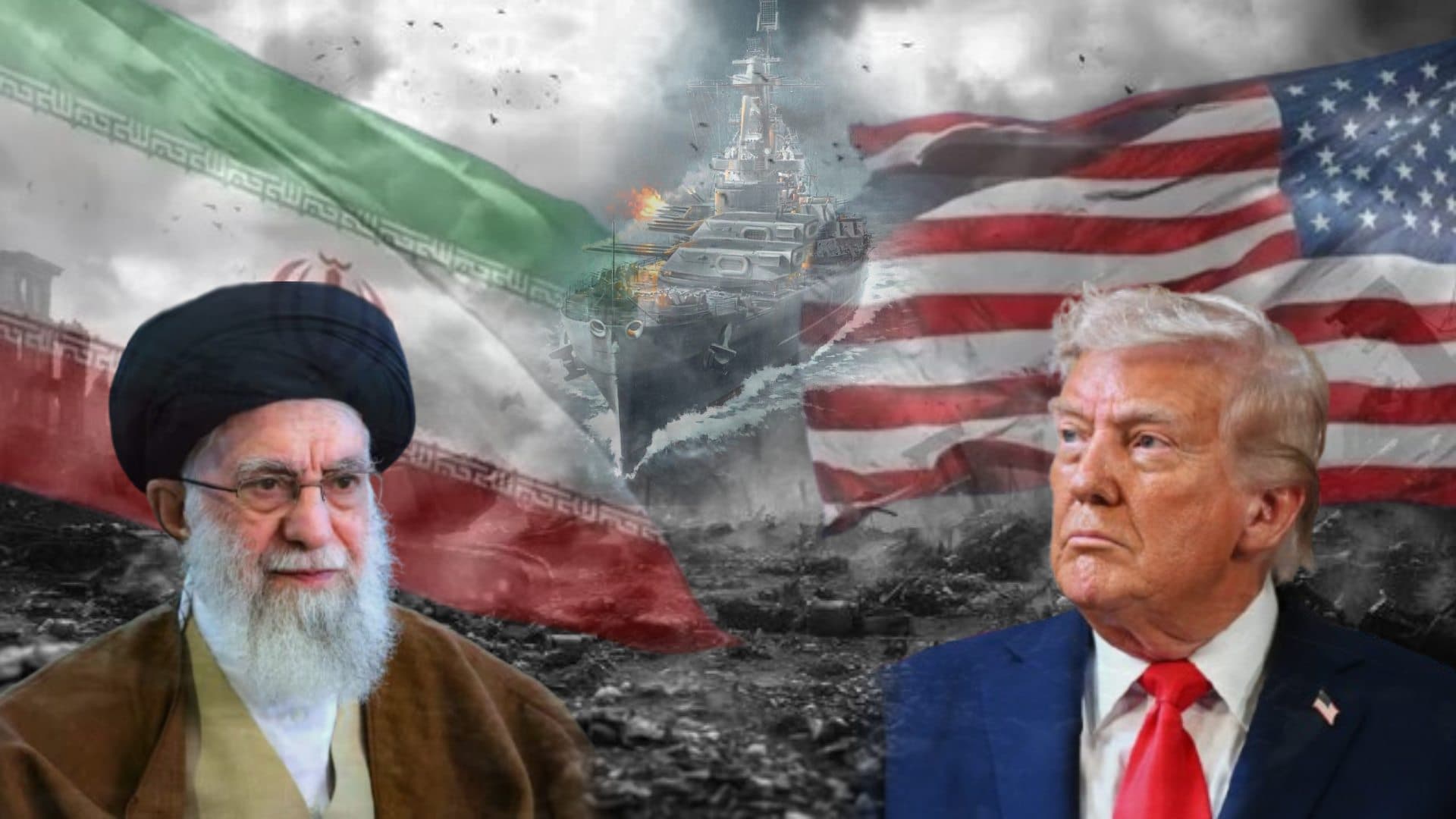
Key Points
- US-Iran ties shifted from nuclear cooperation and educational partnerships in the 1950s-70s to deep hostility after the 1979 Revolution.
- Washington condemns Iran’s human rights record and support for militant groups, while Tehran accuses the US of global hegemony and hostility toward Islam.
- Nuclear ambitions, sanctions, and proxy conflicts continue to fuel tensions, with military build-ups and threats of escalation shaping today’s geopolitics.
Bhubaneswar, Feb 24: The story of US-Iran relations is one of shifting alliances, ideological battles, and historic turning points. Once partners in trade, education, and even nuclear cooperation, the two nations now stand worlds apart - locked in decades of mistrust, sanctions, and sharp rhetoric.
From Eisenhower’s “Atoms for Peace” initiative to the
fallout of the 1979 Iranian Revolution, and from university collaborations to
bitter diplomatic estrangement, the relationship has evolved into one of the
most complex and contentious in modern geopolitics.
Amid the long-standing tensions between the United States
and Iran - although sparked earlier, but took a drastic turn after Tehran’s
support for Lebanon and Palestine in their conflict with Israel - their
relationship traces back to 1953.
Also Read: Mexican Drug Lord's Killing Triggers Unrest, Roadblocks, Stranded Americans
A New Ally!
In December 1953, President Dwight D. Eisenhower delivered his famous “Atoms for Peace” speech at the United Nations, launching a programme that shared nuclear technology for peaceful purposes. Iran quickly came on board. By 1957, the US and Iran signed a civil nuclear cooperation agreement, under which Washington provided Tehran with its first nuclear research reactor and the fuel to operate it. In 1967, the US supplied Iran with highly enriched uranium for use in that reactor.

📱 Get Argus News App
✨
Iran further cemented its role in the global nuclear framework by signing the Nuclear Non-Proliferation Treaty (NPT) in July 1968, with its parliament ratifying the treaty in 1970. This allowed Iran to receive continued nuclear assistance from Western nations, including the US and European partners. However, this cooperation came to an abrupt halt following the 1979 Iranian Revolution, which transformed Iran’s political landscape and ended decades of close nuclear collaboration.
Talk about education during the Pahlavi era, Iran’s higher
education system was heavily influenced by American models. Institutions such
as Pahlavi University (now Shiraz University), Sharif University of Technology,
and Isfahan University of Technology were developed with guidance from US
universities, including the University of Chicago, MIT, and the University of
Pennsylvania. American professors were invited to teach, and curricula were
designed to mirror Western standards.
Iran also invested significantly in US academia. For
example, the Shah endowed a chair in petroleum engineering at the University of
Southern California and contributed $1 million to George Washington University
to establish an Iranian Studies programme.
The Iranian Revolution
The Iranian Revolution, also called the Islamic Revolution,
was a mass uprising that unfolded between January 1978 and February 1979. It
led to the overthrow of Mohammad Reza Shah Pahlavi and the end of the monarchy
in Iran. The revolution was fuelled by widespread discontent over political
repression, corruption, social inequality, and the Shah’s close ties with
Western powers.
Ayatollah Ruhollah Khomeini, who had been exiled, returned
to Iran in February 1979 and quickly became the central figure of the new
Islamic Republic. The revolution replaced the 1906 Persian Constitution with a
new system rooted in Islamic governance, making Khomeini the Supreme Leader.
Key outcomes included:
- The fall of the Pahlavi dynasty and establishment of the Islamic Republic.
- A sharp ideological shift, with governance based on Islamic law.
- The beginning of strained relations with the West, including the Iran hostage crisis later in 1979.
The revolution marked a turning point in Middle Eastern politics, reshaping Iran’s role globally and setting the stage for decades of tension with the United States and its allies.
Post Revolution Era
The United States and Iran officially broke off diplomatic relations on April 7, 1980, following the US Embassy hostage crisis in Tehran. Since then, the two countries have relied on “protecting powers” to manage limited diplomatic and consular affairs: Pakistan represents Iranian interests in Washington, DC, while Switzerland represents US interests in Tehran.
In August 2018, Iran’s Supreme Leader Ali Khamenei declared
a permanent ban on negotiations with the United States, reinforcing decades of
hostility. Relations have remained tense, marked by sanctions, proxy conflicts,
and accusations of plots against US officials. Despite occasional indirect
contacts, formal diplomatic ties have been frozen for nearly half a century,
making this one of the longest-standing rifts in modern international
relations.
The Ideological Clash
Iran has long accused the United States of being hostile to
Islamic values and discriminatory toward Muslim minorities within its borders.
Iranian leaders also portray Washington as a global hegemon that imposes its
will on other nations and supports authoritarian regimes when it suits US
interests.
Also Read: India Issues Fresh Advisory For Nationals In Iran To Leave Amid Evolving Situation
On the other hand, the United States consistently criticises Iran for widespread human rights abuses, particularly since the 1979 Islamic Revolution under Ayatollah Khomeini and his successors. Washington points to Iran’s restrictions on political freedoms, treatment of women and minorities, and suppression of dissent as evidence of authoritarian governance.
A major source of tension is Iran’s support for militant groups across the Middle East. The US and its allies accuse Tehran of funding and arming organizations such as Hamas, Hezbollah, and the Houthis, which they classify as terrorist groups. Analysts note that Hamas, for example, has received years of Iranian training, weapons, and hundreds of millions of dollars in funding, strengthening its ability to carry out attacks against Israel.
Current Scenario & Trump Effect
As US envoys continue negotiations with Iran, the United States is undertaking its largest airpower build-up in the Middle East since the 2003 invasion of Iraq, deploying the USS Gerald R Ford and the USS Abraham Lincoln carrier strike groups, along with fighter jets, refuelling tankers and air defence systems.
Senior US officials have demanded that Iran halt uranium enrichment, curb its ballistic missile programme and end support for proxy groups, while Tehran has reiterated that it wants to find a diplomatic solution with the US on its nuclear programme but will defend itself if Washington resorts to military action.
On February 19, 2026, Donald Trump said he would decide
within 10 days whether to authorise military action, though it remains unclear
whether any strike would target nuclear facilities, missile stockpiles, or aim
at regime change. Amid the heightened US presence, Iran temporarily closed the
Strait of Hormuz for live-fire drills. Trump had earlier threatened
intervention following mass anti-government protests in late December 2025,
which were met with a severe crackdown, reportedly killing thousands.
In recent years, tensions have centred on Iran’s nuclear
programme, regional influence and US sanctions. During his 2017–2021
administration, Trump pursued a “maximum pressure” campaign, withdrawing from
the Joint Comprehensive Plan of Action (JCPOA) in May 2018 and re-imposing
sweeping sanctions on Iran. Washington accused Tehran of destabilising the
Middle East through support for groups such as Hezbollah and Hamas, while Iran
insisted its nuclear programme was peaceful.
Supreme Leader Ali Khamenei repeatedly rejected direct talks
with the US, particularly after the JCPOA withdrawal. Iranian officials warned
that sustained pressure could push the country towards expanding its nuclear
activities.
As a widening geopolitical fault line, the standoff goes
beyond bilateral tensions, with Russia often aligning with Iran against the
United States, while Israel remains central as Washington and its allies stay
committed to preventing Iran from acquiring nuclear weapons, a dynamic
reshaping Middle Eastern geopolitics.
Compiled by: Satabhisa Jena
Related Topics
Explore more stories