



UNGA 2026 / India Hits Back at Shehbaz Sharif at UN, Raises 9/11, Kashmir and Operation Sindoor
Key Points
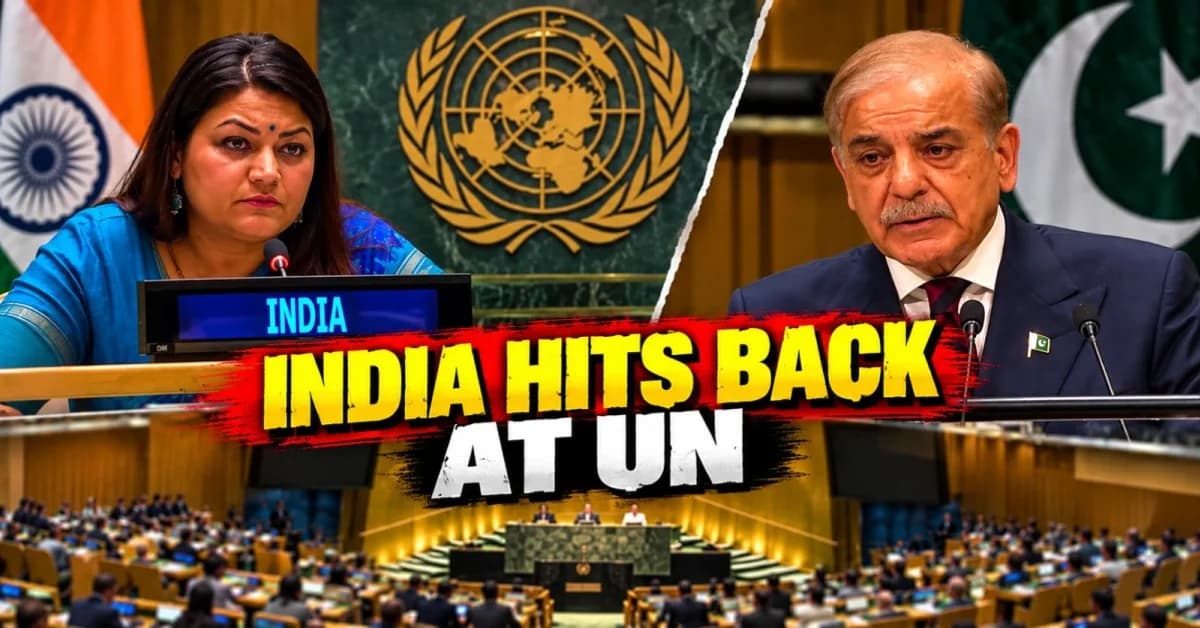
India delivered a sharp response to Pakistan Prime Minister Shehbaz Sharif at the UN General Assembly, raising questions over terrorism, Osama bin Laden, Kashmir, Pakistan's military establishment and Operation Sindoor.
United Nations, Sept 26: India strongly criticised Pakistan Prime Minister Shehbaz Sharif's remarks at the United Nations General Assembly, accusing Islamabad of hypocrisy over terrorism, democracy, religious tolerance and the Kashmir issue.
Exercising India's right of reply on Friday, Petal Gahlot, First Secretary at India's UN Mission, rejected Sharif's criticism of India and highlighted Pakistan's alleged links to terrorism, including the presence of 9/11 mastermind Osama bin Laden in Abbottabad.
Gahlot described Sharif's attack on India as "bizarre" and questioned the Pakistani government's political relationship with the country's military leadership.
India Raises Osama bin Laden and 9/11
Responding to Pakistan's statements at the UN, Gahlot recalled that Osama bin Laden, the mastermind of the September 11, 2001 terrorist attacks in the United States, had been living in Abbottabad, close to the Pakistan Military Academy.
Also Read; EAM Jaishankar Jaishankar to Address UNGA on September 26

📱 Get Argus News App
✨Bin Laden was killed in 2011 during a US operation in Abbottabad.
Gahlot said Pakistan's military establishment remained a central factor in the country's political system and questioned Sharif's repeated praise for Field Marshal Syed Asim Munir during his UN speech.
She also referred to Pakistan's "Form 47 government", a term used by critics of the Pakistani government in connection with allegations surrounding the country's 2024 general election.
India Questions Pakistan's Democratic Credentials
Gahlot also challenged Pakistan's claims regarding democratic rights and human values.
She argued that Pakistan's political system remains heavily influenced by its military establishment and referred to constitutional and political developments involving the country's military leadership.
India's representative further criticised Pakistan's comments on religious intolerance in India, pointing to Pakistan's blasphemy laws and the treatment of religious minorities.
"The world knows how minorities are treated in Pakistan; no pious platitude can mislead it," she said.
India Reiterates Position on Jammu and Kashmir
The Kashmir issue was another major point of contention during India's right of reply.
Gahlot reiterated India's position that Jammu and Kashmir is an integral and inalienable part of the country.
Turning the focus to Pakistan-occupied Jammu and Kashmir (PoJK), she raised allegations concerning violence, political unrest and restrictions on basic rights in the region.
She specifically referred to protests and unrest in areas including Rawalakot and criticised Pakistan's handling of dissent.
India Defends Operation Sindoor
Gahlot also responded to Sharif's remarks concerning India's military action under Operation Sindoor.
India has described Operation Sindoor as a response to the April 2025 Pahalgam terror attack, in which 26 people were killed, and has said the operation targeted terrorist infrastructure.
"We demonstrated last year that terrorists will have nowhere to run, nowhere to hide," Gahlot said.
She further asserted India's right to defend itself against terrorism and warned that continued terrorist attacks linked to Pakistan could have consequences for bilateral relations.
"Our right to defend ourselves against terrorism will be exercised," she said.
Also Read: India, Gulf Countries Reaffirm Freedom of Navigation; Push Trade and Diaspora Ties
India Accuses Pakistan of Repeating False Claims
Addressing the international community at the UN General Assembly, Gahlot said India was confident that member states would assess Pakistan's policies based on their actions rather than its statements.
She criticised what she described as Pakistan's repeated allegations against India, saying that repeating claims at the UN does not make them true.
"Pakistan's terrorism, deceit and duplicity will neither benefit it nor the world," she said.
The exchange highlights the continuing diplomatic tensions between India and Pakistan at the United Nations, particularly over terrorism, Kashmir, bilateral relations and the role of Pakistan's military establishment.
Related Topics
Explore more stories