



India and Gulf Countries / India, Gulf Countries Reaffirm Freedom of Navigation; Push Trade and Diaspora Ties
Key Points
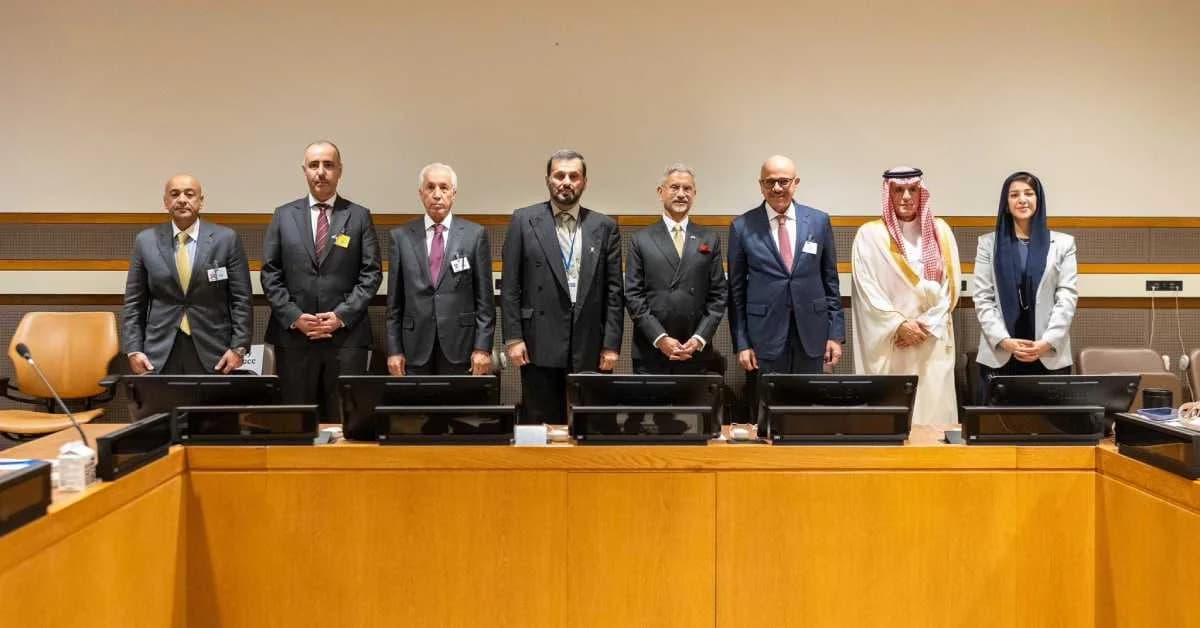
New York, Sep 26: India and the Gulf Cooperation Council (GCC) reaffirmed their shared commitment to freedom of navigation and maritime security during a high‑level ministerial meeting in New York, amid growing concerns over disruptions in regional waters, officials said on Saturday.
External Affairs Minister S. Jaishankar, who co-chaired the
India-Gulf Cooperation Council Troika Ministerial meeting here on Friday, said
on X that they "reiterated our strong commitment to freedom of navigation
and safety of seafarers and commercial shipping".
Glad to co-chair the India-Gulf Cooperation Council Troika Ministerial Meeting in New York on the margins of #UNGA81.
— Dr. S. Jaishankar (@DrSJaishankar) September 25, 2026
Reviewed the progress of the India-GCC Joint Action Plan 2024–28 and discussed ways to further advance our partnership.
Welcomed the launch of India-GCC FTA… pic.twitter.com/e5MGzOPb59
GCC Secretary General Jasem Al-Budaiwi, Bahrain's Foreign Minister Abdul Latif Al-Zayani, and Qatar's Minister of State for Foreign Affairs Sultan bin Saad Al Muraikhi were among those at the meeting.

📱 Get Argus News App
✨EAM Jaishankar said the meeting "reviewed the progress of the India-GCC Joint Action Plan 2024–28 and discussed ways to further advance our partnership".
The plan was adopted in 2024 at the inaugural India-GCC Foreign Ministers meeting in Riyadh.
It covers cooperation in health, trade, agriculture, food security, transportation, energy and energy security, and culture.
EAM Jaishankar said he "Thanked GCC leaderships for the support extended to the Indian community".
The biggest concentration of the diaspora is in the Gulf region, where over 9 million Indians live.
EAM Jaishankar said in his post that they "welcomed the launch of India-GCC FTA negotiations".
The six-member GCC is currently the largest trade partner for India with bilateral trade recording about $178 billion in 2024-25.
Negotiations resumed in February for the free trade
agreement.
Also Read: 'New Dimension To Ties': EAM Jaishankar Hails India–Japan Cricket Match
In preparation for the ministerial meeting, talks were held in Riyadh last month between Vipul, India’s ambassador to Saudi Arabia, and Al-Budaiwi.
EAM Jaishankar said in his post, "Look forward to strengthening ties in the areas of trade, investment, energy, food security, health, new technologies, culture and people-to-people exchanges".
--IANS
Related Topics
Explore more stories