



Geopolitics / Donald Trump Calls Canada “Most Difficult”, Says it “Can’t Survive” without US as Trade War Escalates
Key Points
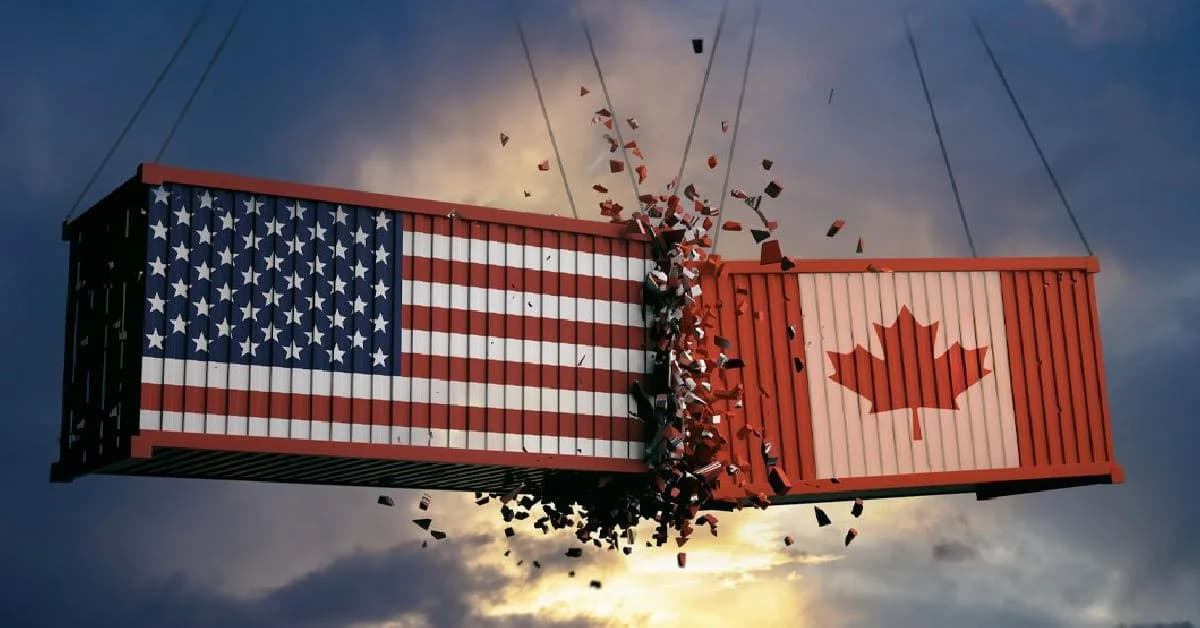
Trump escalates US‑Canada trade clash, calling Ottawa “difficult and unreasonable,” as both sides impose steep tariffs, spar over dairy, autos, and alcohol, and brace for economic fallout across integrated supply chains.
Washington, Aug 26: The trade standoff between Washington and Ottawa has entered a new and volatile phase, with President Donald Trump unleashing his harshest rhetoric yet against Canada.
In a statement issued Tuesday, Trump branded Canada the most “difficult and unreasonable” trading partner of the United States and warned that the country “could not survive economically without access to the American market.”
The White House accused Ottawa of “ripping off the United States for decades” and vowed to end what it described as Canada’s preferential access to the world’s largest economy.
Also read: Iran Currency ‘Rial’ Crashes as US Launches New Sanctions

📱 Get Argus News App
✨On Tuesday, the White House declared that Trump would no longer allow Ottawa to benefit from preferential access to the world’s largest economy. “Canada is easily the most difficult and unreasonable. They feel entitled, but they are not a State, and will be entitled no longer!” Trump said in a statement released by the White House.
The strongly worded remarks followed Canada’s announcement of additional retaliatory tariffs on American products, marking a sharp deterioration in relations between two nations that share one of the world’s largest bilateral trading relationships.
According to the White House, Washington had offered Canada deep tariff reductions covering steel, aluminium, automobiles and lumber. It accused Ottawa of responding with “unreasonable demands, walk-backs, and flat-out rejection.” The administration further claimed that Canada and China were the only countries that had chosen retaliation over negotiation in their trade disputes with Washington.
The statement highlighted specific grievances. Canada, it said, imposed 25 per cent tariffs and company-specific quotas on American vehicles, contributing to a 22 per cent decline in US automobile exports to Canada over the past year. It also accused Canadian provinces and territories of restricting American wine, beer and spirits, noting that US alcohol exports to Canada had fallen by 81 per cent in one year.
Dairy was singled out as another major source of friction. The White House argued that Canada used restrictive tariff-rate quotas and imposed over-quota tariffs approaching 300 per cent on certain US dairy products. It described the rates as so high that they effectively blocked American products from entering the Canadian market.
The administration also said the United States had recorded an average annual goods trade deficit of about $50 billion with Canada over the past decade. “Without the United States, Canada could not survive,” the statement asserted, pointing out that Canada sends roughly three-quarters of its goods exports to the American market. It added that the US economy was approximately 13 times larger than Canada’s and had more than eight times its population. “The United States has the clear leverage,” the statement concluded.
Canada swiftly rejected Washington’s position and announced that it would match the new American tariffs “dollar-for-dollar, rate for rate.” Ottawa said Washington had proposed terms that were not in Canada’s national interest and that it suspended negotiations rather than accept an agreement that could harm its workers, businesses and strategic industries.
Effective September 8, Canada will impose tariffs of 15, 25 and 50 per cent on American goods covering $27.6 billion in imports. The targeted sectors include steel, dairy, appliances, agricultural equipment, pulp and paper, electronics, furniture and clothing. “When the United States asked too much and offered too little, we chose to stand up for Canadians,” Canadian Finance Minister François-Philippe Champagne said.
Ottawa also unveiled a $7.5 billion assistance package for workers and businesses affected by the trade dispute. The measures include liquidity support, worker-retention programmes, training assistance and investments to help companies diversify.
The confrontation comes despite the US-Mexico-Canada Agreement, which has governed trade between the three countries since July 2020. The pact replaced NAFTA and established updated rules for automobiles, agriculture, labour, intellectual property and digital commerce.
Canada remains one of the United States’ largest trading partners, with deeply integrated supply chains in automobiles, energy, agriculture and manufacturing. Analysts warn that disruptions caused by tariffs could ripple across both economies, affecting producers and consumers alike, as many products and components cross the border multiple times before reaching the market.
(IANS)
Related Topics
Explore more stories