



The Voice God Sculpted for Grandeur: Pranab Patnaik, the Classical Colossus of Odia Music| Special Tribute
Key Points
Bhubaneswar: There are singers who acquire a voice, and there are a rare few whose very being appears to have been shaped around one.
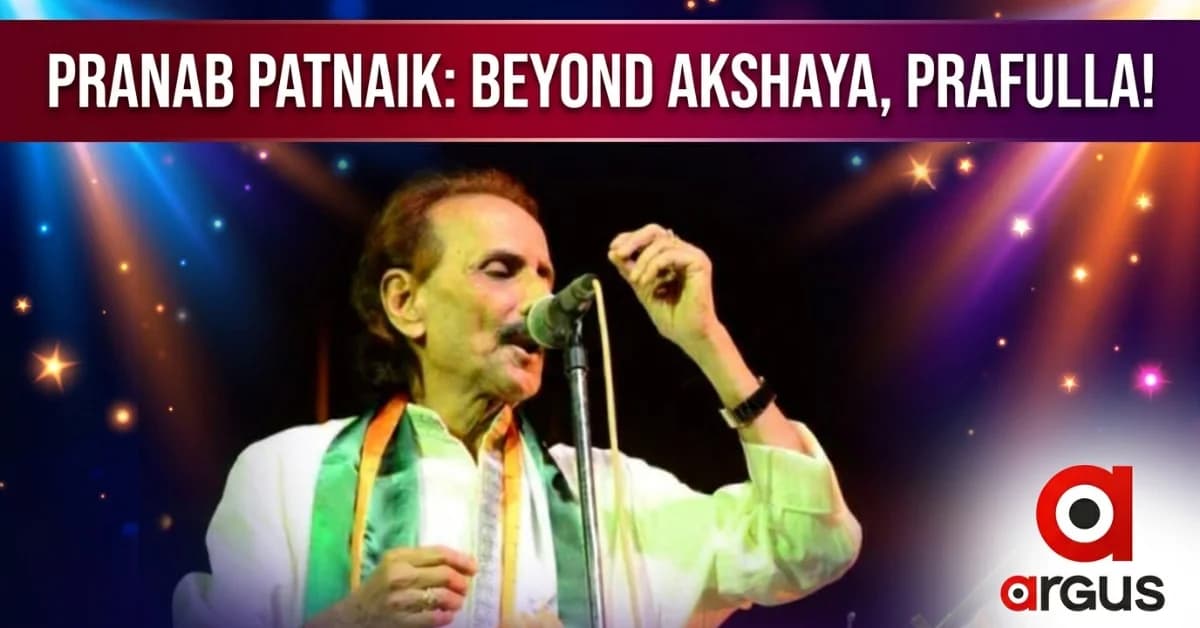
Pranab Patnaik belonged to the latter category. The serene depth in his eyes seemed made for devotional surrender; his broad, commanding facial structure suited the open-throated resonance that became his signature; and his calm, anchored stage presence reflected the extraordinary breath control with which he could scale high notes without strain. Even his minimalist gestures appeared to mirror the discipline of his music.
In Pranab Patnaik, it often seemed as if nature had quietly matched the instrument to the man –and the man to the music.
That instrument would go on to occupy a unique place in the golden era of Odia music.
‘Maa' Introduces Odia Music Gems, Pranab and Akshaya
Pranab Patnaik made his debut in Odia film music in the landmark Maa in 1958 – the same film that also introduced another future legend, Akshaya Mohanty, to playback singing.
Along with Akshaya
Mohanty and Prafulla Kar, Pranab would eventually be remembered as the “Holy
Trinity” of Odisha’s golden musical era.
#ଶେଷ_ଦର୍ଶନ_କଲେ_ବାବୁ_ସିଂ
— Argus News (@ArgusNews_in) August 21, 2026
ବିଶିଷ୍ଟ ଓଡ଼ିଆ କଣ୍ଠଶିଳ୍ପୀ ପ୍ରଣବ ପଟ୍ଟନାୟକଙ୍କ ୮୮ ବର୍ଷ ବୟସରେ ଭୁବନେଶ୍ୱରର ଏକ ଘରୋଇ ହସ୍ପିଟାଲରେ ପରଲୋକ ହୋଇଛି। ଏହି ଦୁଃଖଦ ଖବର ପାଇ ଏକାମ୍ର ବିଧାୟକ ବାବୁ ସିଂ ହସ୍ପିଟାଲରେ ପହଞ୍ଚି ଅମର ଆତ୍ମାର ଶେଷ ଦର୍ଶନ କରିବା ସହ ଶ୍ରଦ୍ଧାଞ୍ଜଳି ଅର୍ପଣ କରିଛନ୍ତି।#PranabPatnaik #BabuSingh… pic.twitter.com/STln3ZOTvW
But even
within that triumvirate, his place was distinctive.
When Legends Akshaya and Prafulla Stepped Aside for Pranab’s Voice
Akshaya Mohanty brought modernity, experimentation and a conversational, romantic musical sensibility.
Prafulla Kar carried the fragrance of Odisha’s folk traditions, lyrical sweetness and rooted melodic richness.
But Pranab Patnaik brought something else altogether – classical grandeur, vocal architecture and the dramatic power of the high register.
And that was why, whenever the music demanded an exacting classical foundation, formidable pitch control or a song that had to soar above the ordinary, the call often fell on Pranab.
Even Akshaya Mohanty and Prafulla Kar could turn to him when a composition required that special combination of raga discipline, open-throated weight and theatrical intensity.
Pranab was the voice to which Odia music returned when the composition itself seemed to demand a larger canvas.
Mastering the Duet: Collaborations with National Icons
His extraordinary mastery over classical music made him equally formidable in duet singing with some of India's greatest female voices.
With S. Janaki, he matched pitch with pitch in the soaring Purila Asha Mora from Paribar, composed by Upendra Kumar.
The duet demanded precision in the upper register, with both singers negotiating high notes with remarkable control.
With Vani
Jairam, whose own classical grounding made her one of Indian playback's
most musically accomplished voices, Pranab found a natural artistic
counterpart in Jhumu Jhumu Nupura Baje, a semi-classical composition
marked by rhythmic exchanges and delicate classical movements.
With Usha Mangeshkar, who brought a distinct playfulness and crisp Bollywood-style clarity in Odia cinema music, Patnaik added a highly commercial, toe-tapping flavor to Odia playback – Phula Renu Luchi Rahi – a lively, melodic track that highlights how comfortably Patnaik could pivot from heavy classical numbers to accessible, breezy romantic melodies.

📱 Get Argus News App
✨Solo Masterpieces: Weaving Ragas into Odia Playback
His solo repertoire was equally revealing of his classical command.
Mora Antara Mandire Rahi from Mala Janha, composed by Akshaya Mohanty, drew upon the Bhairavi idiom and remains one of the finest examples of semi-classical male playback in Odia cinema.
In the Jagannath devotional Kala Kalebara Kanhai, based on Kafi or Mishra Kafi, his open-throated weight gave voice to spiritual surrender.
Chaala Sakhi Aambhe, from Bhajans of Salbeg, rested on the serene Kalyan or Yaman framework, while Mun Je Amruta Sagara Bindu from Jibana Eka Nataka drew from Alhaiya Bilawal. This legendary track demanded both a high register and exceptional breath control.
The Guru Who Built the Foundation
Behind this seemingly effortless vocal authority lay rigorous classical training under Guru Kundal Adinarayan, an eminent classical maestro who remained more closely associated with the world of musical training than the glamour of mainstream cinema. It was under him that Pranab's voice was disciplined, expanded and conditioned.
The training gave Pranab the structural strength to sustain long notes, move across a wide pitch range and execute classical embellishments without sacrificing tonal weight. More importantly, the classical grounding did not imprison him within rigid grammar. It enabled him to move between an Odissi devotional, a semi-classical composition and a high-drama film song while retaining the technical integrity of his voice.
That training soon found its way into Odia cinema.
Pranab formally entered the film industry with the 1958 landmark Maa. His talent was recognised by eminent music director Bhubaneswar Mishra, who composed for the film under the pseudonym Srikumar. The film also marked the debut of lyricist Gurukrushna Goswami and singer Akshaya Mohanty – a convergence of talent that would help reshape the course of Odia cinema and music.
A Voice Across Five Decades
From the late 1950s through the 1990s, Pranab Patnaik remained one of the most important voices in Odia playback.
He sang across genres – Odissi, semi-classical music, devotional songs, modern compositions, folk-based melodies, ghazals and emotionally intense film numbers.
His film journey stretched across more than 200 Odia feature films, with an estimated repertoire of over 600 recorded tracks, including non-film and traditional recordings. Among his most enduring songs were:
- Majhire... Uansa Rati Pahila from Chilika Tire, composed by Shantanu Mohapatra
- Mora Antara Mandire Rahi from Mala Janha, composed by Akshaya Mohanty
- Pahadara Sepakhe from Papa Punya
- Tuki Paradesi Nija Deshe from Sri Lokanath
- Jebethu Bujhili Jibanaku
- Re Mita Aa Sangata, his evergreen duet with Sikandar Alam from Sesa Srabana, composed by Prafulla Kar
He was also the only male playback singer to win the Odisha State Film Award for Best Male Playback Singer seven times. The state later honoured him with the prestigious Jayadev Samman, the highest honour in Odisha cinema.
A Brief Biography
Pranab Kishore Patnaik was one of the defining male playback voices of Odia cinema's golden era. His career, spanning more than five decades, began with Maa in 1958 and went on to establish him as one of the most technically versatile singers in the history of Odia music.
Classically trained, he developed a wide vocal range marked by deep resonance, open-throated projection, high-pitch control and exceptional breath command. His ability to combine classical grammar with cinematic emotion allowed him to sing with equal authority across devotional, semi-classical, Odissi, folk, ghazal and mainstream film music.
For generations of listeners, Pranab Patnaik was not merely one of the three great voices of an era. He was its classical summit.
A Tribute
The loss of Pranab Patnaik is a loss that will be felt not only by Odia cinema but by the entire world of Odia music. His contribution was colossal, but his true greatness lay in his versatility. He could make a raga breathe with classical discipline, turn a devotional into an act of spiritual surrender, raise a high-pitched film song to dramatic splendour and still retain the emotional intimacy of a singer speaking directly to his listener.
That rare balance of technique, power and emotion cannot be manufactured. Nor can it be easily replaced.
Such geniuses are not born every time.
With Pranab Patnaik, Odisha has lost one of the tallest pillars of its golden musical tradition. His songs will remain, his voice will continue to travel across generations, but his absence will leave a void in the Odia music world that will be difficult to fill.
For a singer
who could climb the most demanding notes with such ease, the silence he leaves
behind may now be the hardest note for Odisha to endure.
Also Read: From 'Kalia Asila Bhai, Kalia Asila...' to Eternity: Voice Behind Odisha's Timeless Jagannath Devotional Song S. Janaki Falls Silent at 88 | Special Report
Related Topics
Explore more stories