



Indian Cinema / Flowers, Curtains And Kisses: Here's The Long Journey Of Lip-Lock In Indian Cinema
·2 weeks ago·4 min read

Key Points
Indian cinema's tryst with the kiss dates back to 1921's 'Bilat Ferat' and 1933's 'Marthanda Varma', often credited as India's first on-screen lip-lock.
Bhubaneswar, Sep 12: For many Indians in the early 2000s, the television remote had one very important job: saving everyone in the family from an 'awkward' kissing scene. Peter Parker hanging upside down to kiss Mary Jane in 'Spider-Man' (2002) could send a hand racing towards the remote in many Indian households. Then came Emraan Hashmi's 'Murder' (2004) and the lip-lock became a talking point in its own right.
However, the kiss was hardly a 21st-century arrival. Indian cinema had been experimenting with it for more than a century.
When The Kiss Was Still New
The history is surprisingly complicated. The silent Bengali film 'Bilat Ferat' is widely regarded as one of the earliest Indian films to feature kissing, dating back to 1921.
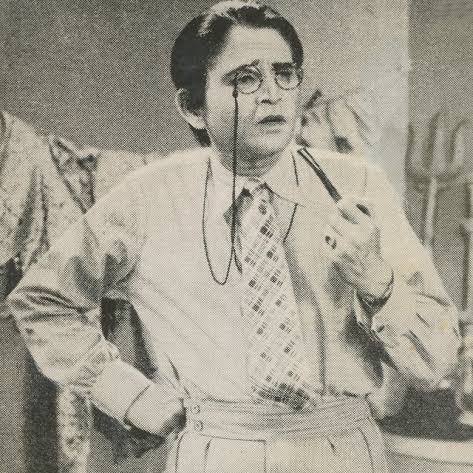
Lalita Pawar's 'Pati Bhakti' followed in 1922, while Seeta Devi and Charu Roy shared a kiss in 'A Throw of Dice' in 1929.
However, the kiss was hardly a 21st-century arrival. Indian cinema had been experimenting with it for more than a century.
When The Kiss Was Still New
The history is surprisingly complicated. The silent Bengali film 'Bilat Ferat' is widely regarded as one of the earliest Indian films to feature kissing, dating back to 1921.
Lalita Pawar's 'Pati Bhakti' followed in 1922, while Seeta Devi and Charu Roy shared a kiss in 'A Throw of Dice' in 1929.

📱 Get Argus News App
✨📰 60 Word News🎬 Argus Podcast📺 Live TV and Breaking News🔔 Free Notification Alerts
Download Free:
A scene in 'Marthanda Varma', the 1933 Malayalam silent film, is frequently credited by many film historians as India's first on-screen lip-lock. Later that year came 'Karma', starring Devika Rani and Himanshu Rai, whose much-discussed kissing sequence became one of the most famous intimate moments in early Indian cinema.
When The Kiss Disappeared
The Indian screen subsequently became far more conservative. Film censorship had existed since the British era, but the post-Independence period brought tighter regulation and a stronger emphasis on “decency” and “morality”.
The result was not necessarily the disappearance of romance. Instead, filmmakers became experts at suggesting intimacy without showing it.
Two flowers touching became a kiss. Lovers approaching each other suddenly disappeared behind a tree. A song took over just as things became interesting. Rain, rippling water, curtains and elaborate song sequences became part of Indian cinema's visual vocabulary of desire.
From Scandal To Selling Point
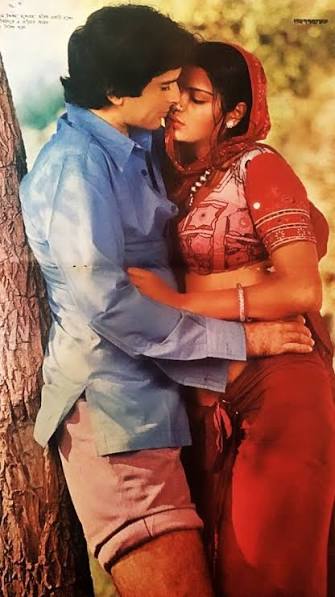
Hindi cinema's kiss began returning more visibly in the 1970s. Rishi Kapoor and Dimple Kapadia's 'Bobby' (1973) became an important landmark in youthful romance, while Zeenat Aman and Shashi Kapoor's intimacy in 'Satyam Shivam Sundaram' (1978) generated considerable controversy.
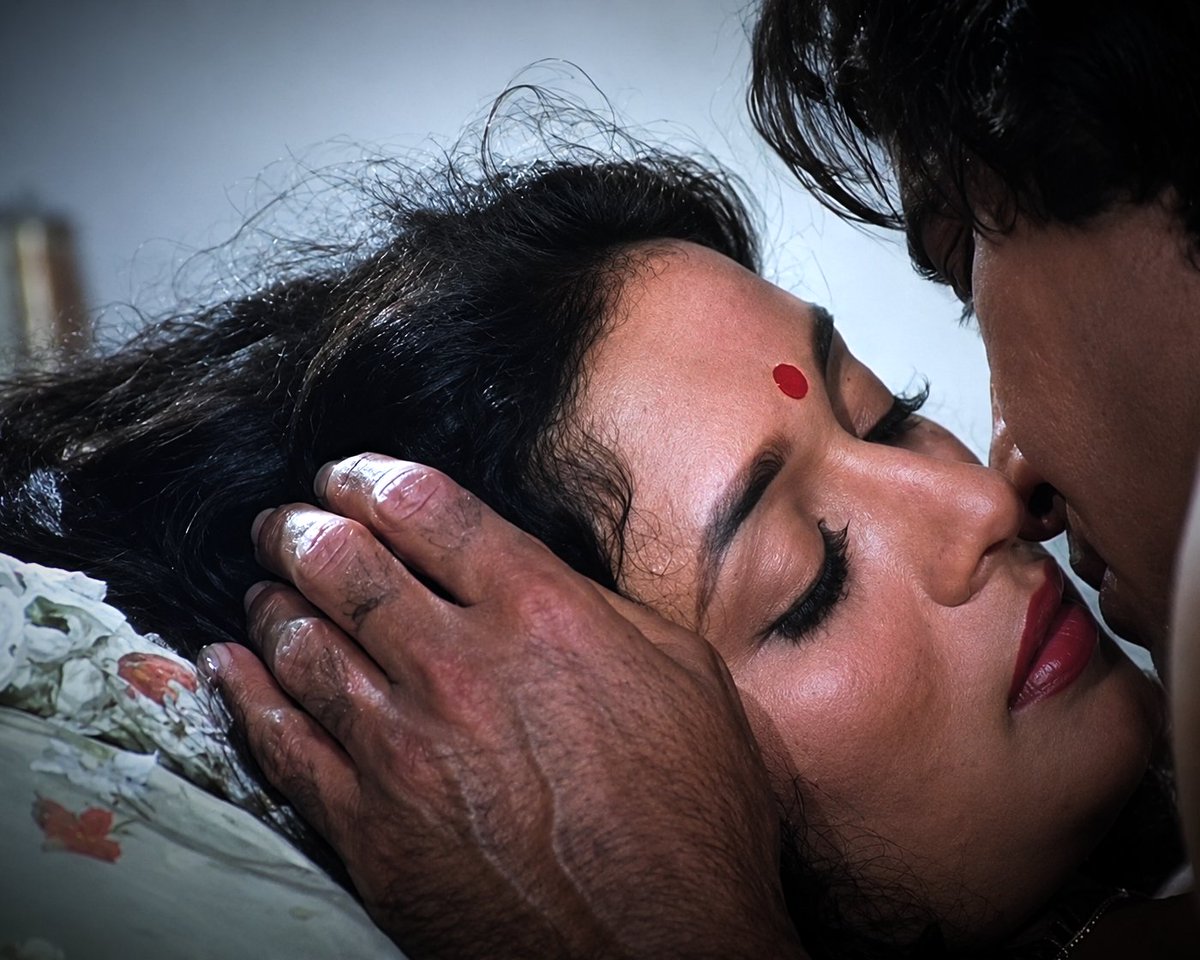
Another memorable moment came with 'Dayavan' (1988), when Madhuri Dixit and Vinod Khanna shared a prolonged kissing scene. The sequence became controversial at the time, and Dixit later said she regretted doing it, making it an important example of how the onscreen kiss could carry considerable discomfort for actors.
When The Kiss Disappeared
The Indian screen subsequently became far more conservative. Film censorship had existed since the British era, but the post-Independence period brought tighter regulation and a stronger emphasis on “decency” and “morality”.
The result was not necessarily the disappearance of romance. Instead, filmmakers became experts at suggesting intimacy without showing it.
Two flowers touching became a kiss. Lovers approaching each other suddenly disappeared behind a tree. A song took over just as things became interesting. Rain, rippling water, curtains and elaborate song sequences became part of Indian cinema's visual vocabulary of desire.
From Scandal To Selling Point
Hindi cinema's kiss began returning more visibly in the 1970s. Rishi Kapoor and Dimple Kapadia's 'Bobby' (1973) became an important landmark in youthful romance, while Zeenat Aman and Shashi Kapoor's intimacy in 'Satyam Shivam Sundaram' (1978) generated considerable controversy.
Another memorable moment came with 'Dayavan' (1988), when Madhuri Dixit and Vinod Khanna shared a prolonged kissing scene. The sequence became controversial at the time, and Dixit later said she regretted doing it, making it an important example of how the onscreen kiss could carry considerable discomfort for actors.
But the 1990s brought a more decisive change.
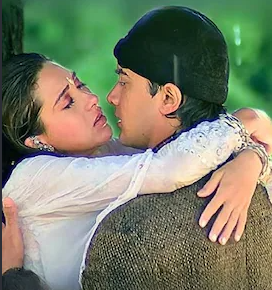
Aamir Khan and Karisma Kapoor's kiss in 'Raja Hindustani' (1996) became one of the most discussed intimate scenes in mainstream Hindi cinema. Remarkably, the film received a U certificate despite the lengthy sequence.
By the 2000s, films such as 'Murder', 'Jism', 'Zeher' and 'Gangster' had pushed the kiss firmly into commercial Hindi cinema. Emraan Hashmi's screen image became so closely associated with kissing that he was popularly branded the “serial kisser” of Bollywood.
The South Had Its Own Kiss Story
This was never merely a Bollywood phenomenon. Malayalam cinema had already entered the history books with 'Marthanda Varma'. Decades later, the industry again tested the boundaries of onscreen intimacy with films such as Chappa Kurishu (2011), whose extended kissing sequence became a major talking point.
Also Read: Sapna Chaudhary Recalls ‘Scary’ Farmhouse Show Where Gangster Kissed Her
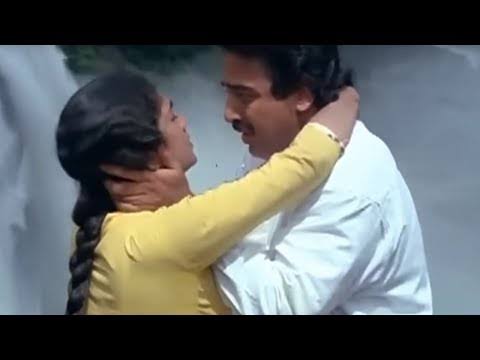
Tamil cinema, too, had its share of controversy. Kamal Haasan and Rekha's kiss in 'Punnagai Mannan' (1986) became particularly contentious years later when Rekha Harris said she had not been informed beforehand that the kiss would be filmed. The episode is significant today not merely because of the kiss itself, but because the conversation around screen intimacy has increasingly come to include an actor's consent.
Telugu cinema followed its own trajectory. Films such as 'Geethanjali' in 1989 brought a more direct expression of romance to the screen, while later films including 'Arjun Reddy' and 'Dear Comrade' portrayed physical relationships with considerably fewer euphemisms.
Also Read: Udit Narayan Kisses Female Fans On Lips During Concert, Video Goes Viral
Kannada cinema also gradually moved away from the traditional flower-and-cutaway formula, reflecting a broader change across India's regional industries.
The Kiss Today
Yet the evolution of Indian cinema should not be confused with the complete acceptance of on-screen kissing in Indian society.
Kisses are now considerably more common on the big screen and especially on streaming OTT platforms. But watching an intimate scene with family can still produce the same old reaction: somebody reaches for the remote, somebody suddenly becomes interested in the ceiling, and everyone waits for the scene to end.
That is perhaps the most fascinating part of the kiss's Indian journey.
It began as a cinematic novelty, became controversial, disappeared behind flowers and songs, returned as a scandal, became a commercial selling point and eventually evolved into an ordinary storytelling device.
Related Topics
Explore more stories