



History / Secret affairs, incest rumour that made this Mughal princess one of Indian history's most controversial figures
·31 mins ago·3 min read
Key Points
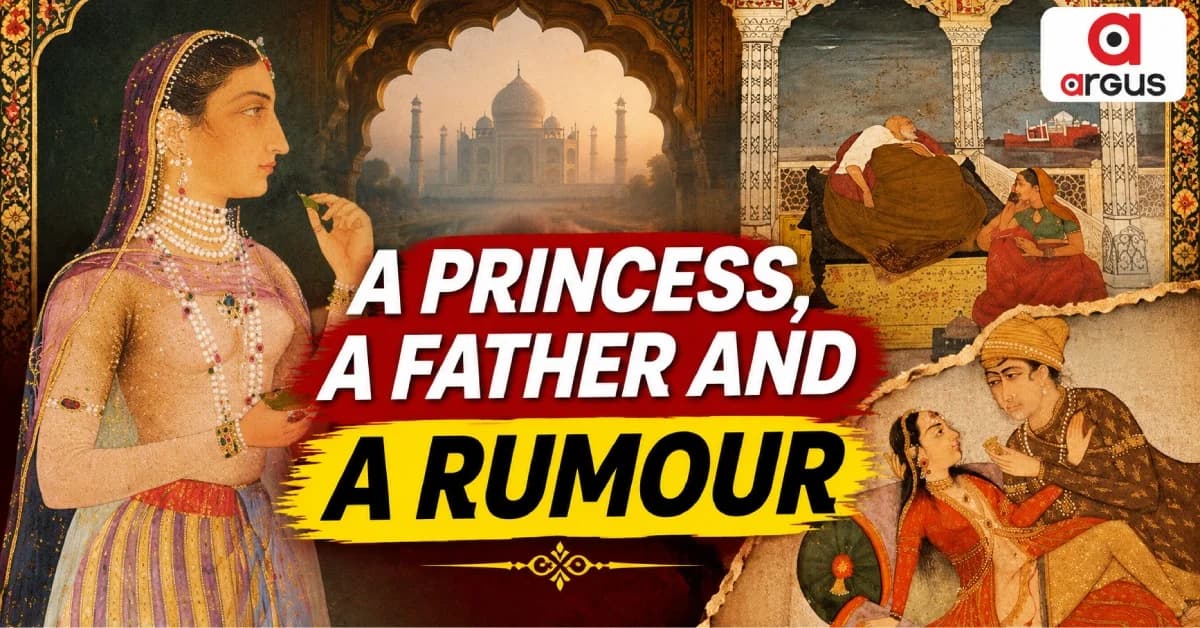
Born in 1614 to Shah Jahan and Mumtaz Mahal, Jahanara Begum became one of the most influential women in the Mughal Empire, assuming charge of the imperial household after her mother's death in 1631 and receiving the title of 'Padshah Begum', remaining unmarried and enjoying considerable political and financial influence.
Bhubaneswar, Nov 12: She was the favourite daughter of Shah Jahan and wielded extraordinary influence at the Mughal court. But behind Jahanara Begum's privileged position lay some of the most scandalous stories ever told about a Mughal princess.
Seventeenth-century European travellers wrote about alleged secret lovers, forbidden relationships and even an incest rumour involving her father -- Shah Jahan. One French physician claimed that two men associated with Jahanara met horrifying ends after Shah Jahan discovered their relationships. Let's discuss.
Born in 1614 to Shah Jahan and Mumtaz Mahal, Jahanara Begum became one of the most influential women in the Mughal Empire. Following her mother's death in 1631, she assumed charge of the imperial household and received the title of Padshah Begum. She remained unmarried and enjoyed considerable political and financial influence.
However, her private life became the subject of sensational accounts by European visitors to the Mughal court.

📱 Get Argus News App
✨📰 60 Word News🎬 Argus Podcast📺 Live TV and Breaking News🔔 Free Notification Alerts
Download Free:
One of the most disturbing accounts appeared in the writings of François Bernier, a French physician who spent several years in India during the reigns of Shah Jahan and Aurangzeb.
In his book, Travels in the Mogul Empire, Bernier described two alleged romantic relationships involving Jahanara.
In the first incident, Bernier claimed that a young man of modest social standing secretly visited the princess inside the imperial palace. According to his account, Shah Jahan learnt about the alleged relationship and decided to catch the couple off guard.
When the emperor unexpectedly entered Jahanara's apartments, the young man reportedly hid inside a large cauldron used for bathing. Bernier alleged that Shah Jahan ordered a fire to be lit beneath it, killing the man.
The French traveller described another alleged relationship involving a Persian nobleman named Nazer Khan, whom Jahanara had appointed as her steward.
According to Bernier, an influential court noble proposed Nazer Khan as a possible husband for the princess. Shah Jahan reportedly reacted angrily, suspecting an improper relationship between the two.
Bernier further claimed that the emperor presented Nazer Khan with poisoned betel leaf during a public court gathering. The unsuspecting nobleman consumed it and died before reaching home.
But Bernier's allegations did not end there.
Also Read: This princess from Sindh once rejected Mughal emperor’s marriage proposal, later made history
He also recorded a disturbing rumour suggesting that Shah Jahan's affection for Jahanara had crossed the boundaries of a father-daughter relationship. The allegation was framed through a metaphor about an emperor claiming the right to enjoy the fruit of a tree he had planted.
However, these claims were disputed even by another European visitor, Niccolao Manucci. He questioned the credibility of Bernier's account and argued that the incest allegation originated in popular gossip about Jahanara's devotion to her father.
Historian Faraz Anjum, in his academic paper Strangers' Gaze: Mughal Harem and European Travellers of the Seventeenth Century, highlights the limitations of such accounts. European travellers had little access to the private quarters of royal women and often relied on hearsay, speculation and second-hand information.
Consequently, Bernier's stories remain documented allegations rather than established historical events.
Jahanara died in 1681, leaving behind a legacy as a powerful political figure, Sufi writer and patron of architecture.
Related Topics
Explore more stories