



Space Tech News / India Now Has Capability to Track and Image Enemy Satellites in Orbit
·6 months ago·3 min read
Key Points
- Azista Industries' satellite AFR successfully imaged the International Space Station from orbit.
- This marks the first such capability demonstrated by India's private space sector.
- The achievement is a step toward enhancing Space Situational Awareness (SSA) to protect orbital assets.
Ahmedabad, Feb 8: In a significant development for India’s private space sector, Ahmedabad-based Azista Industries Private Limited has demonstrated an indigenous capability to image objects in orbit from another satellite, marking a first for the country’s private industry and a step toward strengthening space situational awareness (SSA).
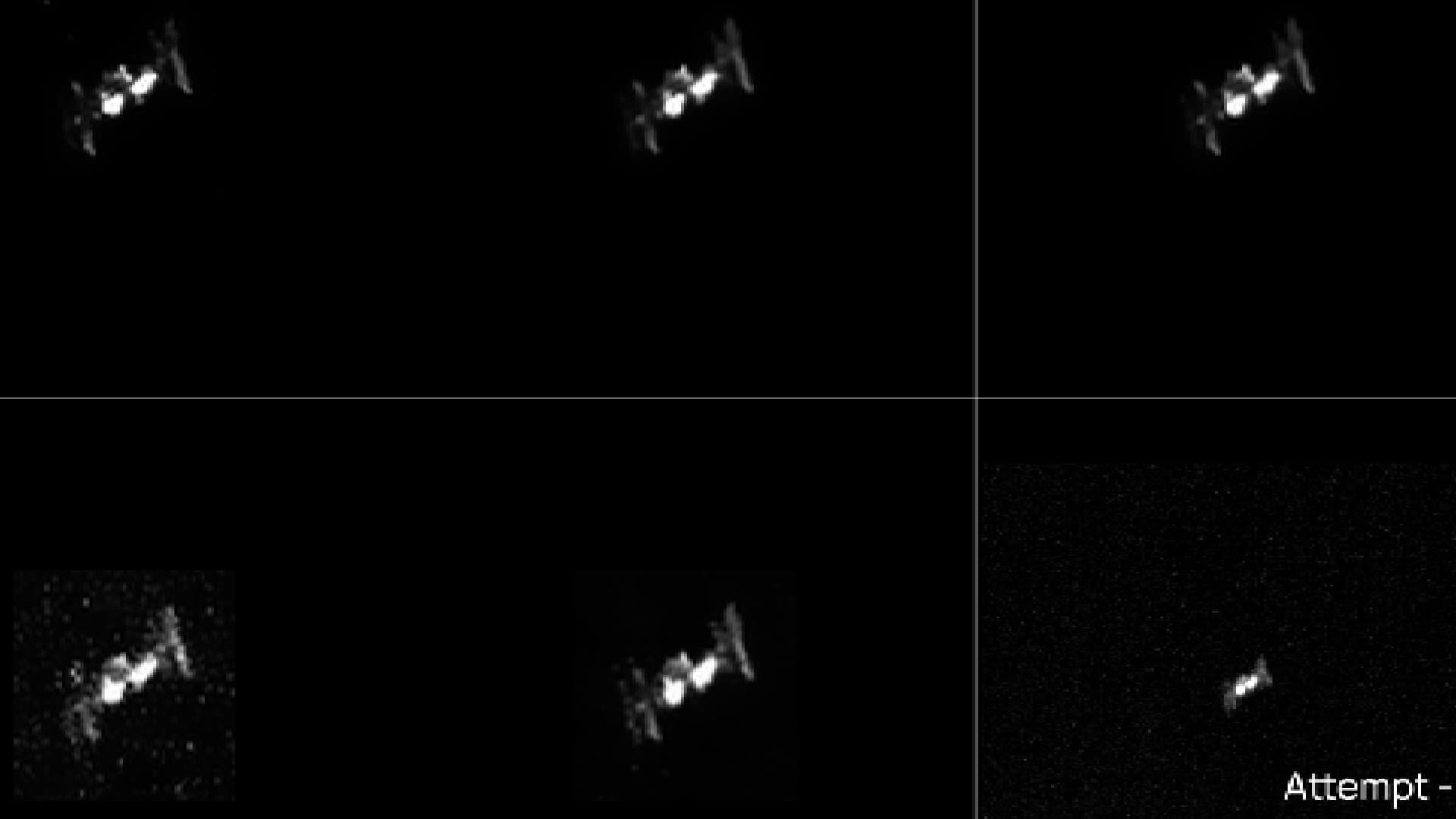
According to information shared by the company, its 80-kg Earth observation satellite AFR successfully captured images of the International Space Station (ISS) during two planned experiments on February 3. Our source from the ground informed that the experiments were conducted under near-horizon and sunlit conditions.
Azista said the first imaging pass was executed at an approximate distance of 300 km, followed by a second at about 245 km. During the attempts, the satellite’s sensor was tasked to track the ISS and captured 15 distinct frames with an imaging sampling of around 2.2 metres. The company stated that both attempts achieved 100 per cent success, validating its tracking algorithms and electro-optical imaging precision.
Also Read: Earth On Alert: Sun Releases Strongest Solar Flare Of 2026, ISRO Warns Of Radio Blackouts
Speaking after the experiment, Srinivas Reddy, Managing Director of Azista, said AFR currently supports multiple customers with advanced imaging and remote-sensing solutions and has now demonstrated Non-Earth Imaging (NEI) using fully indigenous systems. “These technologies form the backbone of our NEI and SSA payloads, enabling precise tracking and characterisation of objects in orbit,” he said.
Space Situational Awareness refers to the ability to detect, track and analyse the behaviour of objects in space. With increasing congestion in low-Earth orbit and more satellites being deployed globally, monitoring orbital activity has gained strategic importance.
India operates over 50 satellites across communication, navigation, Earth observation and strategic applications, with a combined valuation estimated at over ₹50,000 crore. Protecting these assets requires continuous monitoring of orbital activity, particularly during sensitive geopolitical situations.
While the Indian Space Research Organisation (ISRO) has previously demonstrated in-orbit manoeuvring capabilities, including through the SPADEX experiment, Azista’s demonstration represents a private sector initiative in this domain.
Brigadier Adarsh Bharadwaj, Executive Director at Azista, described the ISS imaging as an initial proof of capability. “This is the first proof of what can be achieved in the future,” he said, adding that enhanced SSA capabilities would help protect national interests in space.
AFR, launched on June 13, 2023, aboard SpaceX’s Falcon 9 as part of the Transporter-8 mission, is designed, built and operated entirely by private industry in India. The satellite has completed 2.5 years in orbit and, according to the company, continues to function nominally with another 2.5 years of mission life remaining.
Also Read: DRDO Successfully Tests SFDR Technology, Marks India’s Leap toward Next-Gen Missile Power
Azista stated that beyond SSA-related demonstrations, AFR supports naval imaging, night imaging and video imaging modes for civilian and defence customers. The company also said it is developing next-generation indigenous payloads capable of producing imagery of the ISS at resolutions up to 25 centimetres from its upcoming electro-optical payload manufacturing facility in Ahmedabad.
Officials maintained that the ISS imaging marks the beginning of expanded private participation in strategic space capabilities, with further applications subject to future development and regulatory frameworks.
According to information shared by the company, its 80-kg Earth observation satellite AFR successfully captured images of the International Space Station (ISS) during two planned experiments on February 3. Our source from the ground informed that the experiments were conducted under near-horizon and sunlit conditions.
Azista said the first imaging pass was executed at an approximate distance of 300 km, followed by a second at about 245 km. During the attempts, the satellite’s sensor was tasked to track the ISS and captured 15 distinct frames with an imaging sampling of around 2.2 metres. The company stated that both attempts achieved 100 per cent success, validating its tracking algorithms and electro-optical imaging precision.
Also Read: Earth On Alert: Sun Releases Strongest Solar Flare Of 2026, ISRO Warns Of Radio Blackouts
Speaking after the experiment, Srinivas Reddy, Managing Director of Azista, said AFR currently supports multiple customers with advanced imaging and remote-sensing solutions and has now demonstrated Non-Earth Imaging (NEI) using fully indigenous systems. “These technologies form the backbone of our NEI and SSA payloads, enabling precise tracking and characterisation of objects in orbit,” he said.
Space Situational Awareness refers to the ability to detect, track and analyse the behaviour of objects in space. With increasing congestion in low-Earth orbit and more satellites being deployed globally, monitoring orbital activity has gained strategic importance.
India operates over 50 satellites across communication, navigation, Earth observation and strategic applications, with a combined valuation estimated at over ₹50,000 crore. Protecting these assets requires continuous monitoring of orbital activity, particularly during sensitive geopolitical situations.
While the Indian Space Research Organisation (ISRO) has previously demonstrated in-orbit manoeuvring capabilities, including through the SPADEX experiment, Azista’s demonstration represents a private sector initiative in this domain.
Brigadier Adarsh Bharadwaj, Executive Director at Azista, described the ISS imaging as an initial proof of capability. “This is the first proof of what can be achieved in the future,” he said, adding that enhanced SSA capabilities would help protect national interests in space.
AFR, launched on June 13, 2023, aboard SpaceX’s Falcon 9 as part of the Transporter-8 mission, is designed, built and operated entirely by private industry in India. The satellite has completed 2.5 years in orbit and, according to the company, continues to function nominally with another 2.5 years of mission life remaining.
Also Read: DRDO Successfully Tests SFDR Technology, Marks India’s Leap toward Next-Gen Missile Power
Azista stated that beyond SSA-related demonstrations, AFR supports naval imaging, night imaging and video imaging modes for civilian and defence customers. The company also said it is developing next-generation indigenous payloads capable of producing imagery of the ISS at resolutions up to 25 centimetres from its upcoming electro-optical payload manufacturing facility in Ahmedabad.
Officials maintained that the ISS imaging marks the beginning of expanded private participation in strategic space capabilities, with further applications subject to future development and regulatory frameworks.

📱 Get Argus News App
✨📰 60 Word News🎬 Argus Podcast📺 Live TV and Breaking News🔔 Free Notification Alerts
Download Free:
Related Topics
Explore more stories