



Astronomy / Don’t Miss This Celestial Spectacle as Jupiter Lights Up Sky Starting January 10
·8 months ago·2 min read
Key Points
- Jupiter will be at one of its best viewing positions of the year from January 10, appearing exceptionally bright and large.
- The planet will be visible all night, rising in the east after sunset and climbing overhead by midnight.
- No telescope needed, but binoculars may reveal its four largest moons; alignment has no astrological impact on Earth.
Bhubaneswar, Jan 9: Skywatchers are set for a celestial treat from January 10 as Jupiter, the largest planet in the solar system, reaches one of its most favourable viewing positions of the year, appearing brighter and larger than at any other time.
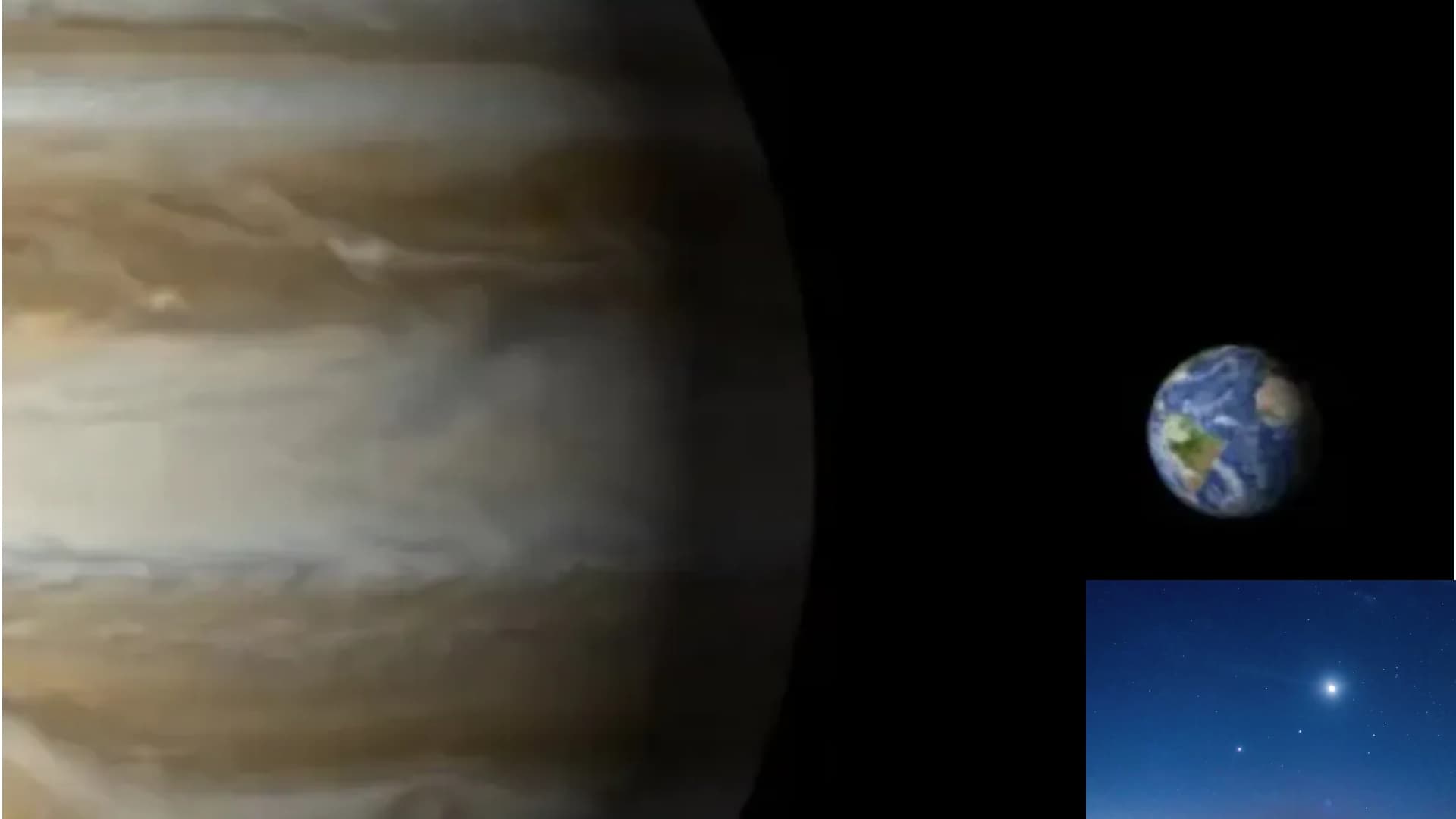
On January 10, Earth will lie almost in a straight line between the Sun and Jupiter, placing the gas giant close to opposition. Astronomers say this alignment brings Jupiter nearer to Earth, making it shine with exceptional brilliance in the night sky. For nearly a month, the planet will be visible throughout the night, offering a striking spectacle to the naked eye.
Jupiter is easy to identify, experts note. Unlike stars, it does not twinkle. Instead, it appears as a steady, bright yellow-white point of light. Soon after sunset, it can be spotted in the eastern sky. As the night progresses, Jupiter climbs higher and by midnight it will be nearly overhead, becoming the brightest object in the sky after the Moon.
No telescope is required to observe Jupiter. However, a small telescope or even powerful binoculars can reveal its four largest moons — Io, Europa, Ganymede and Callisto — known as the Galilean satellites.
On January 10, Earth will lie almost in a straight line between the Sun and Jupiter, placing the gas giant close to opposition. Astronomers say this alignment brings Jupiter nearer to Earth, making it shine with exceptional brilliance in the night sky. For nearly a month, the planet will be visible throughout the night, offering a striking spectacle to the naked eye.
Jupiter is easy to identify, experts note. Unlike stars, it does not twinkle. Instead, it appears as a steady, bright yellow-white point of light. Soon after sunset, it can be spotted in the eastern sky. As the night progresses, Jupiter climbs higher and by midnight it will be nearly overhead, becoming the brightest object in the sky after the Moon.
No telescope is required to observe Jupiter. However, a small telescope or even powerful binoculars can reveal its four largest moons — Io, Europa, Ganymede and Callisto — known as the Galilean satellites.

📱 Get Argus News App
✨📰 60 Word News🎬 Argus Podcast📺 Live TV and Breaking News🔔 Free Notification Alerts
Download Free:
Jupiter orbits the Sun at an average distance of about 780 million kilometres, while Earth is about 150 million kilometres away. Because of their differing orbits, the distance between the two planets constantly changes. At its farthest, Jupiter can be more than 930 million kilometres from Earth, while at its closest the distance reduces to around 600 million kilometres. Jupiter comes closest to Earth roughly once every 13 months, during which it appears especially bright.
Scientists have repeatedly clarified that despite frequent claims on social media and in astrology columns, Jupiter’s position has no impact on human health, behaviour, earthquakes, climate or personal fortune.
Also Read: BCCI Mourns Death of Mizoram Ranji Player K Lalremruata
For the coming month, the brilliant planet will dominate the night sky, offering observers a chance to enjoy Jupiter simply as one of the solar system’s most remarkable worlds — a shining reminder of the vast and fascinating universe beyond Earth.
Scientists have repeatedly clarified that despite frequent claims on social media and in astrology columns, Jupiter’s position has no impact on human health, behaviour, earthquakes, climate or personal fortune.
Also Read: BCCI Mourns Death of Mizoram Ranji Player K Lalremruata
For the coming month, the brilliant planet will dominate the night sky, offering observers a chance to enjoy Jupiter simply as one of the solar system’s most remarkable worlds — a shining reminder of the vast and fascinating universe beyond Earth.