



TMC on the Brink: Why Mamata's Trusted Lieutenant Kakoli Ghosh Dastidar Has Turned Rebel| Analysis
Key Points
* Mamata Banerjee's four-decade loyalist emerges as the face of the biggest revolt in TMC history.
* Sukhendu Sekhar Ray's resignation adds to growing allegations of arrogance, corruption and disconnect within TMC.
Bhubaneswar: The first thing political colleagues often say about Kakoli Ghosh Dastidar is that she rarely raises her voice.
A trained physician, measured in speech and methodical in politics, Kakoli was never among the headline-seeking faces of the Trinamool Congress. For nearly four decades, she remained one of Mamata Banerjee's most dependable lieutenants - loyal through victories, defeats, internal battles and political storms.
Today, that same woman stands at the centre of what could become the most devastating parliamentary revolt in the history of the Trinamool Congress.
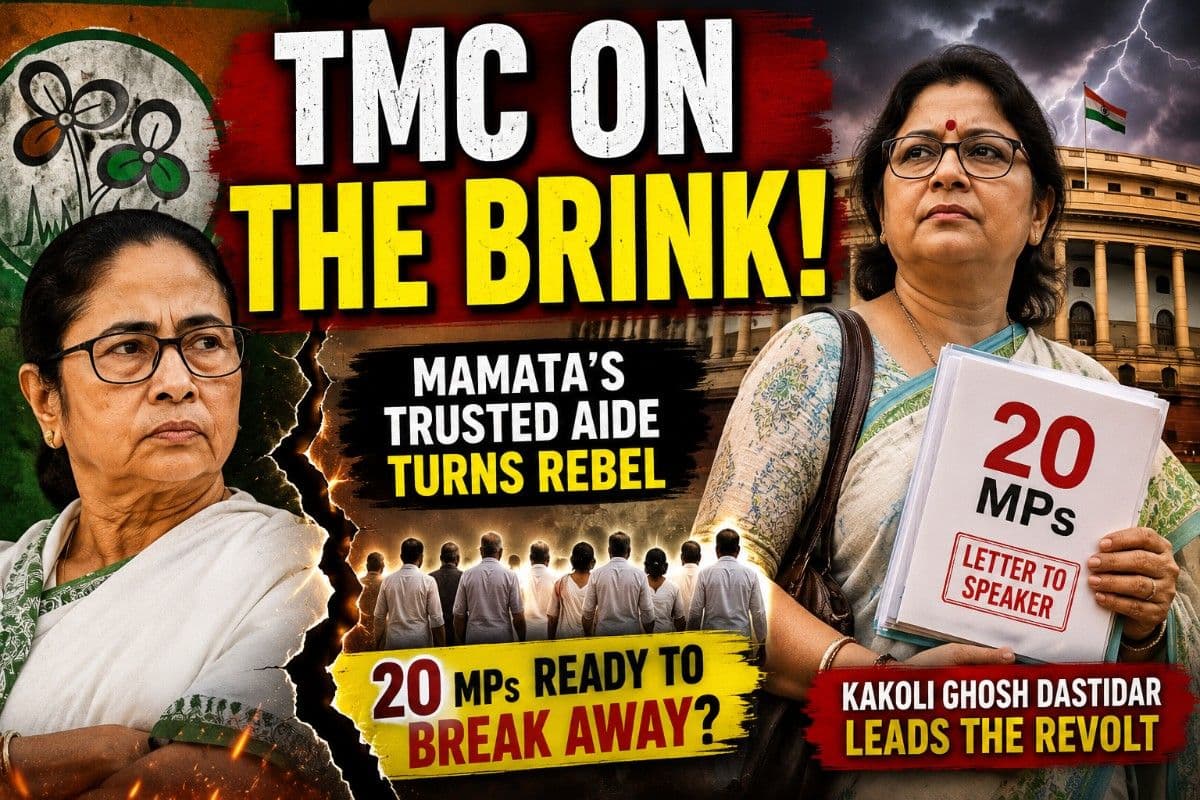
According to developments in New Delhi, as many as 20 of the 28 Trinamool Congress MPs have written to Lok Sabha Speaker Om Birla seeking recognition as a separate bloc and expressing their desire to support the BJP-led NDA. The rebellion is being led by Kakoli Ghosh Dastidar, once considered part of Mamata Banerjee's innermost political circle.

📱 Get Argus News App
✨If the split formalises, it would represent not merely a numerical setback for Trinamool in Parliament but the symbolic collapse of a political relationship that began half a century ago.
The Woman Who Walked Beside Mamata
Kakoli's political journey predates the Trinamool Congress itself.
Born into a politically conscious family, she grew up surrounded by public life. Her paternal uncle Arun Moitra was a freedom fighter and former Pradesh Congress president. Her maternal uncle Gurudas Dasgupta would go on to become a prominent parliamentarian.
Unlike many career politicians, Kakoli first established herself professionally. She graduated from Kolkata's R.G. Kar Medical College and later pursued postgraduate training in obstetric ultrasound at King's College London.
But politics remained a constant presence.
She entered public life through the Congress student movement during the 1970s and developed a close association with Mamata Banerjee as early as 1976. Their political partnership deepened through the 1980s, when Mamata emerged as one of Congress's most aggressive young leaders in West Bengal.
For decades, Kakoli remained among the few leaders who never publicly challenged Mamata's authority.
A Career Built on Persistence
If Mamata's rise was meteoric, Kakoli's journey was built on persistence.
She entered electoral politics in 1996, contesting from Jadavpur Lok Sabha constituency. She lost.
She contested again in 1999. She lost again.
Many politicians would have disappeared after consecutive defeats.
Kakoli did not.
Instead, she remained active in organisational work, steadily strengthening her position inside the party.
Her breakthrough came in 2009 when she shifted to Barasat and won the Lok Sabha election by over one lakh votes. Since then, she has represented the constituency continuously, winning election after election.
The trajectory revealed two defining traits.
First, political tenacity.
Second, political pragmatism.
Unlike ideological hardliners, Kakoli built her reputation as a practical operator focused on organisation, parliamentary work and constituency management.
That pragmatism may now be shaping the most consequential decision of her political life.
The First Public Crack
The first unmistakable signs of estrangement emerged after Trinamool's stunning electoral collapse in West Bengal.
On May 15, Kakoli was removed from the post of Chief Whip in the Lok Sabha.
The response was extraordinary.
Posting on social media, she wrote:
"Acquainted since 1976. Walking together since 1984. Today I was rewarded for four decades of loyalty."
For seasoned Trinamool observers, the message was unmistakable.
This was not merely disappointment over a parliamentary post.
It was a public expression of betrayal from someone who had invested four decades in the movement.
Within days, the relationship deteriorated further.
On May 27, Kakoli resigned from all organisational posts she held in the Trinamool Congress. In a scathing attack, she accused fellow MP Kalyan Banerjee of misogyny and verbal abuse. She also pointed to corruption allegations, the fallout of the RG Kar rape-murder case and what she described as excessive influence exercised by political consultancy networks within the party.
The rebellion had moved beyond personality clashes.
It had become ideological and organisational.
Delhi Meeting Changes Everything
The turning point came in New Delhi.
At a meeting held at the residence of senior BJP leader and Union Minister Bhupender Yadav, rebel Trinamool MPs gathered to discuss their future course.
West Bengal Chief Minister Suvendu Adhikari, himself a former Trinamool heavyweight who crossed over to the BJP, also interacted with the dissident camp.
The outcome was dramatic.
Twenty MPs reportedly decided to seek separation from the Trinamool parliamentary party led by Abhishek Banerjee and move closer to the NDA.
Significantly, it was Kakoli who emerged as the accepted leader of the rebellion.
Trinamool MP Sharmila Sarkar publicly acknowledged that the dissident bloc had formed under "Kakoli di's leadership" and that she had submitted the letter to the Lok Sabha Speaker.
The choice was revealing.
The rebels could have rallied behind younger leaders.
Instead, they selected one of Mamata's oldest associates.
That lends the revolt moral and political weight that ordinary defections often lack.
Why This Crisis Is Different
Political defections are common in Indian politics.
What makes this episode uniquely damaging for Trinamool is the identity of the rebels.
Kakoli is not an outsider.
She is not a recent entrant.
She is not a disgruntled turncoat denied a ticket.
She is part of Trinamool's foundational generation.
Her departure effectively challenges the narrative that the crisis is limited to a few ambitious individuals.
Instead, it suggests that dissatisfaction has reached leaders who helped build the organisation itself.
Even more worrying for Trinamool is the growing perception that the party's post-defeat introspection never happened.
That criticism gained powerful reinforcement on Monday when veteran Rajya Sabha MP Sukhendu Sekhar Ray resigned from both Parliament and the party.
Sukhendu Sekhar Ray's Explosive Exit
Few leaders understand Trinamool's evolution better than Sukhendu Sekhar Ray.
A Rajya Sabha member since 2011 and among the party's most recognisable parliamentary faces, Ray's resignation carried extraordinary significance.
His criticism was devastating.
According to Ray, the party leadership failed to understand public anger after the RG Kar rape and murder case.
"Power had gone to their heads to such an extent that they believed no one in the world could touch them," he said.
He accused the organisation of becoming disconnected from ordinary workers and voters.
Leaders, ministers, panchayat heads and councillors, he argued, had become inaccessible.
Grassroots workers who built the movement were marginalised.
Meanwhile, "middlemen, thieves, dacoits and rapists" rose within the system.
Ray further demanded forensic audits of public institutions and investigations into the assets of political leaders, claiming massive corruption had flourished under the cover of political power.
Perhaps most damaging was his assertion that no meaningful internal review followed the electoral defeat.
For a party built on Mamata Banerjee's image as a street fighter against entrenched power, the accusation strikes at the very core of its political identity.
The Bigger Battle Ahead
The parliamentary rebellion and Ray's resignation may be separate events.
Yet together they tell the same story.
The post-defeat crisis inside Trinamool is no longer confined to whispers in party corridors.
It has reached Parliament.
It has reached veteran leaders.
And it has reached individuals who once stood closest to Mamata Banerjee herself.
For years, Mamata Banerjee's greatest political strength was her ability to retain loyalty even during adversity.
The emergence of Kakoli Ghosh Dastidar as the face of parliamentary rebellion raises uncomfortable inferences that the bond has begun to weaken.
The twenty MPs eventually moving into the NDA camp carries far reaching consequences that would extend far beyond parliamentary arithmetic.
It would mark the fragmentation of a political family that took decades to build.
And at the centre of that story stands Kakoli Ghosh Dastidar - doctor, parliamentarian, survivor of multiple electoral defeats, four-decade loyalist and now the unlikely architect of Trinamool Congress's biggest internal revolt.
Whether this
becomes a temporary rebellion or the beginning of a larger exodus will
determine not only Kakoli's political legacy but also the future shape of
opposition politics in West Bengal.
Also Read: Power Politics / From Cleopatra to Mamata Banerjee: The saga of power-clinging at any cost continues
Related Topics
Explore more stories