



Judicial System / Wrongfully Jailed for 22 Years! Odisha Man Acquitted, Supreme Court Slams Judicial Failures
Key Points
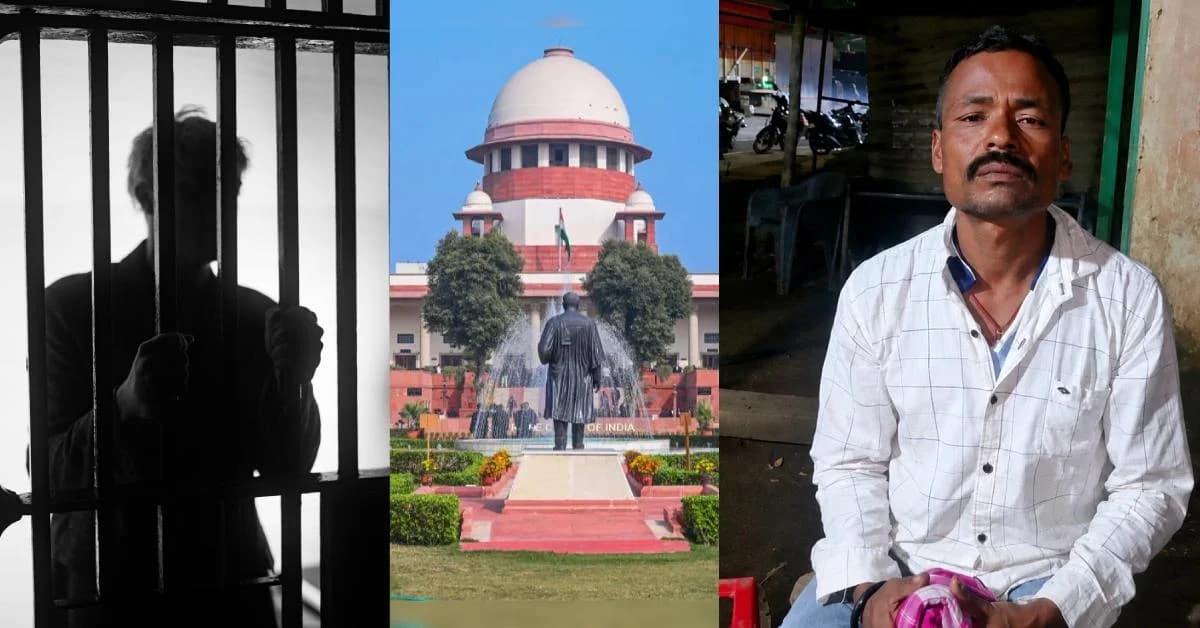
Supreme Court acquits Nabarangpur’s Arjun Jani after 22 years in jail, criticizing judicial failures and ordering rehabilitation support, stressing that conviction based on suspicion alone is unconstitutional.
Bhubaneswar, Aug 6: In a landmark judgment, the Supreme Court has acquitted Arjun Jani of Nabarangpur, who spent 22 years behind bars after being wrongly convicted in a 2004 triple murder case.
The apex court expressed deep dissatisfaction over the prolonged miscarriage of justice, highlighting failures at multiple judicial levels that led to Jani’s wrongful incarceration.
The case dates back to 2004, when three women were murdered in Nabarangpur district. Based on suspicion and the testimony of a single eyewitness, police arrested Jani.
Also read: Odisha Vigilance Cracks ₹55 Lakh Tank Renovation Fraud, Three Arrested

📱 Get Argus News App
✨The trial court convicted him and sentenced him to life imprisonment. After spending 12 years in jail, Jani approached the Orissa High Court, but his petition was dismissed due to delay. Left with no option, he moved the Supreme Court.
A bench comprising Justice J.B. Pardiwala and Justice K. Vinod Chandran overturned the High Court’s earlier ruling, criticizing both the trial court and the High Court for failing to properly evaluate evidence. The judges noted that Jani had been punished solely on suspicion, which was unacceptable under constitutional principles.
The Supreme Court observed: “Where the trial court failed to assess evidence correctly, the High Court remained silent. As a result, an innocent man spent 22 years in jail. Such collective failure is deeply disturbing.”
The court also directed the Koraput District Collector and legal aid authorities to take immediate steps for Jani’s rehabilitation and reintegration into society. This includes support for livelihood, housing, and social acceptance after decades of wrongful imprisonment.
Expressing concern over systemic lapses, the bench stressed that constitutional courts must exercise discretion and vigilance, especially in cases involving marginalized individuals.
“Punishing someone for life based only on suspicion is not acceptable,” the court remarked, underscoring the need for judicial sensitivity in safeguarding the rights of the poor and vulnerable.
The verdict has reignited debate on delays in justice delivery and the importance of accountability in the criminal justice system. For Jani, however, it marks the end of a long ordeal and the beginning of a new chapter in freedom.
Yet one question remains — can the 22 years stolen by
judicial failure ever be reclaimed for Arjun Jani?
Related Topics
Explore more stories