



World Malaria Day: Experts, Policymakers Strategise Elimination By 2030 At Bhubaneswar Meet
·5 months ago·2 min read
Key Points
Joint meeting organised by NAVBD and RMRC Bhubaneswar on World Malaria Day brought together 150 stakeholders to strategise malaria elimination by 2030.
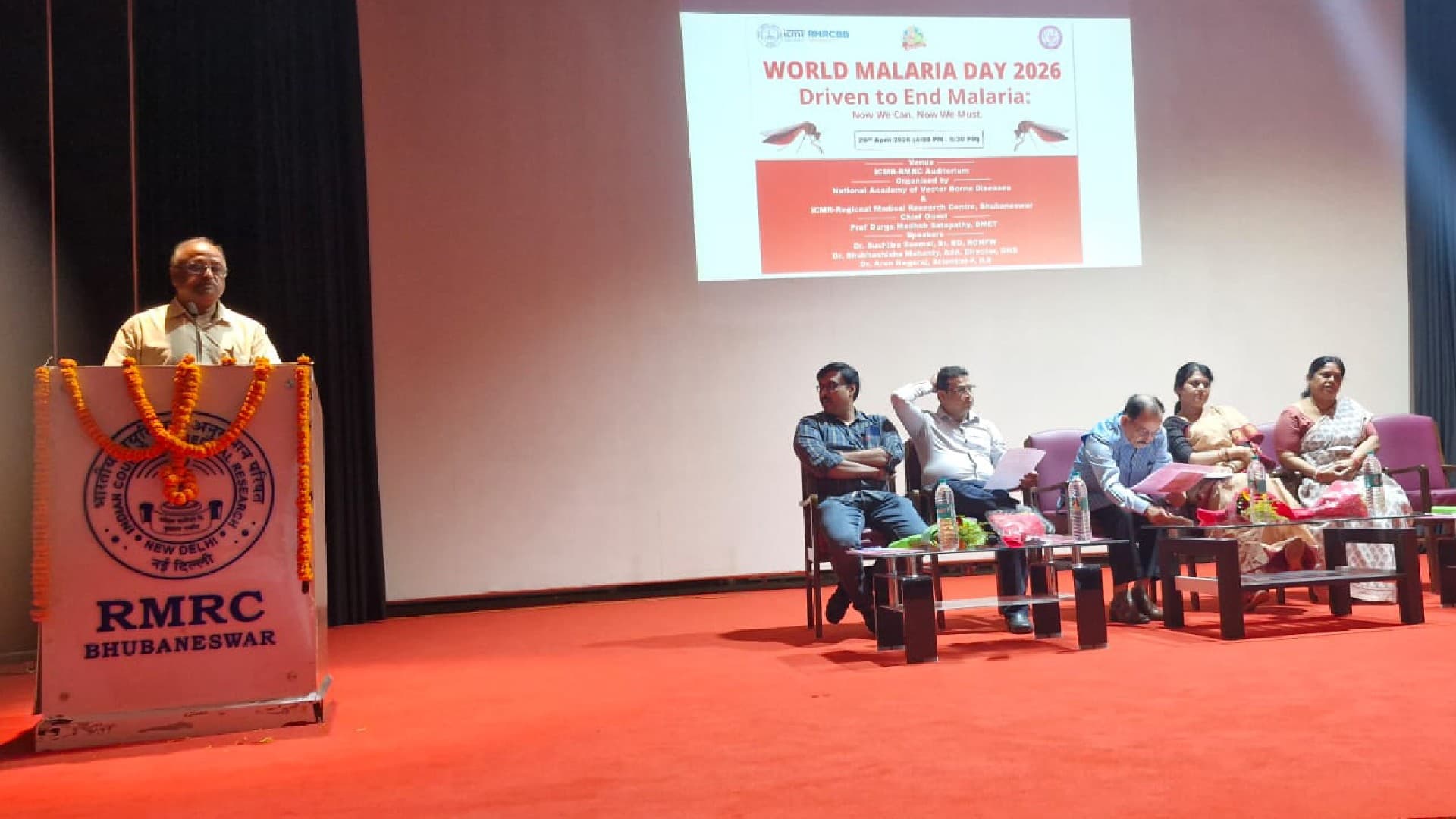
Bhubaneswar, Apr 30: A joint meeting marking World Malaria Day was held in Bhubaneswar on Wednesday, bringing together experts, policymakers and public health professionals to strategise malaria elimination by 2030.
The event was organised by National Academy of Vector Borne Diseases (NAVBD) and Regional Medical Research Centre Bhubaneswar (RMRC), with participation from around 150 stakeholders across government, academia and research institutions.
Experts Emphasise Urgency
Padma Shri Prof. AP Dash, Former Vice Chancellor of CUTN and Regional Adviser, WHO-SEARO, highlighted the importance of public-private partnerships in achieving malaria elimination. Dr Sanghamitra Pati, Additional Director General, ICMR, stressed the need for greater mobilisation of government resources, reaffirming India’s commitment to eliminating malaria by 2030.
Dr Suchitra Sasmal, Senior Regional Director, Regional Office of Health and Family Welfare (ROHFW), outlined the global malaria scenario, noting progress as well as persistent challenges.
The event was organised by National Academy of Vector Borne Diseases (NAVBD) and Regional Medical Research Centre Bhubaneswar (RMRC), with participation from around 150 stakeholders across government, academia and research institutions.
Experts Emphasise Urgency
Padma Shri Prof. AP Dash, Former Vice Chancellor of CUTN and Regional Adviser, WHO-SEARO, highlighted the importance of public-private partnerships in achieving malaria elimination. Dr Sanghamitra Pati, Additional Director General, ICMR, stressed the need for greater mobilisation of government resources, reaffirming India’s commitment to eliminating malaria by 2030.
Dr Suchitra Sasmal, Senior Regional Director, Regional Office of Health and Family Welfare (ROHFW), outlined the global malaria scenario, noting progress as well as persistent challenges.

📱 Get Argus News App
✨📰 60 Word News🎬 Argus Podcast📺 Live TV and Breaking News🔔 Free Notification Alerts
Download Free:
Odisha’s Progress Highlighted
Dr Subhasisha Mohanty, Additional Director, Health Department, Government of Odisha, presented Odisha’s achievements in malaria control and reiterated the state’s commitment to meeting elimination targets. Meanwhile, Dr V Arun Nagaraj, Senior Scientist, ILS, spoke about ongoing research, including the potential development of more effective antimalarial drugs.
Call for Collective Action
Welcoming participants, Dr MR Ranjit, Secretary of NAVBD, underlined the importance of sustained awareness campaigns and coordinated action.
The meeting concluded with a collective resolve to strengthen collaboration, innovation and resource mobilisation to accelerate progress towards a malaria-free future by 2030.
Dr Subhasisha Mohanty, Additional Director, Health Department, Government of Odisha, presented Odisha’s achievements in malaria control and reiterated the state’s commitment to meeting elimination targets. Meanwhile, Dr V Arun Nagaraj, Senior Scientist, ILS, spoke about ongoing research, including the potential development of more effective antimalarial drugs.
Call for Collective Action
Welcoming participants, Dr MR Ranjit, Secretary of NAVBD, underlined the importance of sustained awareness campaigns and coordinated action.
The meeting concluded with a collective resolve to strengthen collaboration, innovation and resource mobilisation to accelerate progress towards a malaria-free future by 2030.
Related Topics
Explore more stories