



Will Naveen Patnaik Still Wield His Metaphorical ‘Guillotine’ Or Let His Rivals Go Free?
Key Points
Naveen Patnaik’s historic use of expulsions to maintain control resurfaces amid growing dissent within BJD.
Senior BJD leaders voice concern over VK Pandian’s influence, fueling speculation of internal rifts.
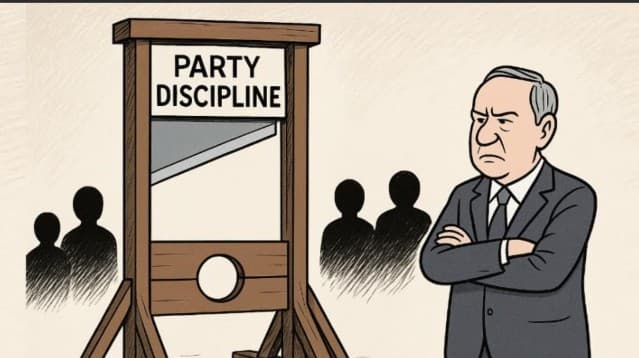
Bhubaneswar, Sept 5: In the turbulent politics of Odisha, few metaphors capture Naveen Patnaik’s leadership style better than the “guillotine.” A word borrowed from the bloody annals of the French Revolution, the term once symbolised egalitarian justice but soon became synonymous with ruthless political decapitation. In Odisha’s political vocabulary, it came to signify the Biju Janata Dal (BJD) supremo’s uncompromising method of dealing with dissent.
The metaphor first gained traction in the early 2000s when Patnaik, then consolidating his control over the newly formed BJD, expelled Bijoy Mohapatra, a founding member and towering strategist. That was only the beginning. Over the years, a long line of heavyweights—from Ramakrushna Patnaik and Dilip Ray to Braja Kishore Tripathy, Baijayant Panda, Pyarimohan Mohapatra, Dr Damodar Rout Soumya Ranjan Patnaik, and Amar Prasad Satpathy—fell to what many in political circles called Naveen’s “guillotine.” Their common offence: either questioning his authority or emerging as potential rivals.
Now, as murmurs of discontent grow louder within the BJD, the question is whether the guillotine will be unsheathed again—or whether Naveen, after his party’s bruising performance in the 2024 elections, will be forced into uncharacteristic restraint. Senior leaders such as Badrinarayan Patra, Bhupinder Singh, and Ranendra Pratap Swain have openly expressed dissatisfaction, particularly with the growing influence of Naveen’s trusted aide, V. Karthikeyan Pandian. This rare chorus of dissent has fueled speculation that the party chief may once again resort to his old playbook.
Historically, Naveen has shown little tolerance for independent voices or alternative power centres within his party. His iron grip and instinctive mistrust of ambition have long defined his political persona. Those who dared to challenge his authority have either been silenced, sidelined, or shown the door.
Yet, the present moment is more complex. Political observers note that the veteran leader, despite setbacks in 2024, is determined to retain relevance and chart a path back to power in 2029. The dilemma he faces is whether to reassert control through decisive expulsions—sending a message that the guillotine still hangs over potential challengers—or to risk appearing weakened by sparing his critics.
For a leader who has built his political empire on discipline, centralization, and a reputation for swift punishment, the stakes could not be higher. If Patnaik continues with his tried-and-tested ruthlessness, he may re-establish dominance in a restive party. But if he hesitates, the symbolism of a dormant guillotine could embolden rivals and signal an unmistakable erosion of his authority.
The coming months will reveal whether Odisha’s longest-serving chief minister still has the will—and the political strength—to wield his most feared weapon.
