



V-P Poll: BJD’s Support Is Not A Necessity But Courtesy!
Key Points
BJD’s support not essential for NDA’s victory, but carries symbolic and strategic weight.
Both NDA and INDIA bloc actively court BJD, reflecting its influence in narrative-building.
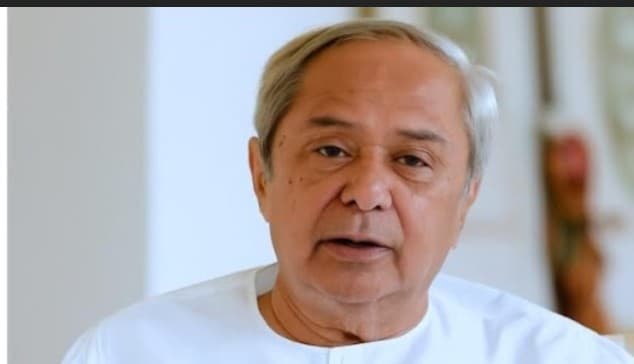
Naveen Patnaik’s decision may shape future alliances and Odisha’s political trajectory.
Bhubaneswar, Aug. 25: The 2025 Vice-Presidential election in India, set to unfold on September 9, encapsulates the intricate interplay of coalition dynamics, numerical strength, and narrative-building in Indian politics. The Biju Janata Dal (BJD), despite its diminished electoral presence following the 2024 Lok Sabha elections, has emerged as a focal point for both the ruling National Democratic Alliance (NDA) and the opposition INDIA bloc. With only seven Rajya Sabha MPs, the BJD’s role in the election raises a critical question: Is its support a necessity for securing the Vice-Presidency, or merely a courteous gesture in the broader political chessboard?
Numerical Context and Electoral Dynamics
The Vice-Presidential election involves an electoral college of 787 MPs—543 in the Lok Sabha and 245 in the Rajya Sabha (233 elected and 12 nominated). A candidate requires a simple majority of at least 394 votes to win. The NDA, led by the Bharatiya Janata Party (BJP), holds a commanding 422 MPs (293 in the Lok Sabha and 129 in the Rajya Sabha), surpassing the required threshold with room to spare. This numerical strength is fortified by external support from regional parties like the YSR Congress Party (YSRCP) and Telugu Desam Party (TDP), which have pledged backing for the NDA’s candidate, C.P. Radhakrishnan. In contrast, the INDIA bloc, with an estimated 354 MPs (249 in the Lok Sabha and 105 in the Rajya Sabha), falls short of the majority, despite its symbolic unity in fielding Justice B. Sudershan Reddy as a joint candidate.

📱 Get Argus News App
✨The BJD’s seven Rajya Sabha MPs, while symbolically significant in Odisha’s regional context, do not hold the balance of power. Even if the BJD aligns with the INDIA bloc, the opposition’s tally would reach 361—still 33 votes shy of the required 394. For the NDA, the BJD’s support would further bolster its already secure position but is not mathematically essential. This raises the question of why both alliances, including high-profile leaders like Prime Minister Narendra Modi, Defence Minister Rajnath Singh, and Congress President Mallikarjun Kharge, have actively courted Naveen Patnaik’s party. The answer lies in the broader political and symbolic implications of the BJD’s stance.
The BJD’s Historical Pragmatism
The BJD, under Naveen Patnaik’s leadership, has long adopted a pragmatic and non-ideological approach to national politics, prioritising Odisha’s interests and maintaining a delicate balance between regional identity and national relevance. Historically, the BJD has leaned toward supporting NDA candidates in high-stakes elections, such as the 2017 and 2022 Vice-Presidential elections and the 2022 Presidential election, where it backed Droupadi Murmu, leveraging her Odisha and tribal identity. However, its support for the UPA’s P.A. Sangma in the 2012 Presidential election, driven by his tribal background, highlights the BJD’s willingness to deviate from the NDA when regional or communal considerations align with its narrative.
The BJD’s current position is complicated by its recent electoral setbacks. In the 2024 Lok Sabha elections, the party failed to secure any seats, and its ouster from power in Odisha by the BJP has strained its relationship with the ruling coalition. The defection of two BJD Rajya Sabha MPs to the BJP further reduced its strength to seven. A recent statement by former BJD MP Mahesh Sahu, indicating reluctance to support the NDA’s candidate, suggests a potential shift toward neutrality or opposition alignment, possibly driven by the BJP’s lack of consultation or lingering resentment from the Odisha elections. Yet, Naveen Patnaik’s silence on the matter keeps the BJD’s final stance ambiguous, fueling speculation about whether it will support Radhakrishnan, Reddy, or abstain altogether.
Strategic Implications: Beyond the Numbers
While the BJD’s seven votes are not pivotal in securing the Vice-Presidency, their strategic value lies in the realm of political optics and narrative-building. Indian politics thrives on coalitions and symbolism, and the BJD’s endorsement carries weight beyond its numerical contribution:
1. Crafting a Narrative: Securing the BJD’s support allows either alliance to project inclusivity and broaden its appeal. For the NDA, BJD backing would reinforce its image as a coalition capable of uniting diverse regional forces, particularly in eastern India, where the BJP seeks to deepen its influence. For the INDIA bloc, BJD support would signal a crack in the NDA’s dominance and bolster its narrative of a united opposition. As political observers note, the alliance that wins the BJD’s endorsement can craft a compelling story of cross-party support, enhancing its legitimacy in the eyes of voters and regional stakeholders.
2. Regional Outreach: The NDA’s choice of C.P. Radhakrishnan, a Tamil Nadu-born OBC leader with RSS roots, reflects its strategic focus on southern India. BJD support could amplify this outreach, given Naveen Patnaik’s historical ties with southern leaders and his secular credentials. Conversely, the INDIA bloc’s candidate, Justice B. Sudershan Reddy, a Telugu speaker, may appeal to regional sentiments, but the BJD’s reluctance to commit suggests that regional affinity alone may not sway its decision.
3. Future Alliances: The Vice-Presidential election is a precursor to the 2029 general election. For the NDA, maintaining cordial relations with the BJD could ensure legislative support in the Rajya Sabha, where the BJP lacks an outright majority. For the INDIA bloc, engaging the BJD could lay the foundation for a broader anti-BJP coalition in Odisha, where the Congress and other opposition parties aim to challenge the BJP’s growing dominance.
From a numerical standpoint, the BJD’s support is not a necessity. The NDA’s 422 votes, combined with the likely backing of nominated Rajya Sabha members, ensure Radhakrishnan’s victory, barring an unlikely internal rebellion. For the INDIA bloc, BJD support would narrow the gap but not overturn the NDA’s lead. However, dismissing the BJD’s role as a mere courtesy oversimplifies its significance. In Indian politics, every vote and endorsement contributes to the broader narrative of power and legitimacy. The BJD’s decision—whether to support the NDA, align with the INDIA bloc, or abstain—will reflect Naveen Patnaik’s strategic calculations, balancing Odisha’s interests with the party’s long-term relevance.
The 2025 Vice-Presidential election highlights the complex interplay of arithmetic, strategy, and symbolism in Indian politics. While the BJD’s seven votes are not a mathematical necessity, their symbolic weight makes them a coveted asset. Both the NDA and the INDIA bloc recognize that securing the BJD’s support enhances their political narrative and regional outreach. Naveen Patnaik’s decision, shaped by Odisha’s regional dynamics and the BJD’s historical pragmatism, will signal the party’s positioning in a rapidly evolving political landscape. In this context, seeking the BJD’s support is less about necessity and more about crafting a compelling story of unity and legitimacy, a hallmark of Indian coalition politics.