



National Education Policy / Union Minister Dharmendra Pradhan Calls for Autonomous, Research-Driven Institutions in Odisha Under NEP 2020
·5 months ago·3 min read
Key Points
Union Minister Dharmendra Pradhan said Odisha's educational institutions must evolve beyond conventional teaching into models of autonomy, innovation, and research, aligning with NEP 2020.
Bhubaneswar, May 2: Union Education Minister Dharmendra Pradhan on Saturday said Odisha’s educational institutions must move beyond conventional teaching and evolve into models of autonomy, innovation and research for the nation, while aligning with the National Education Policy 2020.
Speaking at the inaugural session of the two-day workshop “Pragyan Prerana” on NEP implementation in Bhubaneswar, Pradhan said, "Universities should adopt best practices to address local challenges and contribute towards building a ‘Viksit Odisha’ and ‘Viksit Bharat’".
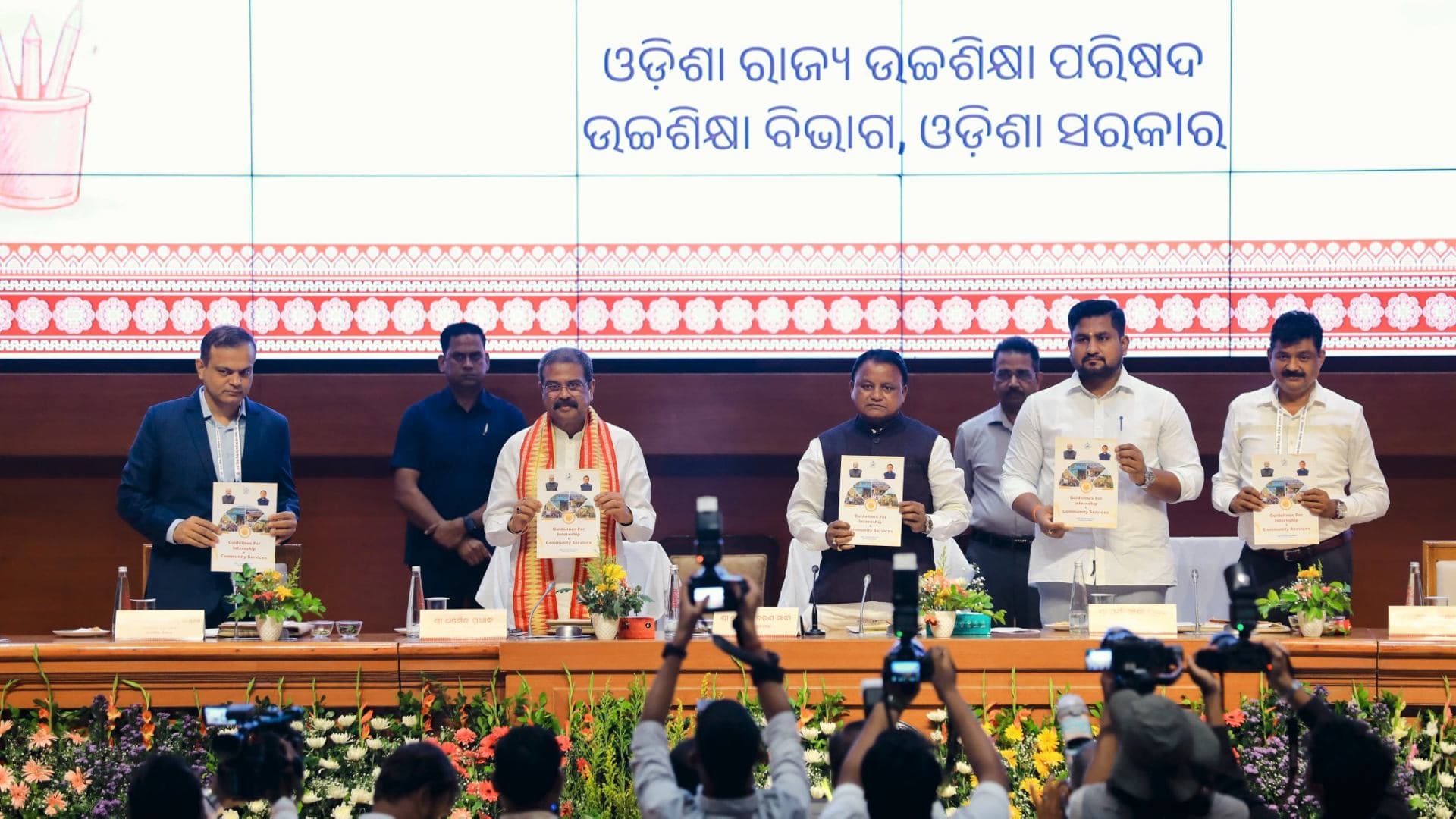
The event, organised by the Higher Education Department of the Odisha government, was attended by Chief Minister Mohan Charan Majhi, Higher Education Minister Suryabanshi Suraj, vice-chancellors, academicians and faculty members from across institutions.
Describing Odisha as a historic ‘land of knowledge’, Pradhan said, "The region has guided the world since ancient times. Referring to the Kalinga War, he noted that it symbolised not just conflict but the triumph of humanity and peace." He added that Odisha played a central role in spreading Indian culture from Sri Lanka to Southeast Asia, driven by its strong foundations in education, maritime trade, agriculture, temple architecture and literature.
Speaking at the inaugural session of the two-day workshop “Pragyan Prerana” on NEP implementation in Bhubaneswar, Pradhan said, "Universities should adopt best practices to address local challenges and contribute towards building a ‘Viksit Odisha’ and ‘Viksit Bharat’".
The event, organised by the Higher Education Department of the Odisha government, was attended by Chief Minister Mohan Charan Majhi, Higher Education Minister Suryabanshi Suraj, vice-chancellors, academicians and faculty members from across institutions.
Describing Odisha as a historic ‘land of knowledge’, Pradhan said, "The region has guided the world since ancient times. Referring to the Kalinga War, he noted that it symbolised not just conflict but the triumph of humanity and peace." He added that Odisha played a central role in spreading Indian culture from Sri Lanka to Southeast Asia, driven by its strong foundations in education, maritime trade, agriculture, temple architecture and literature.

📱 Get Argus News App
✨📰 60 Word News🎬 Argus Podcast📺 Live TV and Breaking News🔔 Free Notification Alerts
Download Free:
Highlighting literary and intellectual contributions, he cited works such as Sarala Mahabharata, Chandi Purana and Bilanka Ramayana as enduring examples of the state’s scholarly legacy. He also referred to eminent figures such as Pathani Samanta, Upendra Bhanja, Fakir Mohan Senapati and Gangadhar Meher as symbols of Odisha’s intellectual excellence.
Pradhan further noted that Padmasambhava, the founder of the Vajrayana branch of Buddhism, was born in Odisha, from where the tradition spread to the Himalayas, Tibet and Arunachal Pradesh. He stressed that curricula should reflect Odisha’s unique needs, including its 450-km coastline and mineral resources, adding that institutions must focus on “building ideas, not just buildings”.
He underlined the need to integrate local history, village temples and stories of unsung heroes into the education system to instil pride among students. The teachings and scientific contributions of figures like Bhima Bhoi, Gopabandhu Das and Pathani Samanta should be given prominence in curricula, he said, while also calling for wider recognition of indigenous knowledge systems.
Also Read: Universities Must Evolve Beyond Teaching, Reflect National Commitment: Dharmendra Pradhan
Citing demographic advantage, Pradhan said nearly 47 per cent of Odisha’s population is below 24 years of age, and over 70 per cent falls within the working-age group, making education a critical driver of growth. He highlighted NEP initiatives such as the Academic Bank of Credits and APAAR ID, which prioritise skills over degrees.
To improve higher education enrolment, he stressed the use of digital platforms like SWAYAM and SWAYAM Prabha, along with AI-based Odia content, to reach remote learners. He also called for internationalisation through foreign language education and updated curricula to make youth globally competitive.
Pradhan further noted that Padmasambhava, the founder of the Vajrayana branch of Buddhism, was born in Odisha, from where the tradition spread to the Himalayas, Tibet and Arunachal Pradesh. He stressed that curricula should reflect Odisha’s unique needs, including its 450-km coastline and mineral resources, adding that institutions must focus on “building ideas, not just buildings”.
He underlined the need to integrate local history, village temples and stories of unsung heroes into the education system to instil pride among students. The teachings and scientific contributions of figures like Bhima Bhoi, Gopabandhu Das and Pathani Samanta should be given prominence in curricula, he said, while also calling for wider recognition of indigenous knowledge systems.
Also Read: Universities Must Evolve Beyond Teaching, Reflect National Commitment: Dharmendra Pradhan
Citing demographic advantage, Pradhan said nearly 47 per cent of Odisha’s population is below 24 years of age, and over 70 per cent falls within the working-age group, making education a critical driver of growth. He highlighted NEP initiatives such as the Academic Bank of Credits and APAAR ID, which prioritise skills over degrees.
To improve higher education enrolment, he stressed the use of digital platforms like SWAYAM and SWAYAM Prabha, along with AI-based Odia content, to reach remote learners. He also called for internationalisation through foreign language education and updated curricula to make youth globally competitive.
Referring to Prime Minister Narendra Modi’s vision, Pradhan said promoting mother tongue Odia and strengthening Indian languages are key to overcoming colonial mindsets and expanding knowledge systems rooted in Indian traditions.
Looking ahead, he noted that Odisha will mark 100 years of its formation as a linguistic state in 2036, while India will celebrate 100 years of independence in 2047. Achieving the goals of ‘Viksit Odisha’ and ‘Viksit Bharat’ will require dedicated efforts from educational institutions starting now, he said.
On the occasion, an ‘Internship and Community Service Guidelines’ booklet was released to enhance practical learning among students. The “Shaktishree” mobile app aimed at women’s safety and empowerment was also launched.
Looking ahead, he noted that Odisha will mark 100 years of its formation as a linguistic state in 2036, while India will celebrate 100 years of independence in 2047. Achieving the goals of ‘Viksit Odisha’ and ‘Viksit Bharat’ will require dedicated efforts from educational institutions starting now, he said.
On the occasion, an ‘Internship and Community Service Guidelines’ booklet was released to enhance practical learning among students. The “Shaktishree” mobile app aimed at women’s safety and empowerment was also launched.
Related Topics
Explore more stories