



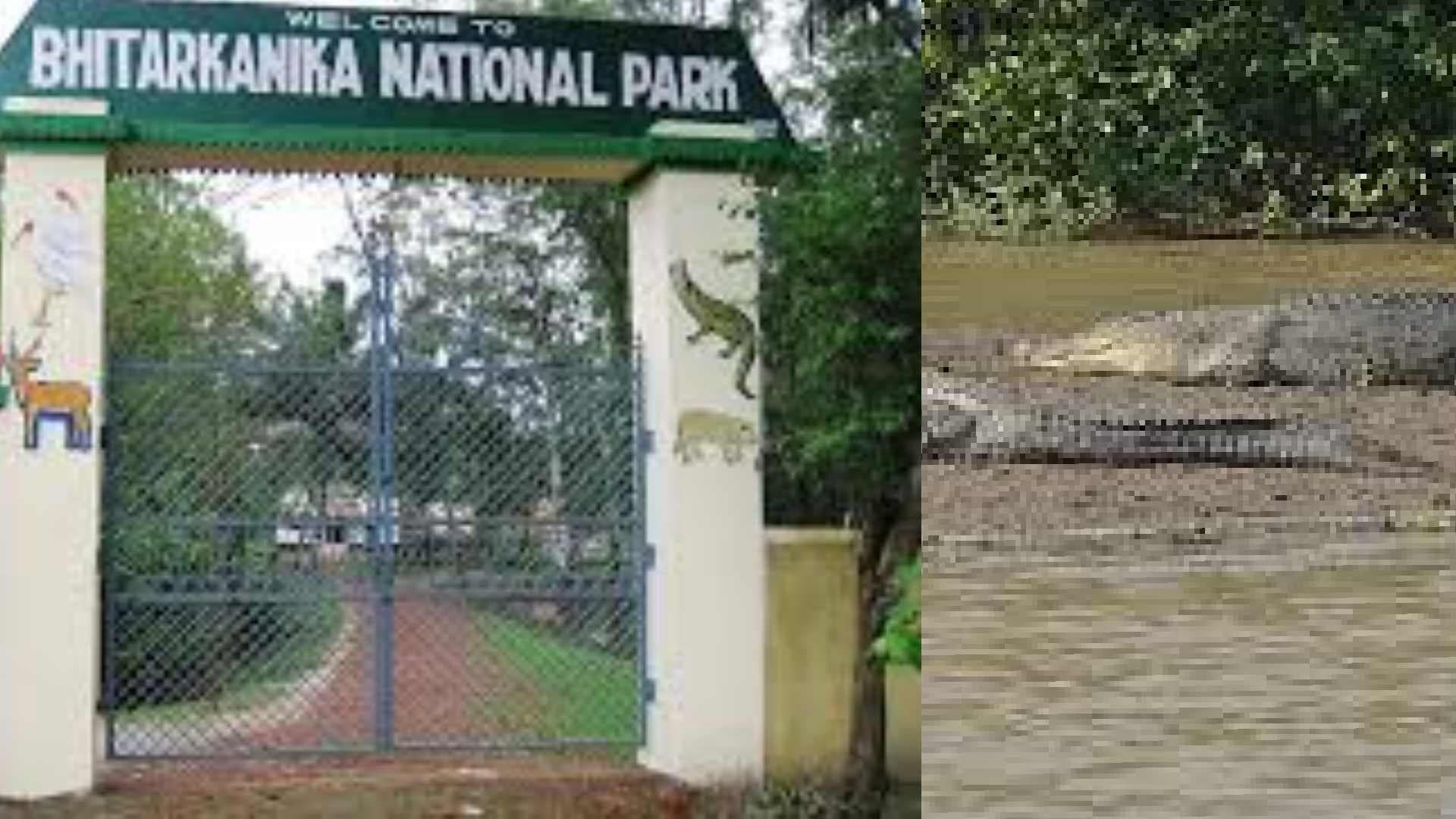
Wildlife / Tourist Entry Barred at Bhitarkanika National Park on These Dates During January Crocodile Census
·9 months ago·3 min read
Key Points
- Bhitarkanika closed from January 8 to 10, 2026, for crocodile census
- Move aimed at ensuring accurate counting without tourist disturbance
- Last census recorded 1826 saltwater crocodiles in the park
Bhubaneswar, Dec 23: Bhitarkanika National Park in Odisha will remain closed to tourists from January 8 to January 10, 2026, to facilitate the next phase of the saltwater crocodile census, forest officials said on Tuesday.
The Rajnagar Divisional Forest Officer said the temporary closure is necessary to ensure accurate counting of crocodiles and to prevent disturbance during the enumeration exercise. Tourists from India and abroad have been advised not to visit the park during this period.
The announcement comes against the backdrop of last year's crocodile census, which recorded 1,826 saltwater crocodiles in Bhitarkanika, a marginal increase from 1,811 the previous year. Of the total population, 18 crocodiles were identified as albinos, officials said.
During the last census, teams counted 585 hatchlings (up to two feet long), 403 yearlings (2–3 feet), 328 juveniles (3–6 feet), 164 sub-adults (6–8 feet) and 346 adult crocodiles measuring over eight feet. The enumeration was carried out between January 19 and 21, 2024, by a 22-member team under the supervision of noted herpetologist Dr Sudhakar Kar, according to Divisional Forest Officer Sudarshan Gopinath Yadav.
The Rajnagar Divisional Forest Officer said the temporary closure is necessary to ensure accurate counting of crocodiles and to prevent disturbance during the enumeration exercise. Tourists from India and abroad have been advised not to visit the park during this period.
The announcement comes against the backdrop of last year's crocodile census, which recorded 1,826 saltwater crocodiles in Bhitarkanika, a marginal increase from 1,811 the previous year. Of the total population, 18 crocodiles were identified as albinos, officials said.
During the last census, teams counted 585 hatchlings (up to two feet long), 403 yearlings (2–3 feet), 328 juveniles (3–6 feet), 164 sub-adults (6–8 feet) and 346 adult crocodiles measuring over eight feet. The enumeration was carried out between January 19 and 21, 2024, by a 22-member team under the supervision of noted herpetologist Dr Sudhakar Kar, according to Divisional Forest Officer Sudarshan Gopinath Yadav.

📱 Get Argus News App
✨📰 60 Word News🎬 Argus Podcast📺 Live TV and Breaking News🔔 Free Notification Alerts
Download Free:
Earlier this year, Bhitarkanika remained closed to tourists for nearly three months, from May 1 to July 31, coinciding with the critical nesting season of saltwater crocodiles. Forest officials said the closure was aimed at reducing human interference during a period when female crocodiles become highly aggressive while guarding their nests.
Assistant Chief Conservator of Forests Manas Das had earlier said that most crocodile attacks occur during the nesting season, prompting the department to enforce strict protection measures. These included banning entry of local villagers for activities such as honey collection and firewood gathering, and prohibiting mechanised boats in sensitive breeding zones.
Female crocodiles typically lay between 50 and 60 eggs per nest, constructing mounds using mangrove twigs, leaves and mud on elevated ground to prevent flooding. Despite these precautions, survival rates in the wild remain low, with officials estimating that only one in 500 hatchlings reaches adulthood.
The estuarine crocodile conservation programme in Bhitarkanika, launched in 1975 with just 95 crocodiles, is considered one of India’s most successful wildlife recovery efforts. The population rose to 1,192 by 2000 and continued to grow steadily thereafter. Although the breeding programme officially concluded in 2024 due to population saturation, the Forest Department continues to collect eggs for conservation awareness at the Dangamal breeding complex.
Also Read: Singer Lagnajita Chakraborty Harassed During East Medinipur Concert
Officials, however, said concerns over human-crocodile conflict persist, noting that 608 crocodiles in the park are categorised as potentially dangerous to humans.
Assistant Chief Conservator of Forests Manas Das had earlier said that most crocodile attacks occur during the nesting season, prompting the department to enforce strict protection measures. These included banning entry of local villagers for activities such as honey collection and firewood gathering, and prohibiting mechanised boats in sensitive breeding zones.
Female crocodiles typically lay between 50 and 60 eggs per nest, constructing mounds using mangrove twigs, leaves and mud on elevated ground to prevent flooding. Despite these precautions, survival rates in the wild remain low, with officials estimating that only one in 500 hatchlings reaches adulthood.
The estuarine crocodile conservation programme in Bhitarkanika, launched in 1975 with just 95 crocodiles, is considered one of India’s most successful wildlife recovery efforts. The population rose to 1,192 by 2000 and continued to grow steadily thereafter. Although the breeding programme officially concluded in 2024 due to population saturation, the Forest Department continues to collect eggs for conservation awareness at the Dangamal breeding complex.
Also Read: Singer Lagnajita Chakraborty Harassed During East Medinipur Concert
Officials, however, said concerns over human-crocodile conflict persist, noting that 608 crocodiles in the park are categorised as potentially dangerous to humans.
Related Topics
Explore more stories