



Special Report| Nandankanan’s Maya Lioness Cub Tragedy Raises Fresh Questions Over Inbreeding, Maternal Care and Captive Breeding
Key Points
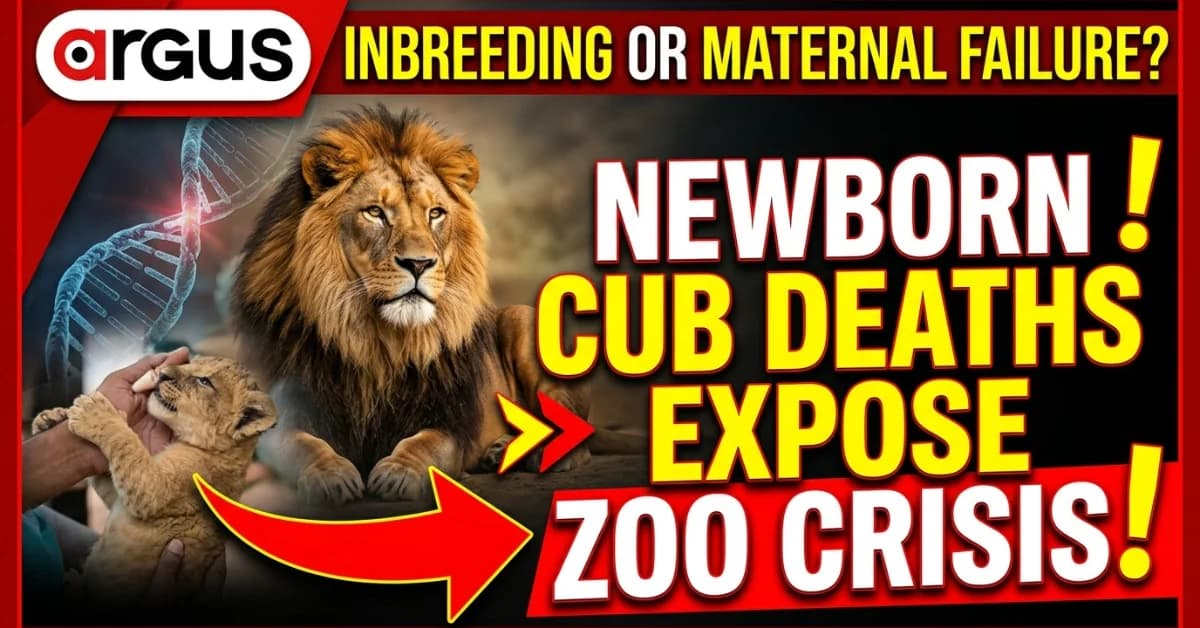
Two newborn Asiatic lion cubs died within three days at Nandankanan Zoological Park, sparked by a stillbirth and maternal rejection.
The parents, Maya and Shivam, share the same mother, highlighting risks associated with direct sibling inbreeding and genetic diversity.
Veterinary experts emphasize the need for improved pedigree tracking, national animal exchanges, and specialized neonatal care strategies.
Bhubaneswar: The death of two newborn Asiatic lion cubs within three days at Nandankanan Zoological Park has turned the spotlight from one failed birth to a larger conservation challenge facing captive conservation: how to protect genetic diversity while ensuring newborns survive the most fragile days of life.
The first cub, born to first-time mother Maya on September 7, was stillborn. Her second cub survived birth but died on September 10 after being rejected by Maya and subsequently struggling to digest food and liquids during hand-rearing.
Inbreeding Fails Cub Lives?
The episode becomes more significant because zoo records show Maya and the father, Shivam, were both born to the same lioness, Rewa. Their pairing therefore represented direct sibling inbreeding.

📱 Get Argus News App
✨Inbreeding is not automatically prohibited in every conservation programme.
In extremely small populations, closely related animals can sometimes be unavoidable, particularly when the surviving gene pool is severely restricted.
But modern zoo management generally attempts to minimise such pairings through pedigree tracking, kinship calculations, animal exchanges and, where necessary, reproductive technologies.
For endangered species, the objective is not simply to produce more animals. It is to retain genetic diversity while avoiding inherited weaknesses that can reduce fertility, immunity and neonatal survival.
Nandankanan’s own history illustrates why that balance matters. Records show four cubs born to Rewa in 2023, with two surviving, while three male cubs born in 2024 survived under specialised monitoring. The 2004–05 period was far more severe: 10 cubs were born across two years, but none survived beyond six months, with severe inbreeding depression cited among the contributing factors.
Yet genetics is only one part of tragedy.
Maya Deserts The Cubs?
Maya was a first-time mother and did not nurse the surviving cub. Once CCTV showed that she was not providing maternal care, veterinarians intervened and began hand-rearing. For a newborn, this is a difficult rescue pathway because early milk, particularly colostrum, provides crucial immune protection and supports development.
The failure of maternal bonding can itself become a critical survival barrier.
It is pertinent to mention that Maya was hand-reared, raising a possible behavioural concern: animals raised without mother-cub bonding may later show difficulties with their own offspring. This should, however, be treated as a factor requiring assessment rather than a proven cause of death.
The priority is diagnostic. A detailed necropsy and scientific veterinary review can establish whether congenital defects, infection, metabolic failure, feeding complications or another condition caused the second cub’s death.
The longer-term question is breeding strategy.
What Next?
According to wildlife experts, Nandankanan can strengthen its programme through national pedigree and kinship records, CZA-approved exchanges with other zoos, introduction of unrelated lineages and, where appropriate, assisted reproduction or cryopreserved genetic material. Physical separation or contraception can also prevent accidental breeding between close relatives.
The
two deaths are thus more than a neonatal loss. They expose the
delicate mathematics of conservation breeding: producing the next
generation is important, but producing a genetically healthier and
behaviourally viable generation is the critical test.
Also Read: EXCLUSIVE|Nandankanan Medical Data Raises Chilling Question: Were Five Mother Orangutans Killed Behind Rescued Baby Orphans in Odisha’s Baleswar?